

Shaping a Greener Future
November 19 – 3:30 pm – 5:00 pm
When?
Join us online on 19 November 2026, from 15:30 to 17:00 CET, for a joint webinar with the SUNRISE Project, bringing together expert speakers to explore key topics and perspectives in green agroecology.
SUNRISE Agroecology Project
Sunrise Agroecology is a European initiative dedicated to advancing agroecology by creating a vibrant network of Agroecological Living Labs (AELLs) in 10 countries. Building on five existing labs and five promising initiatives, the project supports a collaborative approach to innovation. Sunrise Agroecology develops practical solutions to key agronomic challenges – paving the way for a more sustainable and resilient agricultural future.
Learn more about the project here: https://www.sunrise-agroecology.eu/
Event Description
Interested in sustainability, agriculture, and the future of our planet?
Join our interactive webinar on agroecology, Living Labs, and the green transition. Learn from experts, discover real-life examples from across Europe, and join the discussion on sustainable solutions for tomorrow.
Whether you are studying agriculture, environmental sciences, sustainability, engineering, social sciences, or simply interested in creating positive change, this webinar offers an opportunity to connect with experts and learn about real-world solutions for a more sustainable future.
During this interactive session, you will:
- Learn about agroecology and why it matters for sustainable food systems.
- Explore real examples from Agroecological Living Labs across Europe.
- Discover how agroecology supports the green transition.
- Hear from researchers and practitioners working on innovative sustainability projects.
- Take part in a live Q&A session and share your questions and ideas.
Who should join?
Students and staff, especially those in agriculture, sustainability, green technology, environmental policy and governance.
Event Programme
Introduction
Agroecology and why it matters for sustainable food systems.
Understanding agroecology: Concepts and relevance
Agroecological Living Labs (AELLs): Successes and challenges. Roundtable discussion to explore real examples from AELLs across Europe.
The Green Transition and its connection to agroecology
UNIgreen: the green transition from an EU perspective
Q&A: Open discussion with students and speakers
Key takeaways and conclusions
Meet the Speakers!
Full Professor in Agronomy and Field Crops at the Institute of Plant Sciences of the Scuola Superiore Sant’Anna in Pisa, where he coordinates the Research Group in Agroecology (GOA) and the International PhD Programme in Agrobiodiversity (2013-2019 and 2026- ). He is involved in inter- and transdisciplinary research on the link between agrobiodiversity and the provision of ecosystem services (functional agrobiodiversity) in different agroecosystems and at different temporal and spatial scales (field, farm, territory), increasingly conducted with a participatory approach. He is also involved in the ecology and management of wild and weedy vegetation and the design of low-input, organic and agroecological cropping and farming systems. He regularly participates in regional national and international research projects (he has won >20 European FP6, FP7, Horizon 2020,
Horizon Europe, ERA-NET and COST actions projects since 2007). He has participated as (co-)author in ca. 390 scientific papers, many of them published in the best international journals in the field. He collaborates as an expert agroecologist with FAO, the European Commission (Joint Research Centre in Ispra, regular research projects evaluator and monitor), EFSA (environmental risk assessment of GMOs in agriculture), the Italian Ministry of Agriculture (on organic farming). In 2015-2018 he was a member of the panel for the evaluation of the efficacy and risk of biopesticides for the purpose of their authorization (EU Southern Zone – France, Greece, Italy and Spain). From 2002 to 2015 he was scientific secretary, vice-president, president and past-president of the European Weed Research Society. He is co-founder of Agroecology Europe (www.agroecology-europe.org), of which he was vice-president, and of AIDA-Italian Agroecology Association, in which he was a member of the Executive Board.
Speaker Prof. Paolo Bàrberi

More information about our speaker can be found here:
www.santannapisa.it/en/personale/paolo-barberi
www.researchgate.net/profile/Paolo_Barberi
https://scholar.google.com/citations?user=CJc76yYAAAAJ&hl=it
SPEAKER: Prof. Vladislav Popov PhD
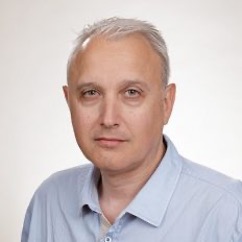
Popov is an acting Professor at the Dept. of Agroecology, Vice-rector of the Agricultural University of Plovdiv, (AUP), Bulgaria. Internationally recognised researcher, expert and adviser, experienced in leading high-profile (inter)national R&D projects in agroecology, organic agriculture and bioeconomy in the EU-27, Balkans, Caucasus, Central Asia and East Africa. Member of the Standing Committee of Agricultural Research (SCAR) at the European Commission (EC). Member of the Advisory Board of the 2nd FOOD 2030 High-Level Event of the European Commission “Research and Innovation for Food and Nutrition Security: Transforming our food systems”, and Viice-Chairman of the LifeWatch ERIC. A National Coordinator and Chairman of the Executive Board of the National Scientific Programme (NSP) of the Ministry of Education and Science (MES) of Bulgaria “Healthy Foods for Strong Bioeconomy and Quality of Life” (2018-2023) and NCP “Smart crop production” (2021-2024).
Leader of the AUP expert group for the execution of the Ministry of Agriculture Technical study “SWOT Analysys of the impact of agriculture on environment and climate”2019-2020 for the Strategic Plan for development of agriculture 2021-2027.
Member of scientific teams in Horizon 2020 and Horizon Europe projects and evaluator at the Research and Executive Agency of the European Commission (EC), expert of the European Training Foundation, the EIT-Food and the FAO and a MES delegate in the EC ‘Shadow committee” for Cluster 6 of the Horizon Europe and the Expert Group for preparation of National Bioeconomy strategy of Bulgaria. A member of the Editorial Boards and the Scientific Committees of Bulgarian and foreign journals, author of 100+ scientific publications, books, manuals, etc.