November 17 – 12:00 pm – 1:00 pm
UNIgreen’s JRC4 – Biodiversity, Forestry, and Agroecology Webinar Series: Episode 9
This event, organized within the UNIgreen JRC4 Living Lab framework, brings together researchers, students, and forest practitioners to discuss aliens and flames – when fire ecology meets invasion ecology.
Thematic
This seminar explores Tropical high elevation ecosystems are hotspots of species diversity and endemism, with the majority of plant diversity sharing a recent origin on an evolutionary scale. The outstanding accumulation of plant diversity in these regions over a short period of time has often been explained by the availability of new habitats, niche differentiation and the influence of geological and climatic changes in the connection and isolation of populations.
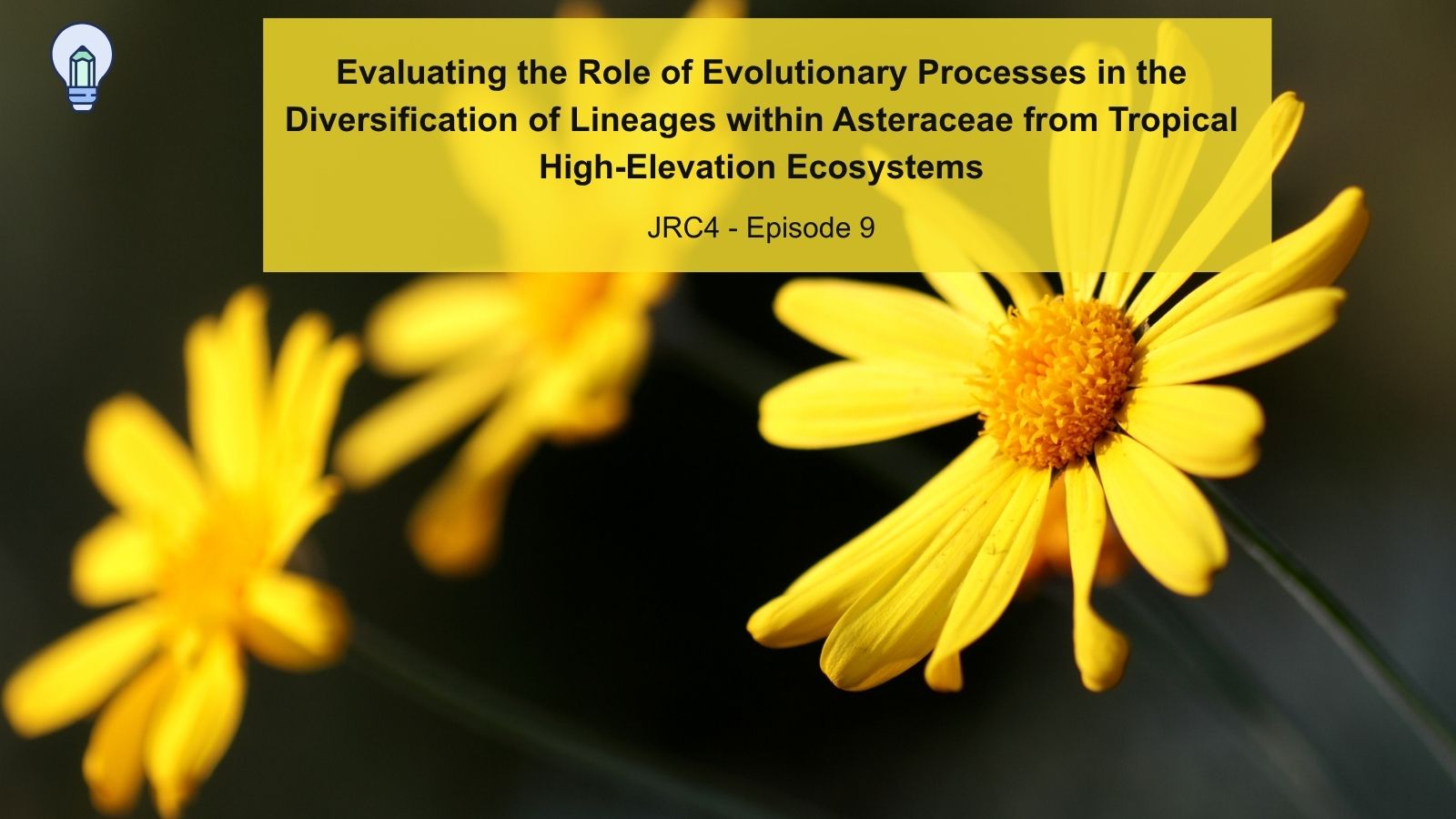
Asteraceae, one of the most diverse plant groups in tropical high elevation hotspots, is a great study system to characterise diversity patterns and determine the main evolutionary processes responsible for plant diversity in these regions. Additionally, the combination of genomic, ecological and morphological data with approaches in phylogenomics, population genomics, demographic modelling and lineage differentiation analyses open the door to the study of evolutionary processes at both the species and population levels. Three Asteraceae genera Oritrophium, Senecio and Dendrosenecio were studied with the aim of extending the knowledge about current diversity and diversification processes behind recently evolved plant groups from tropical high elevation regions. Phylogenomic analyses revealed a recent evolution of the studied plant groups, which evolved after tropical high elevation ecosystems emerged and subsequently diversified likely influenced by Pleistocene climatic oscillations.
Phylogenetic patterns were congruent with the geographic distribution of species, but gene tree and cytonuclear discordances were found in all groups. However, each group showed a different evolutionary history with links between habitat transitions and morphological traits that resembling a pattern of convergent adaptive evolution to habitat; ecologically-based speciation promoted by fine-scale habitat differences in mountainous regions; or lineage differentiation supporting heterogeneous divergence trajectories across the speciation continuum.
When?
On Tuesday, 17 November 2026, join us for an online event, from 12:00 to 13:00 CET with expert speaker and engaging discussions.
Who should join?
Researchers, students, forest managers, and anyone curious about forest ecology and sustainability.
Speaker

Juan Manuel Gorospe
Posdoctoral researcher at the Conservation Biology Research Group – RNM-344, University of Almería
He obtained his PhD in Botany at Charles University in Prague, Czechia. He has participated in projects and carried out research collaborations with academic institutions in Spain, Czechia, Norway, Ecuador, Peru, Germany, Austria and Chile. His research is centered in the study and conservation of plant diversity and has contributed to research fields such as landscape analysis, conservation biology, evolutionary biology, experimental biology, and biogeography. His scientific work employs a multidisciplinary perspective that combines genomic, ecological and morphological approaches to understand which evolutionary processes gave rise to current diversity patterns.