

The UNIgreen SURES Innovation Challenge is underway at partner universities across the alliance, inviting students and recent graduates to turn bold ideas into impactful solutions.
Local competitions at each partner university select finalists, who then compete in the UNIgreen Innovation Challenge Grand Final, held at SupBiotech in Paris between 26 – 30 October 2026.
Agricultural University – Plovdiv
Completed: Fully Completed
Overview
The UNIgreen Innovation Challenge supports early-stage innovative ideas and emerging solutions. Projects submitted to the competition may be at the idea stage. Projects do not need to have a fully developed prototype or market-ready solution. However, applicants must clearly demonstrate the innovative nature of the idea, the scientific or technical foundation of the concept, and the potential feasibility and development pathway.
Key Dates
- Application deadline: 6 March 2026
- Pitching & local selection: 31 March 2026
Focus Areas
- Biochemistry and Biotechnology
- Sustainable Crop Production
- Food Technology, Quality and Safety
- Biodiversity, Forestry and Agroecology
- One Health
- Bioeconomy, Agricultural and Rural Policy
- Plant Breeding
- Responsible Governance, Land Use and Climate Change
Projects may also address topics such as (but not exclusively):
- the reduction of CO2 emissions and pollution,
- supporting the environmental transition of agriculture,
- production of biomaterials, reduction and valorization of agriculture waste,
- reduction of the usage of pesticides and fertilizers,
- crops adaptation to biotic and abiotic stress, monitoring and management of biodiversity,
- preservation of soils and water, protection of plants, animals and human health,
- clean energy, bioeconomy or social innovations will be considered.
Targets
- Students enrolled at Bachelor’s, Master’s, or PhD level at any UNIgreen Alliance partner institution at the time of submission
- Graduates (Bachelor’s, Master’s, or PhD) from UNIgreen Alliance partner institutions who completed their most recent degree no more than one year before the date of first project submission.
Application
Application form needs to be filled in and sent to the Local Coordinator – Ms. Dora Ivanova, [email protected].
Project to represent AUP at the Final in Paris:
Project Title
- Innovative nuzzle design for a sprayer
- Developed and presented by the Aleksander Georgiev (BSc Student)
Project Summary
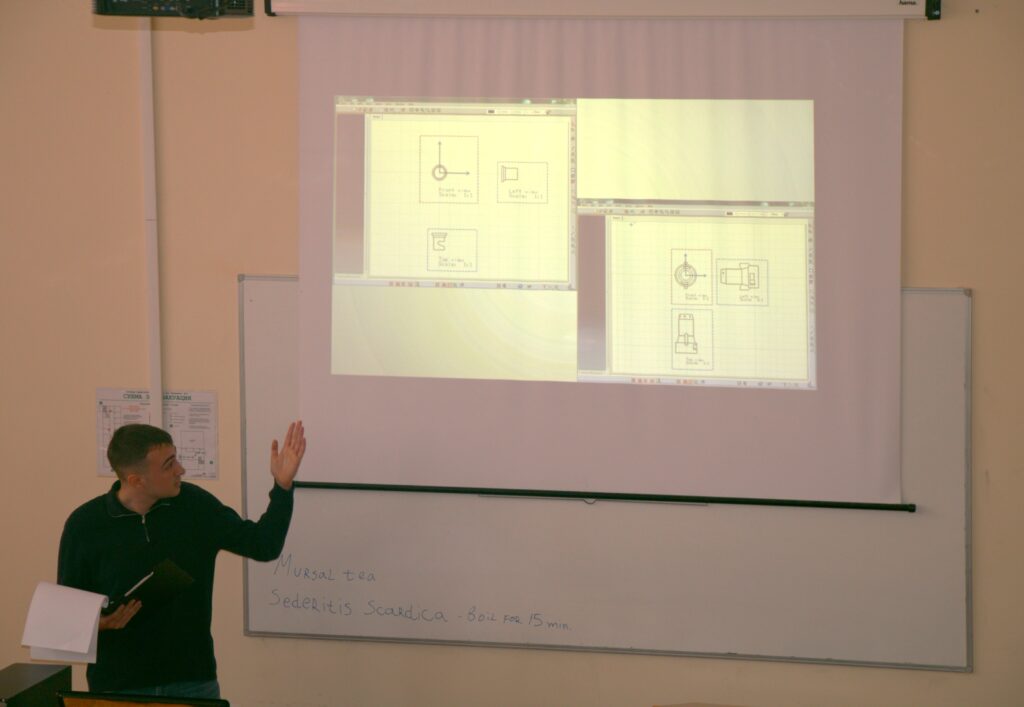
3D printing as a catalyst for a new generation of smarter, more efficient, and more adaptable boom sprayer nozzles — a leap forward for agricultural technology.
The project sets out to reimagine boom sprayer nozzles by harnessing the power of additive manufacturing, transforming a traditionally simple component into a platform for innovation. Using advanced FDM and SLA 3D printing, I am aiming to create prototypes from chemically resistant, wear‑tolerant polymers designed to withstand the harsh realities of agricultural spraying. What makes this approach exciting is the freedom 3D printing unlocks. Unlike conventional injection molding, additive manufacturing allows engineers to sculpt intricate internal geometries, micro‑channels, and turbulence‑inducing features that were previously impossible. These complex structures can dramatically improve spray uniformity, reduce drift, and optimise droplet formation. And because no tooling is required, each design iteration can be printed, tested, and refined within hours — slashing development time and eliminating early‑stage financial risk. The prototypes will undergo rigorous laboratory evaluation, including flow‑rate analysis, spray pattern mapping, and distribution uniformity testing. Once the most promising designs emerge, they will be pushed into real‑world field trials, where performance, durability, clog resistance, and drift reduction will be assessed under genuine agricultural conditions.
Agricultural University of Iceland
Completed: Fully Completed
Overview
This year, participants can also use the same project to take part in two international competitions simultaneously. In addition to the UNIgreen SURES Challenge Lab, participants will have the opportunity to join the Bio-based Innovation Student Challenge – Europe (BISC-E), a European competition focused on the bioeconomy and sustainable solutions.
Key Dates
- Application deadline: 30 April 2026
- Workshop: 18 May 2026
- Pitching & local selection: 19 May 2026
Focus Areas
- Sustainable agriculture
- Biotechnology and the Bioeconomy
- Food and Food Security
- Climate Solutions and the Circular Economy
Targets
- Students at the BSc, MSc, or PhD level
- Recent graduates within one year of graduation
- Students in the vocational program in agricultural sciences
Applications must be submitted by completing the application form no later than 30 April 2026 here: UNIgreen Innovation Challenge – Application Form – Fill in form
Application
Applications must be submitted by completing the application form no later than 30 April 2026 here: UNIgreen Innovation Challenge – Application Form – Fill in form.
The competition contact is Jóhanna Gísladóttir: [email protected].
Projects to represent AUI at the Final in Paris:
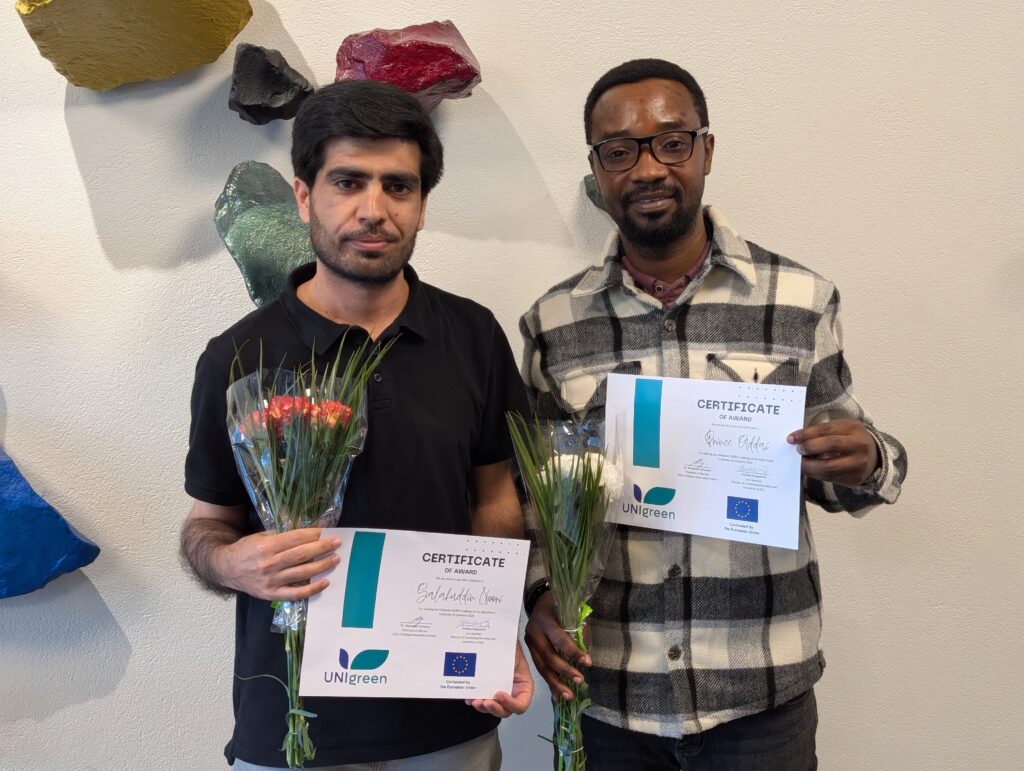
Title: ArcticBioLoop: AI-Powered Bio-Digital Soil Intelligence System for Climate-Smart Agriculture
Group Name: ArcticBioLoop Innovation Team
Abstract: Global food security and safety remain major challenges, threatening livelihoods. In cold-climate regions, especially in Iceland, the situation is devastating, driven by climate change, soil degradation, and short growing seasons. These factors create unfavourable conditions for crop production, forcing the country to spend millions of dollars on food imports. Moreover, amid global tensions and food shortages, the country’s food supply could be affected if the import channel is obstructed. In this regard, this project seeks to develop and implement ArcticBioLoop Technology, which integrates AI self-control systems with ClimateSmart soil (made from basalt powder and biochar) to support sustainable crop production and contribute significantly to the fight against climate change in closed-loop systems and at the field level. The system will enable farmers and stakeholders to make data-driven decisions that improve crop productivity, optimise resource use, and enhance climate resilience. This innovation aims to establish a sustainable, cost-effective, and scalable solution to transform agriculture and land management in Iceland and other Arctic regions. Thus, it will contribute to the development of resilient food systems while supporting global efforts towards climate adaptation, carbon reduction, and sustainable land management, which are within the SDG framework on no poverty, food safety and security, and life on land.
Project Summary: ArcticBioLoop is an innovative AI-driven system designed to improve sustainable agriculture in cold-climate regions, especially Iceland. The project combines IoT-enabled soil sensors and artificial intelligence to improve food production while monitoring soil health and carbon dynamics. Thus, ArcticBioLoop seeks to support farmers in year-round food production, reduce resource losses, and enhance carbon sustainability. This project adopts a five-phase approach and will be implemented over the next 4-5 years, with phases including installation, piloting, expansion, training, and global adoption. This innovation will be implemented in collaboration with key stakeholders, including government representatives in the Ministry of Agriculture, the Agricultural University of Iceland, farmers’ associations, and key NGOs in the country.
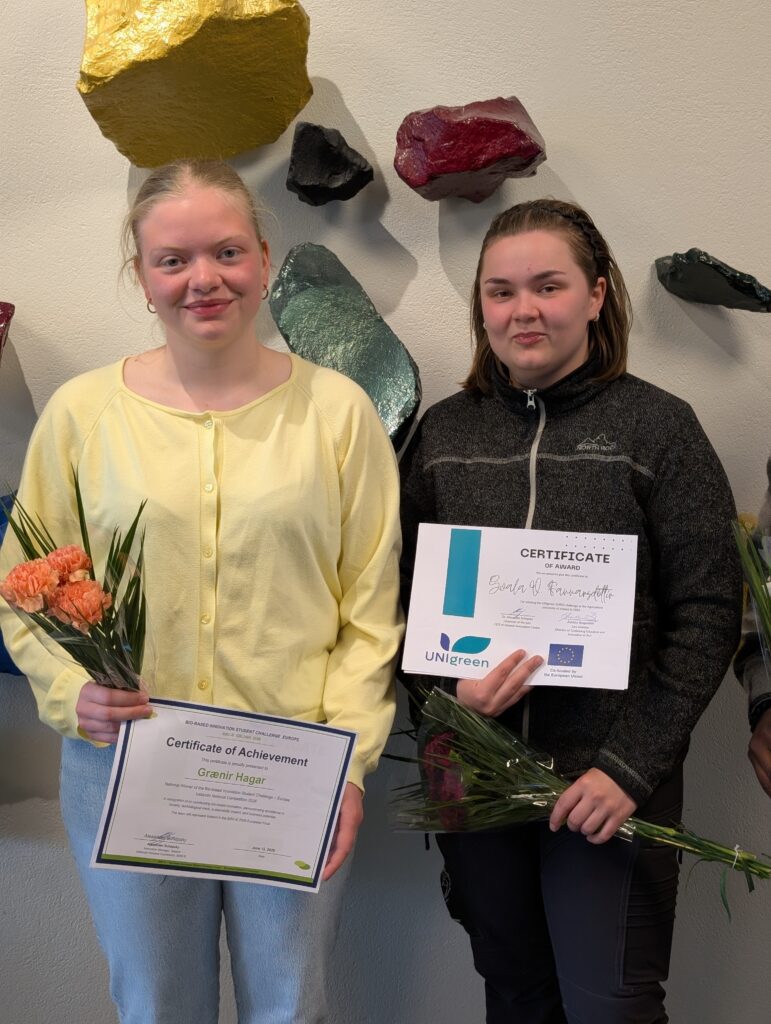
Project name: Grænir Hagar
Abstract: Grænir Hagar is an innovative sustainability project that combines sheep farming, land restoration, and carbon offsetting in Iceland. The project aims to improve grazing management by reducing pressure on vulnerable, erosion-prone land while increasing grazing in healthier ecosystems. Customers can sponsor sheep through a subscription model, directly supporting farmers and sustainable land management. This creates environmental, economic, and social benefits by restoring ecosystems, increasing carbon sequestration, and strengthening the connection between consumers and agriculture. By bridging the gap between farmers and consumers, Grænir Hagar offers a practical and engaging approach to environmental responsibility.
Project summary: Grænir Hagar is a business idea focused on sustainable grazing and ecosystem restoration in Iceland. The concept allows individuals and companies to sponsor sheep as part of a controlled grazing system that supports carbon offsetting and land recovery. The project addresses three main challenges: soil erosion, demand for carbon offsetting, and limited income opportunities for sheep farmers. Through research-based grazing strategies, the business aims to improve land quality while generating new revenue for farmers. In the future, a digital platform and GPS tracking will increase customer engagement and transparency.
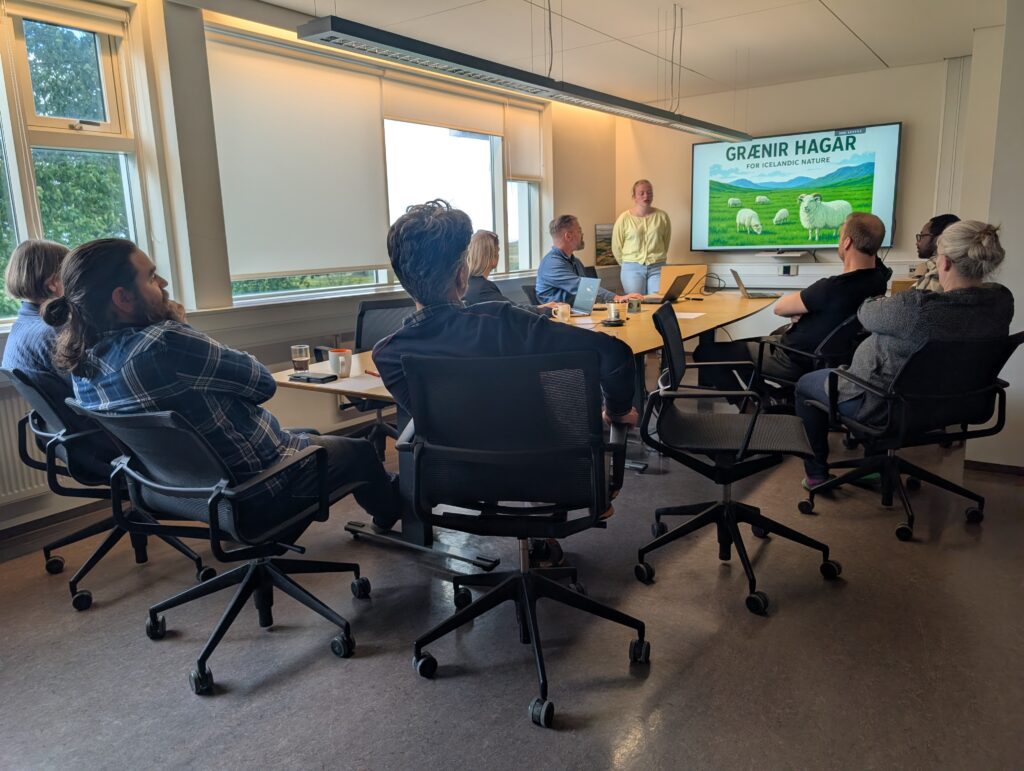
Team: Heiðrún Hrund Sigurðardóttir, Sigríður Ósk Jónsdóttir and Svala Valborg Fannarsdóttir
Polytechnic University of Coimbra
Completed: Fully Completed
Overview
The Institute for Applied Research (I2A) of the Polytechnic University of Coimbra promoted a presentation of the “UNIgreen Innovation Challenge” as part of a session to publicise funding programmes geared towards applied research and business creation.
I2A director Carla Henriques presented the challenge, which aims to stimulate entrepreneurship and innovation, support the development of ideas in their early stages and promote interdisciplinary and inter-institutional teams within the Alliance. Students and Graduate can participate in teams of 1 to 6 members in various eligible areas. At the local level, each institution will submit up to 2 projects.
Key Dates
- Presentation: 25 February 2026
- Application deadline: 13 April 2026
- Local selection: 3 June 2026
Focus Areas
- Various eligible areas
Targets
- Students
- Alumni who graduated less than a year ago can participate
Application
Selected Projects
- Rec3O2, HydroKat, Circity, and LUSOHOP
Projects to represent PUC at the Final in Paris:
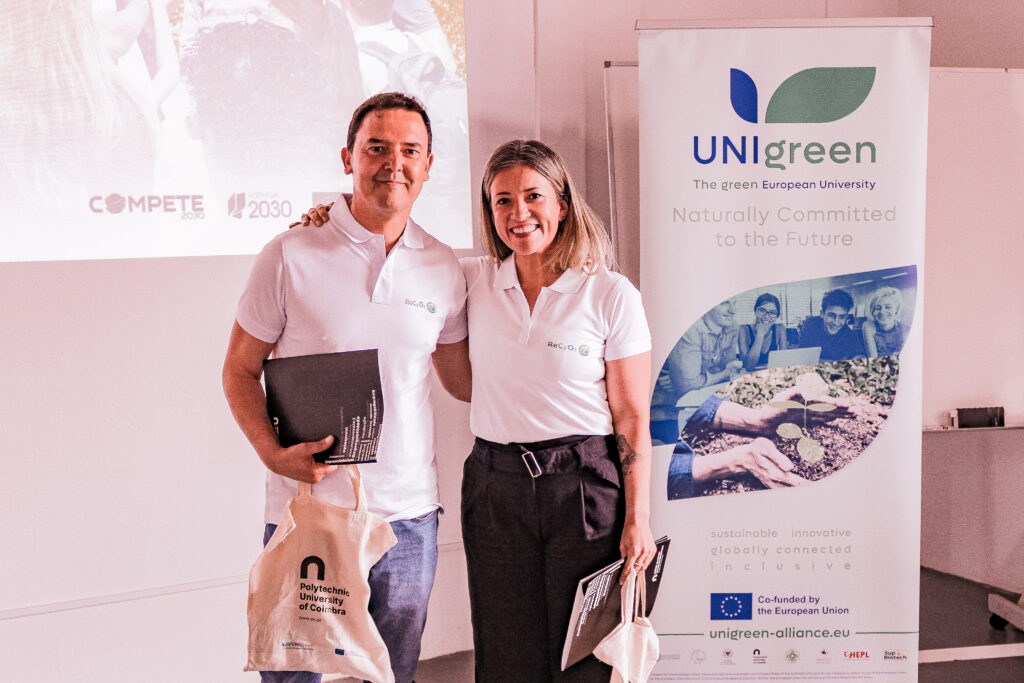
1st Place: Rec3O2
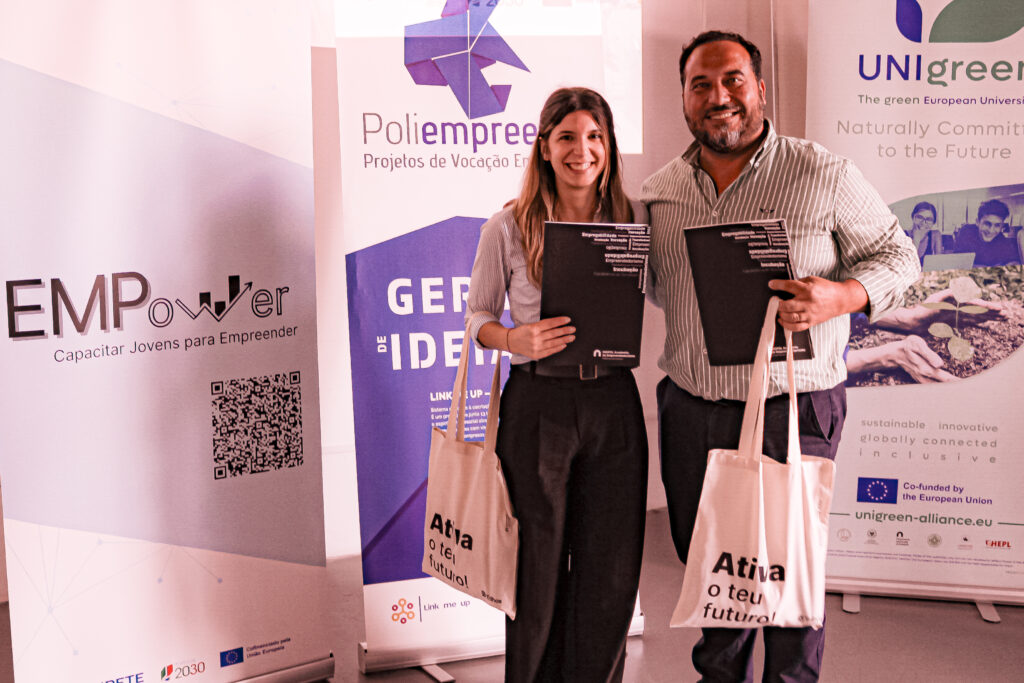
2nd Place: HydroKat
SupBiotech Engineering School of Biotechnology
Completed: Fully Completed
Overview
SupBiotech offers the S.B.I.P. (SupBiotech Innovation Projects) programme to there student in biotechnology to work on a real-world project management experience. This innovative programme runs over four years, starting in the second year, and involves around ten weeks of immersion each academic year.
Key Dates
- Local Selection: 30 September 2025
Focus Areas
- Biochemistry and Biotechnology
- Sustainable Crop Production
- Food Technology, Quality and Safety
- Biodiversity, Forestry and Agroecology
- One Health
- Bioeconomy, Agricultural and Rural Policy
- Plant Breeding
- Responsible Governance, Land Use and Climate Change
Targets
- Students final-year (5th year)
Results
This year, four innovative projects managed by final-year (5th year) students have been selected submitted projects to compete in the SBIP-UNIgreen Challenge. The €1,000 development grant goes to Cap’siRNA and Les ChicTips.
For more information, check out the following LinkedIn Post here:
University-College of the Province of Liège
Completed: Fully Completed
Overview
Food at Work is the Belgian edition of the European Ecotrophelia competition. Organised by FEVIA, it challenges students to develop eco-innovative food products for the future. Participants are required to create an entirely new product, design its packaging, and assess the commercial and economic feasibility of bringing it to market, including its manufacturing and commercialization
Key Dates
- Technical file : February 2026
- Jury presentation : March 2026
- Public presentation : April 2026
Focus Areas
- Biochemistry and Biotechnology
- Food Technology, Quality and Safety
- Bioeconomy, Agricultural and Rural Policy
- One Health
- Responsible Governance, Land Use and Climate Change
Targets
Students of the 4th year (master degrees) in Industrial Engineering
Application
Contact: [email protected]
University of Modena and Reggio Emilia (Italy)
Completed: Fully Completed
Overview
The UNIgreen Innovation Challenge is designed to support and empower students across the UNIgreen Alliance by fostering a dynamic and inspiring environment that encourages entrepreneurship and innovation. It offers participants the opportunity to develop and refine their ideas, experiment with new solutions, and actively contribute to the green transition while strengthening their academic and professional growth. The Challenge also promotes collaboration across disciplines and partner institutions, encouraging cross-cultural teamwork, knowledge exchange, and the development of a strong and interconnected UNIgreen student innovation community.
Key Dates
- Submission: Before April 23rd, 2026 at 17:00 (CET).
- Selection of five teams, April 24th, 2026
- Project training and mentoring for the five teams April 2026.
- Selection of two the finalist teams on May 13th, 2026
- Mentoring and further improvement for the two selected teams, from June to October 2026.
- Final competition with the other UNIgreen Alliance institutions in late October 2026.
Focus Areas
- Biochemistry and Biotechnology
- Sustainable Crop Production
- Food Technology, Quality and Safety
- Biodiversity, Forestry and Agroecology
- One Health
- Bioeconomy, Agricultural and Rural Policy
- Plant Breeding
- Responsible Governance, Land Use and Climate Change
Targets
- Students enrolled at Bachelor’s, Master’s, or PhD level at UNIMORE at the time of submission;
- Teams may consist of one to six members.
- All team members must individually meet the eligibility criteria outlined above.
Application
The Application Form can be found here.
Contact: [email protected]
Project to represent UNIMORE at the Final in Paris:
Project Name: MycoSphere
Developed and presented by Laura d’Alessandro, Alberto Ciannarella, Aurora Popoli, Linda Tumiatti, Michele Dolara
Project Name: MethaStop
Developed and presented by Federica Puddu, Syrine Yakoubi, Sofia Di Stefano, Viola Molinari
University of Almería
Completed: Fully Completed
Overview
UNIgreen Alliance is launching a call for innovative project proposals in the areas of Sustainable Agriculture, Green Biotechnology, and Environmental and Life Sciences. The challenge is showcased as part of the Feria de las Ideas programme at the University of Almeria.
Key Dates
- Phase 1: Feria de las Ideas and Submission of entries for the UNIgreen Innovation Challenge: Before 6th and 22nd April.
- Phase 2:
- Selection of five finalist teams, 27 April
- Project training and mentoring for the 5 teams during May 2026.
- Selection of two finalist teams by the end of May 2026
- Phase 3: Mentoring and further improvement for the two selected teams, during June 2026.
- Phase 4: Final competition with the other UNIgreen Alliance institutions in late October 2026.
- Phase 5: Follow-up and support provided by the University of Almería during November 2026.
Focus Areas
- Biochemistry and Biotechnology
- Sustainable Crop Production
- Food Technology, Quality and Safety
- Biodiversity, Forestry and Agroecology
- One Health
- Bioeconomy, Agricultural and Rural Policy
- Plant Breeding
- Responsible Governance, Land Use and Climate Change
Targets
- Students enrolled at Bachelor’s, Master’s, or PhD level at UAL at the time of submission;
- Graduates (Bachelor’s, Master’s, or PhD) from UAL who completed their most recent degree no more than one year prior to the date of first project submission.
Application
The Application Form can be found here.
Contact: [email protected] , [email protected]
Project to represent UAL at the Final in Paris:
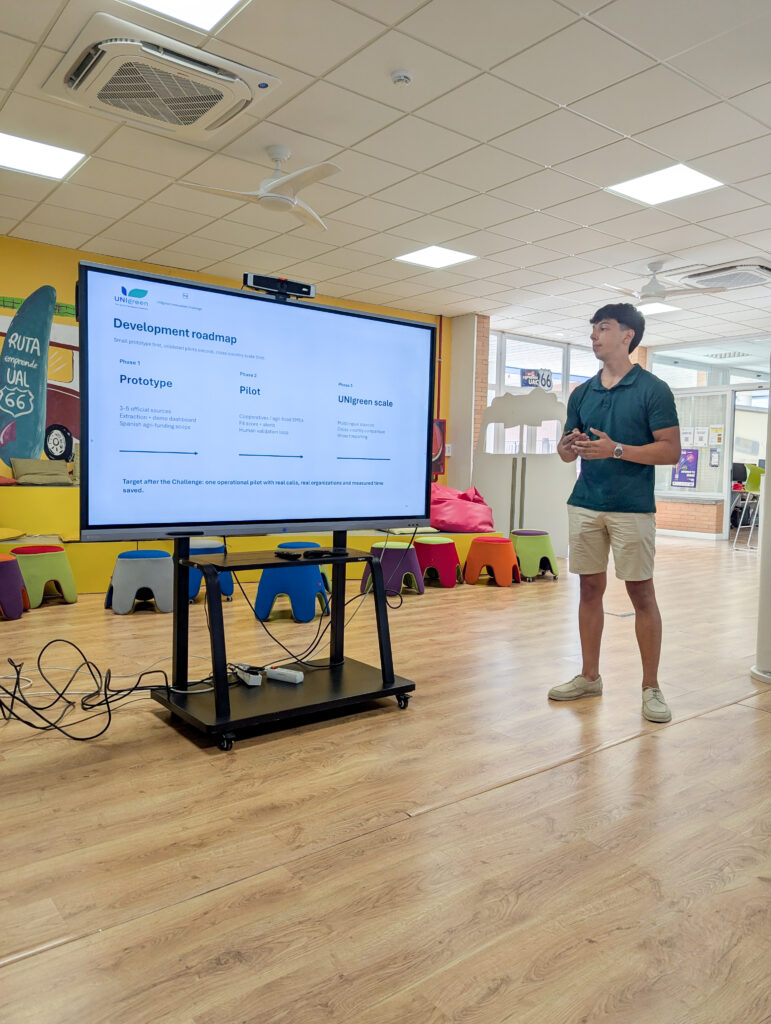
Project Name: Grantwise Agro
Developed and presented by Oliver García Murillo
Project summary: The agricultural sector needs to invest in water efficiency, renewable energy, digitalisation and climate adaptation. However, public funding is scattered across official sources, written in administrative language and often subject to short application deadlines.
Grantwise Agro is not simply a grant search engine. It is an infrastructure for interpreting, prioritising and accessing funding opportunities, combining controlled web scraping, data standardisation, natural language processing, agricultural taxonomies, matching and scoring to generate actionable recommendations.
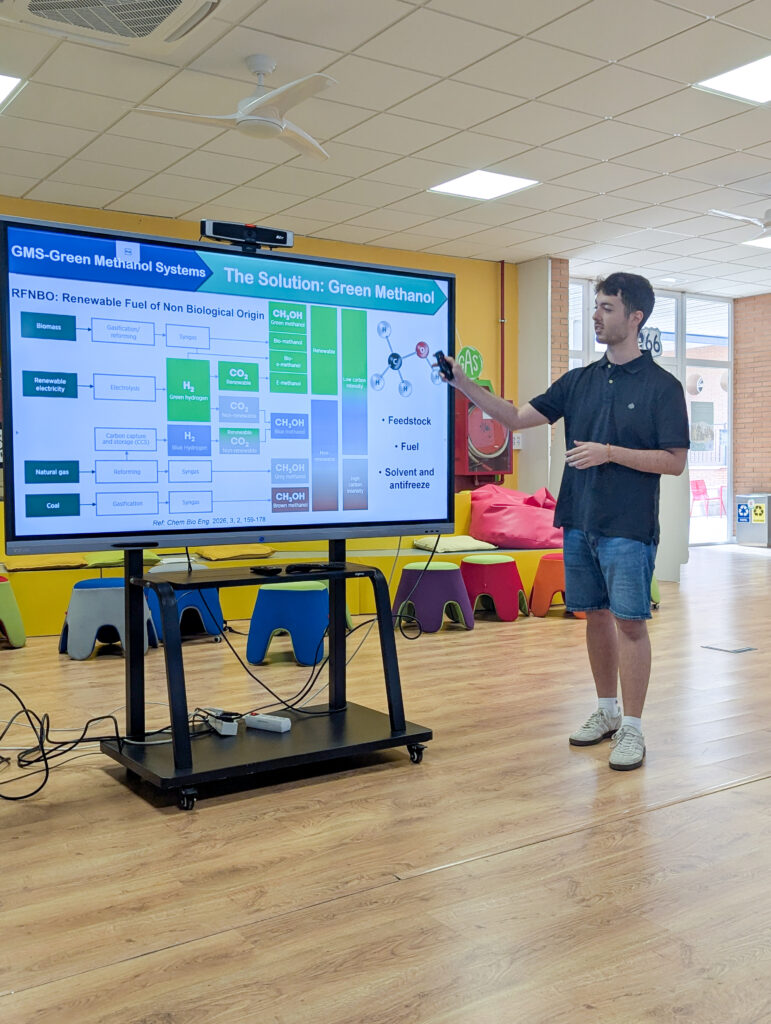
Project Name: MethaEnergy
Developed and presented by Francisco José Martín
Project summary: In Almería’s “sea of plastic,” the sun is our most abundant resource, yet farmers remain at the mercy of oil price volatility. MethaEnergy breaks this dependency by transforming surplus solar energy and biogas waste into green e-methanol: a renewable liquid fuel that can be produced on-site and used just like diesel, without the associated carbon emissions.
Warsaw University of Life Sciences
Completed: Fully Completed
Overview
The UNIgreen Innovation Challenge offers students and graduates the opportunity to develop their own ideas, test new solutions and collaborate within an international academic environment.
Key Dates
- Competition Announcement: 16 March 2026
- Submission of entries: 9 April 2026
- Selection: 15 April 2026 (5 best projects by the jury)
- Project Mentoring: 8 May 2026
- Competition final and selection: 16 March 2026 (2 best projects)
Focus Areas
- Biochemistry and Biotechnology
- Sustainable Crop Production
- Food Technology, Food Quality and Safety
- Biodiversity, Forestry and Agroecology
- One Health Concept
- Bioeconomy, Agricultural Policy and Rural Development
- Plant Breeding
- Environmental Management and climate change
Targets
Application
- dr Olaf Horbańczuk
- dr Magdalena Kowalewska
- Karolina Czarnecka
- mgr inż. Agata Jojczyk
- dr hab. Marcin Ratajczak, prof. SGGW