
-
BIP on Sustainable Food Production and Innovation
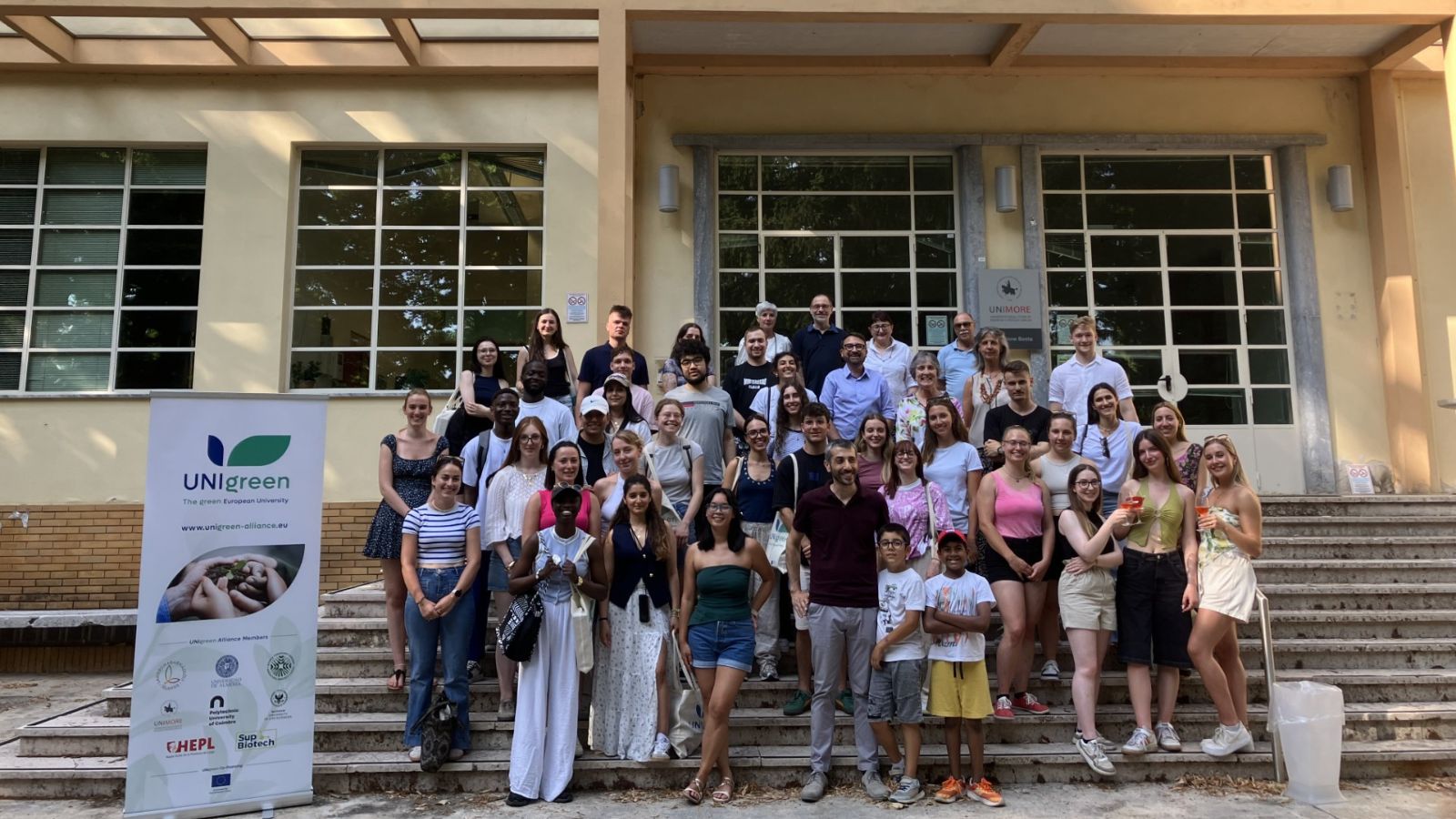
The University of Modena and Reggio Emilia (UNIMORE) recently hosted a Blended Intensive Programme (BIP)on Sustainable Approaches in Food Production and Processing, welcoming students across Europe and from UAL, SupBiotech and SGGW for a two week immersive experience in the heart of Italy’s most iconic food region.
Designed for Master’s, students, the programme offered participants a unique opportunity to deepen their understanding of key topics in food quality and sustainability, including applied microbiology, meat quality, sustainable intensification, packaging innovation, and agricultural biodiversity.
As part of the hands-on component, participants explored the rich culinary heritage of Emilia-Romagna through guided technical visits to some of its most prestigious producers. They toured the Parmigiano Reggiano cheese factory and the consortium, a Traditional Balsamic Vinegar acetaia, and a cured meat production facility, gaining first-hand insight into the craftsmanship and innovation behind world-renowned products.
In the classroom, students experimented with future-forward food technologies, such as testing breadsticks made with algae and learning about the use of insects as sustainable protein sources. The interactive sessions blended science, tradition, and creativity, fostering a deeper awareness of the environmental challenges facing the agri-food sector and how innovation can help overcome them.
One of the highlights of the two weeks was the Food Innovation Challenge, a friendly yet intense competition in which international teams of students worked together to design new, sustainable food products and processes, often combining ingredients and traditions from their countries of origin.
The competition unfolded in two phases:
- A local qualifying round, where teams from UNIgreen presented their projects.
- Followed by an international final, featuring students from UPV – Universitat Politècnica de València (Spain), CZU – Czech University of Life Sciences Prague (Czech Republic), and the University of Caen Normandie (France).
The winning team of the local round — Team 6 — applied insights from their “Food and Insects” class to create a highly original and sustainable concept. They proudly represented UNIgreen in the international final and came just a few points behind CZU Prague, earning a well-deserved second place.
“All teams were exceptionally well-prepared and brought energy, creativity, and collaboration to the table,” said the Prof. Andrea Pulvirenti of UNIMORE, the organizer of the BIP. “The competition was fair and exciting, and it provided a rich, hands-on learning experience for everyone involved.”
With its blend of academic excellence, local heritage, and forward-thinking innovation, the BIP programme reaffirmed UNIMORE’s role as a key player in advancing sustainable food systems in Europe and beyond.
-

Blackboard Platform Training for UNIgreen Staff
UNIgreen is organising a series of trainings on the use of the Blackboard platform, a widely used online learning management system (LMS) that provides tools for faculty and students to engage in digital educational environments.
The course was designed as an introduction to Blackboard, where basic concepts and functionalities are addressed. Through case studies and simple exercises, participants become familiar with the interface and the fundamental tools offered by the platform.
At the same time, participants learn how to create and manage content within Blackboard, such as uploading documents, setting up units of study, and creating assignments for students. Moreover, the course will cover how to use the various communication tools, such as discussion forums and internal emails, to interact with students and colleagues.
The course includes practical examples to teach how to structure a course efficiently, how to use the assessment and feedback features, and how to take advantage of the collaboration options offered by Blackboard. It also explains how to assign homework, grade assignments, and keep track of evaluations.
The goal is to provide participants with a solid foundation to start using Blackboard confidently and effectively in their teaching and administrative activities within the scope of the UNIgreen Alliance.
-
Boosting Circular Economy in Southeast Asia: CIRCULAR Capacity-Building Programme in Malaysia, Laos, and Cambodia
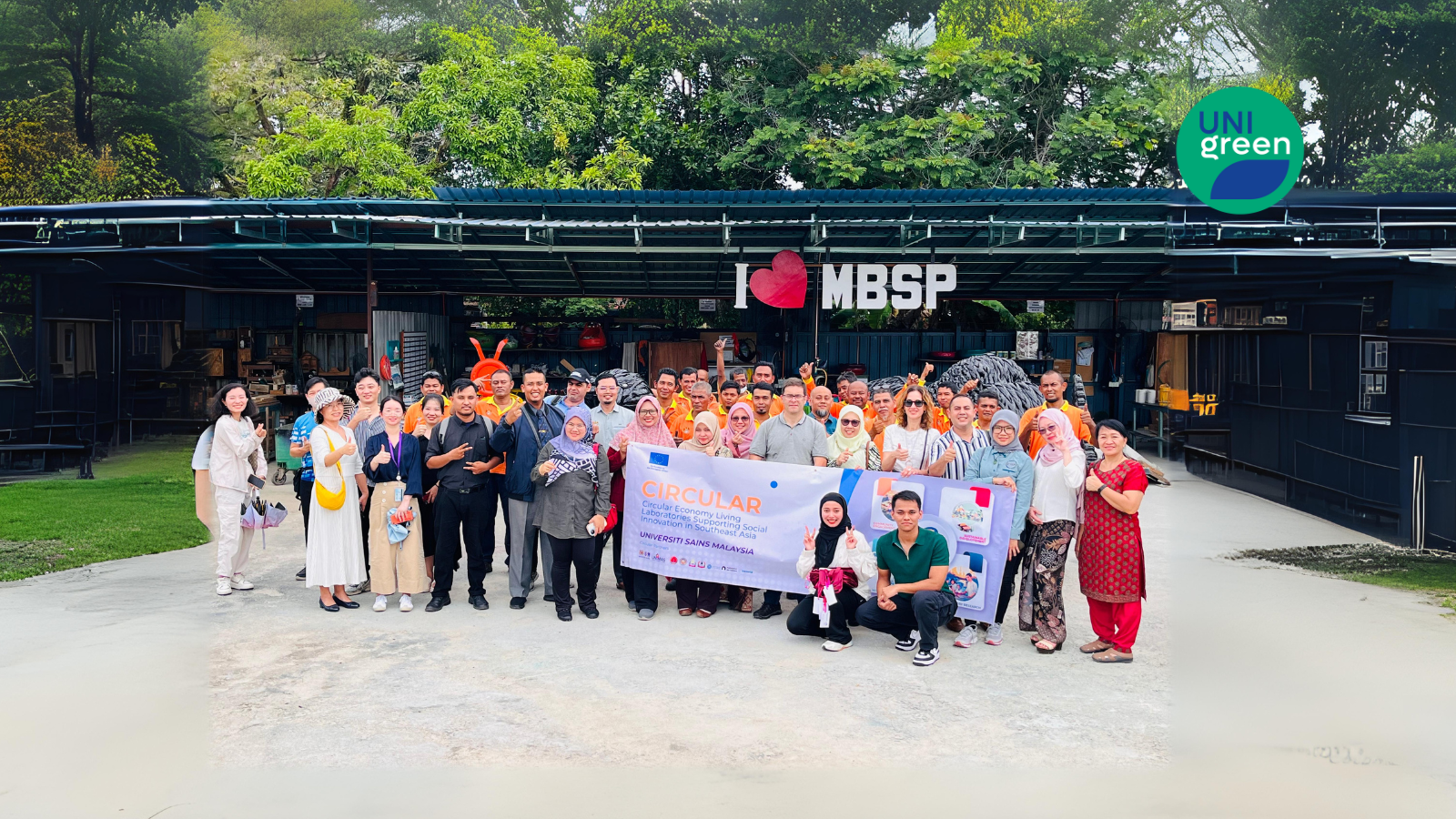
The CIRCULAR Project proudly announces the successful implementation of its Capacity-Building Programme across our six partner universities in Malaysia, Laos, and Cambodia. These dynamic bootcamps have brought together over 165 enthusiastic participants, marking a major milestone in our mission to foster sustainable practices and circular economy principles in Southeast Asia.
Over the past months, vibrant and engaging bootcamps were held at each university, drawing a diverse crowd of academics, researchers, and Master or PhD students. The reach of the programme was further extended by welcoming experts from associated partners, public and private institutions, and other local universities, creating a truly collaborative learning environment.
The bootcamp training sessions were delivered by our trainers from the University of Almería (UAL) and the Polytechnic University of Coimbra (PUC) and featured a Blended Bootcamp approach: Participants experienced a mix of active learning, collaborative techniques, and a learn-by-doing approach, making the sessions both engaging and educational. Theoretical training sessions on circular economy, real-world case studies, embedding circular economy into teaching and circular economy and community-based research were held over the 3-day training events at each institution as well as participants engaged in practical hands-on workshops and site visits to experience sustainable circular economy practices in real life.
By adopting a train-the-trainers methodology, the Capacity-Building Programme has paved the way for future editions to be delivered by Southeast Asian universities themselves, ensuring the sustainability of this initiative beyond the CIRCULAR project.
Feedback from participants has been highly positive, with many pointing out the programme’s impact and relevance.
We invite you to watch the video, which captures highlights from the six bootcamps across Malaysia, Laos, and Cambodia. Join us in celebrating this significant achievement and our collective journey towards a sustainable future for Southeast Asia.
-

Canada joins Horizon Europe
In a landmark agreement, Canada has joined the expanding group of non-EU countries associated with the EU’s prestigious research and innovation programme, Horizon Europe.
This milestone was celebrated today as Iliana Ivanova, Commissioner for Innovation, Research, Culture, Education and Youth, and François-Philippe Champagne, Canadian Minister of Innovation, Science and Industry, signed the agreement. This partnership allows Canadian researchers and organisations to participate in the programme on equal footing with their EU counterparts.
With this agreement, Canadian entities can now join and lead research consortia, contributing to and benefiting from the collaborative projects under Pillar II of Horizon Europe. This pillar focuses on addressing global challenges such as climate change, energy, the digital economy, and health.
Currently, 19 countries are associated with Horizon Europe, encompassing a diverse range of members from the European Economic Area, acceding and candidate countries, European Neighbourhood Policy countries, and other third countries meeting specific criteria. Recently, formal negotiations concluded with the Republic of Korea, and discussions are ongoing with Switzerland, Japan, and Singapore.
Canada’s association with Horizon Europe marks a significant step forward in global research collaboration, promising to drive innovation and address some of the world’s most pressing challenges through joint efforts and shared expertise.
More details: https://ec.europa.eu/commission/presscorner/detail/en/ip_24_3626
-

Celebrating the UNIgreen Day
Today we celebrate the 1 year anniversary of the signature of the UNIgreen project.
One year ago, representatives of the universities involved in the UNIgreen alliance met in Brussels to sign a declaration of accession to the initiative.
The Rectors’ meeting was organized by the International Relations Office of the Belgian partner university – Haute Ecole de la Province de Liège (HEPL).
17 February became a symbolic beginning of UNIgreen – The Green European University.
To commemorate the date, the universities associated with the alliance set this day as the UNIgreen Day.For this occasion, we interviewed the 8 rectors of the alliance members to reflect on words that best represent UNIgreen.
We let you discover the result by watching the video : -
Celebrating UNIgreen: Highlights from the Summer Festival
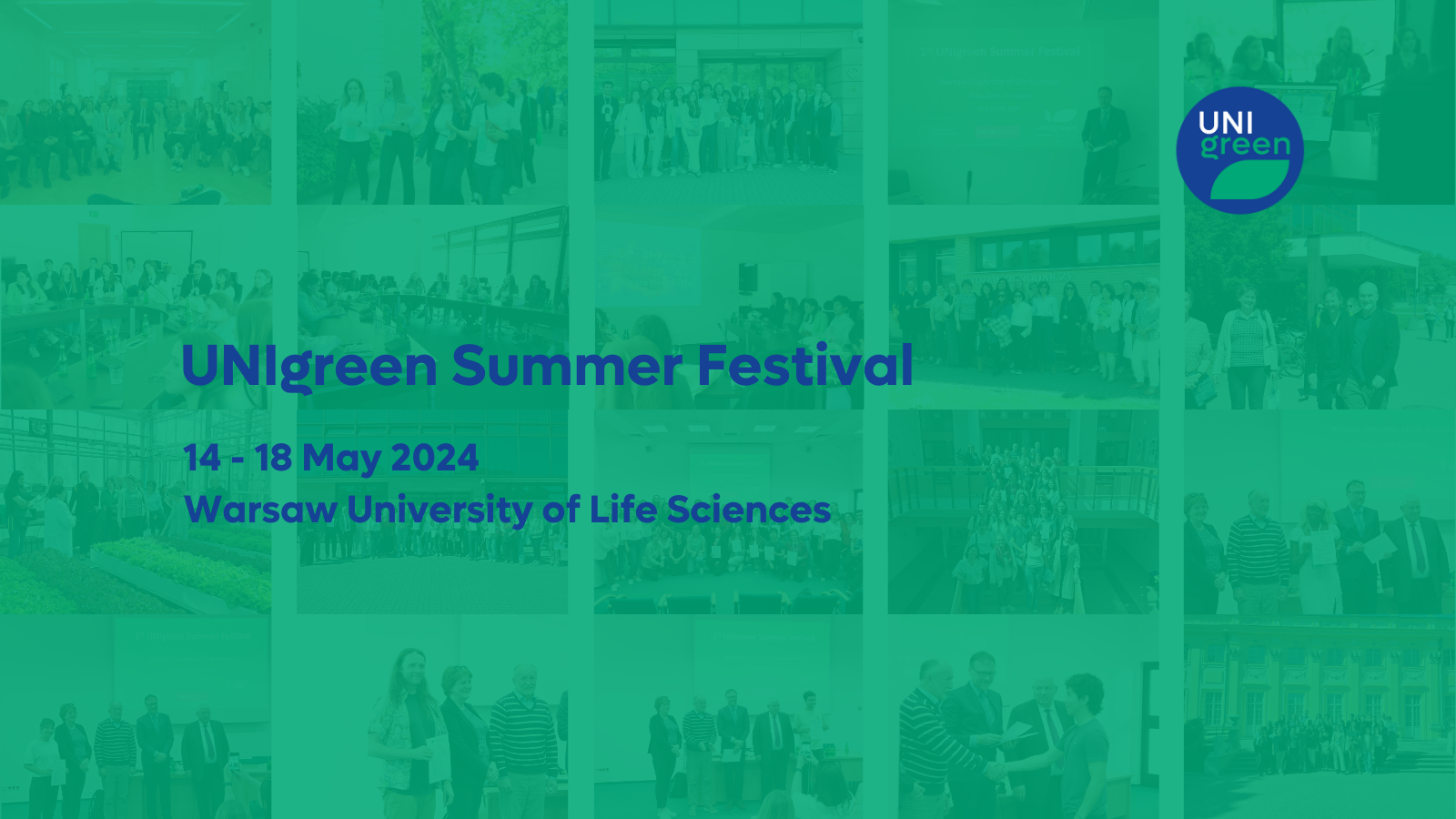
The inaugural UNIgreen Summer Festival was organised by the Warsaw University of Life Sciences, from 14 to 18 May 2024.
With a rich, diversified programme, the event brought together members from the UNIgreen Community: students, academics, and non-teaching staff got together for a combination of formal and informal gatherings that aimed at strengthening the UNIgreen spirit and sense of belonging, and at fostering dialogue at multiple levels.
Indeed, the UNIgreen Summer Festival agenda encompassed different debates, presentations, visits and a vibrant cultural component that celebrated our roots and heritage through concerts and live performances.
Moreover, the UNIgreen Student Forum was an informal session focused on giving a voice to students and understanding their opinions, ideas and recommendations for the organisation of future UNIgreen events, having resulted in many important insights for the UNIgreen Alliance and, in particular, the Communication Unit.
We look forward to continuing this journey together, building on the success of this festival to create even more impactful and engaging events in the future. Stay tuned for updates and opportunities to get involved in the next UNIgreen events taking place in the upcoming academic year!
-
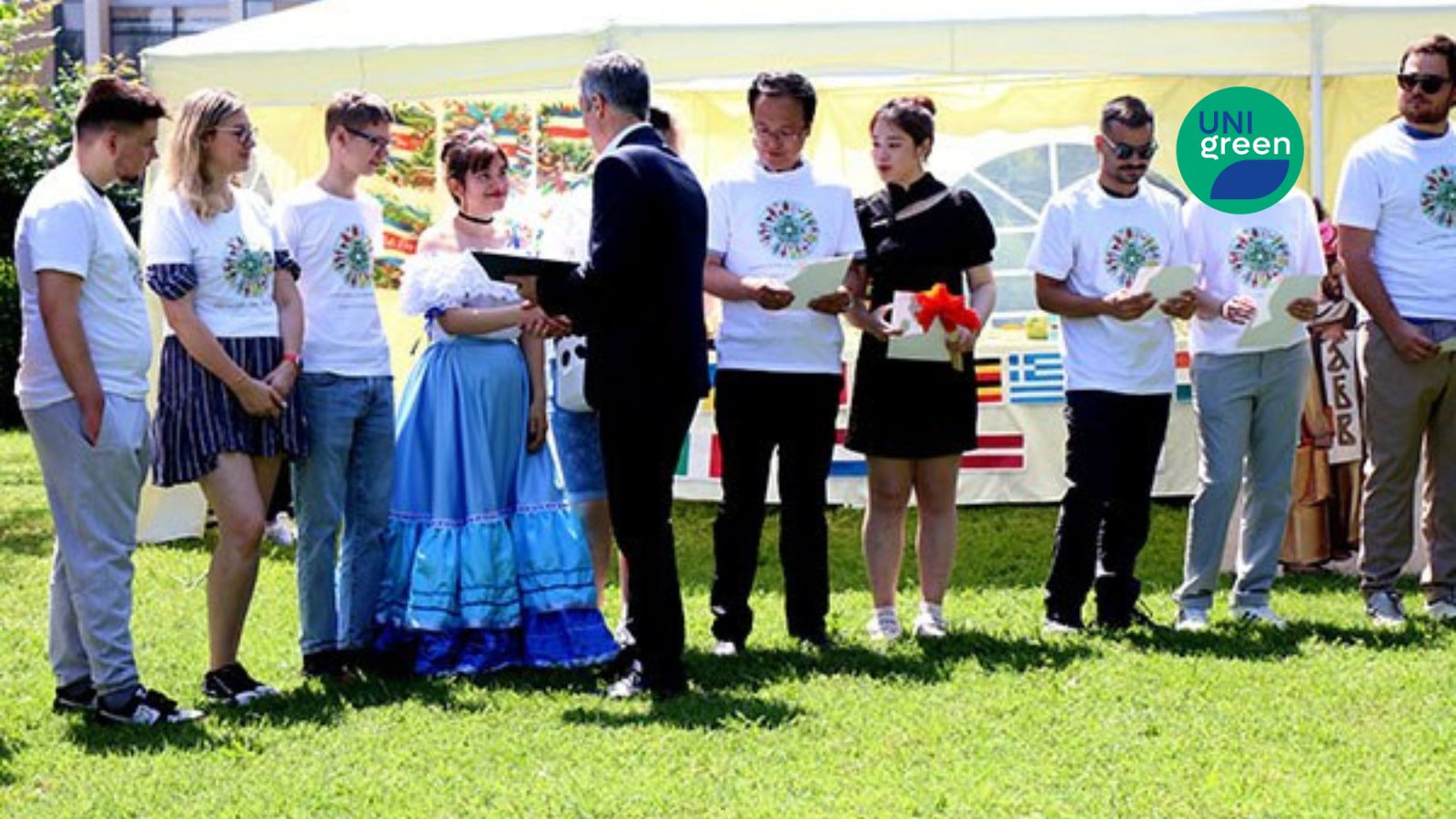
Celebration of cultural diversity at AUP
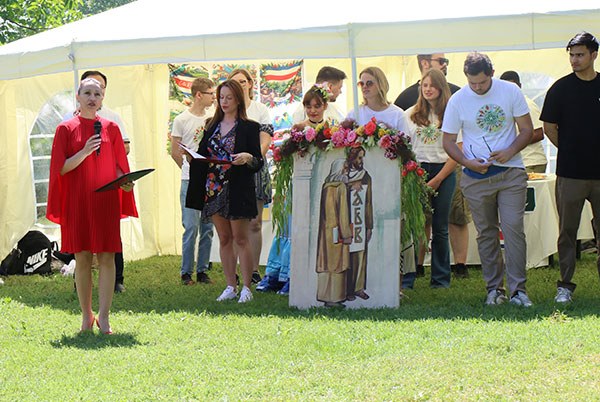
On May 23, 2025, the Agricultural University – Plovdiv held a festive event celebrating important occasions: the Day of Saints Cyril and Methodius (May 24) and the initiative “Bouquet of Nationalities”. The event took place within the university’s 80th anniversary framework and brought together students, faculty, guests, and representatives of cultural and educational institutions.
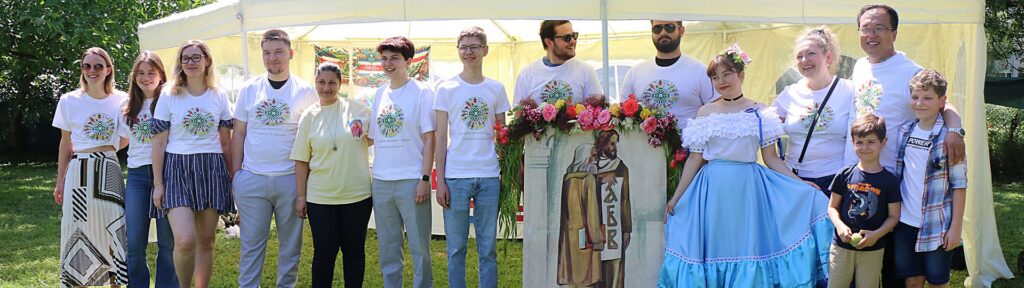
A welcome was extended by the Rector of the university, Assoc. Prof. Boryana Ivanova, emphasized the institution’s role as a centre of academic excellence, scientific innovation, and intercultural dialogue.
An important event highlight was the celebration of cultural diversity through the initiative “Bouquet of Nationalities,” presented by the Vice-Rector for Scientific and International Affairs, Prof. Dimo Atanasov. The initiative brought together students from over fifteen countries, who shared their unique cultural heritage through traditional music, dance, and cuisine. This vibrant exchange underscored the Agricultural University’s commitment to multiculturalism, international integration, and inclusive education.
The promotion of diversity and intercultural understanding is not only central to the university’s mission but also aligned with broader European values and policy priorities. In this context, the Agricultural University – Plovdiv proudly affirms its membership in the UNIgreen European University Alliance, an academic consortium committed to fostering green education, sustainability, inclusion, and diversity as fundamental guiding principles. The university’s active engagement in this alliance reflects its strategic orientation toward international cooperation, ecological responsibility, and social equity within the European Higher Education Area.
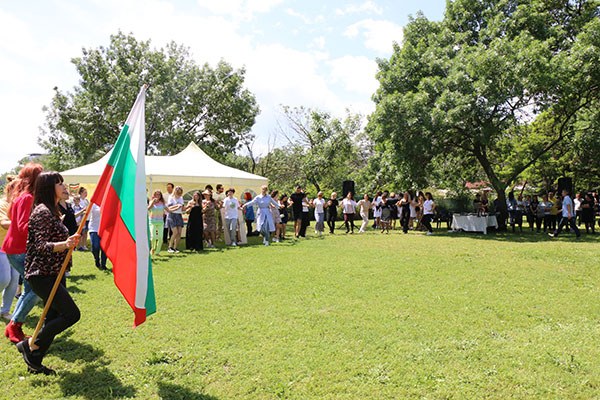
The celebration concluded with a traditional Bulgarian horo, embodying the spirit of community, continuity, and shared cultural values.
As it commemorates its 80th anniversary, the Agricultural University – Plovdiv continues to strengthen its position as a leading academic and research institution in the field of agriculture and rural development. Firmly rooted in national tradition yet oriented toward global challenges, the university fosters interdisciplinary collaboration, innovation-driven education, and dynamic partnerships to pursue a more inclusive, sustainable, and knowledge-based future.
-
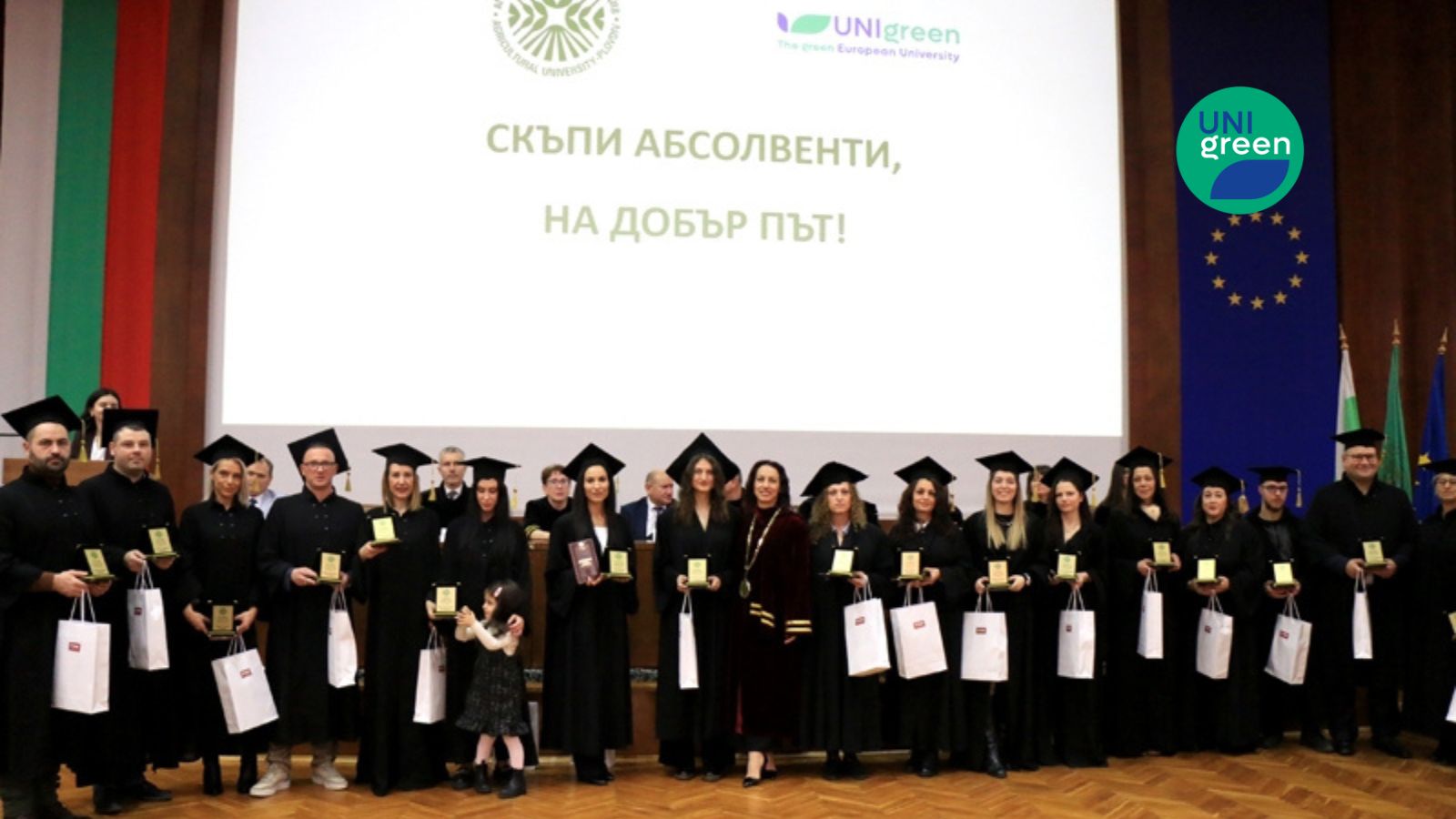
Class of 2024 Graduation Ceremony at AUP
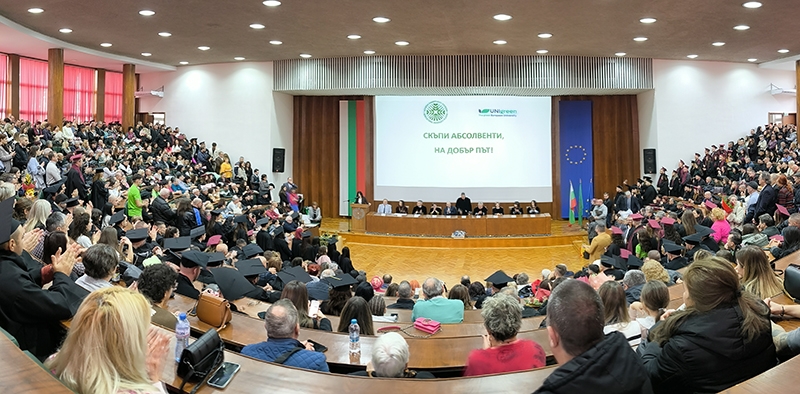
The Graduation Ceremony for the Class of 2024 was held at the Agricultural University – Plovdiv
On December 12, 2024, Plovdiv, a solemn graduation ceremony for the Class of 2024 was held at the Aula-Maxima Auditorium of the Agricultural University – Plovdiv. A total of 653 university studentsreceived their diplomas, among which 373 successfully completed the Bachelor’s degree and 280 – the Master’s degree.
The average grade for the undergraduates of all 17 majors, full-time and part-time, is a very good 4.86, and the average grade of the state exams is a very good 5.06. The graduates from 19 majors in seven professional fields graduated with an average grade of study – a very good 5.71 and an average grade of state exams – an excellent 5.64.
65 undergraduates received their diplomas with excellent grades, 4 of which with complete excellence, and 50 graduates received their complete excellent diplomas. Among them was the host of the ceremony Plamena Dobreva, Plant Protection major.
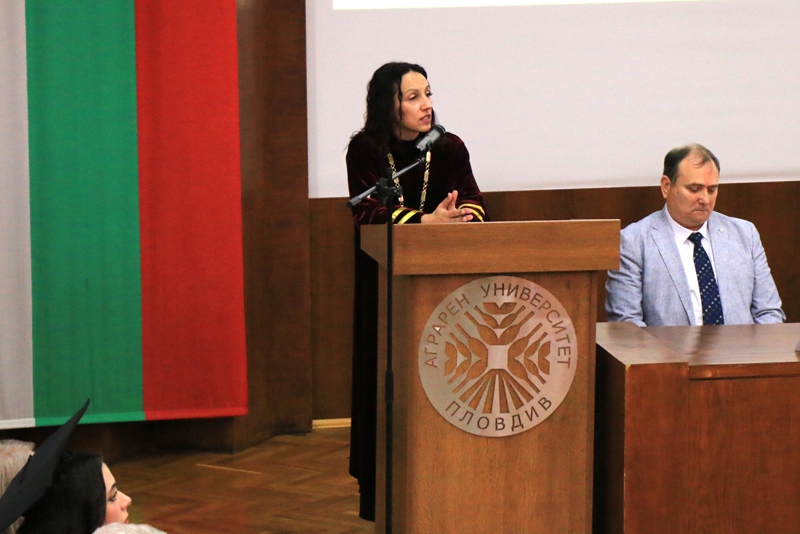
In her welcoming speech to the graduating students, the Rector of the Agricultural University Assoc. Prof. Dr. Boryana Ivanova stated: “Today is a solemn day of realized dreams and a new stage in life of professional realization and career development. Dear graduating students, you had the privilege and pleasure of studying at a university that today is a modern, national and European, educational, research and innovation center. Well integrated into the European educational space and UNIgreen partner with a significant contribution to the sustainable, intelligent growth of the agricultural sector, the tourist business, and the development of the regions.” She emphasized the leading role of the university in agricultural science, education and business in Bulgaria and abroad, as well as the consolidated leadership positions of the university in the professional fields of Crop Breeding, Plant Protection and Livestock Breeding according to the rating system of higher education institutions in Bulgaria. In conclusion, Assoc. Prof. Dr. Ivanova wished the graduating students a successful realization and a good journey.
Official guests of the celebration were Prof. Dr. Violeta Bozhanova – President of the Agricultural Academy, Mrs. Ivanka Todorova – Secretary General of the National Agricultural Advisory Service, Dr. Mariana Tcholakova – Honorary Consul of Germany in Plovdiv, Mr. Korhan Küngerü – Consul General of Turkey in Plovdiv, Dr. Yang Tian – Education Advisor, Embassy of China, Rectors of Plovdiv Higher Schools, Dr. Momchil Stanishev – Director of the Association for the Promotion of Agricultural Cooperation between China and the Central and Eastern European countries, representatives of the Board of Trustees of AU, local authorities, Regional Department of Education – Plovdiv, agricultural business, vocational high schools.
Special guests at the ceremonial promotion were rectors of the Agricultural University – Plovdiv, who have left a mark on its history: Assoc. Prof. Dr. Georgi Moskov – Rector of AU 1995-1999,Corresponding Member Prof. Dr. Yordanka Kuzmanova – Rector of AU 1999-2007. and Prof. Dr. Dimitar Grekov – Rector of AU 2008-2015.
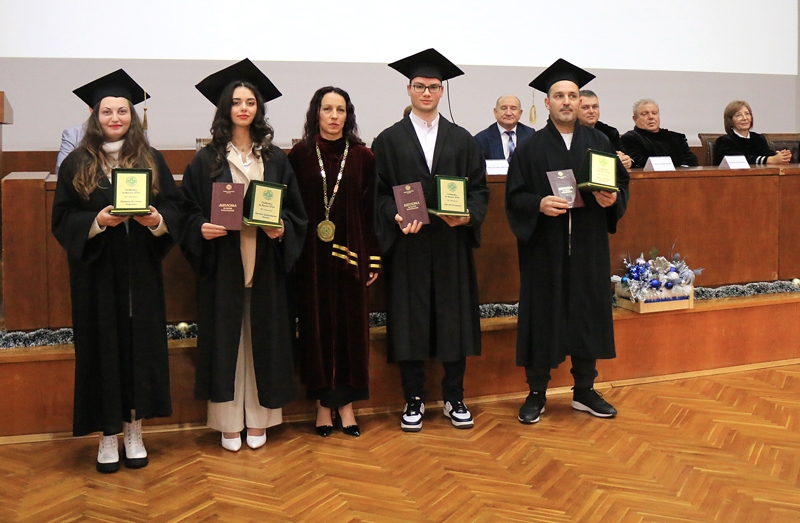
This year’s bachelor’s degree winners from the class of 2024 are four – Miglena Gercheva, Plant Protection major, Mariyana Georgieva, Business Economics major, Dmitry Gospodinov, AgriculturalEngineering major and Georgi Gidishki, Economics and Management of Regional Development major. They graduated with an excellent 6.00 from the course of study and 6.00 from the state exam.
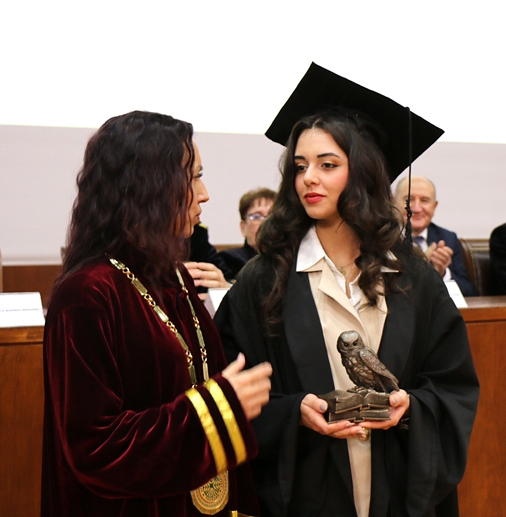
Assoc. Prof. Dr. Boryana Ivanova presented the traditional Rector’s Award to Miglena Gercheva from the Plant Protection major, who is continuing her education at the Agricultural University in the Master’s course Integrated Plant Protection and to Dmitry Gospodinov from the Agricultural Engineering major.
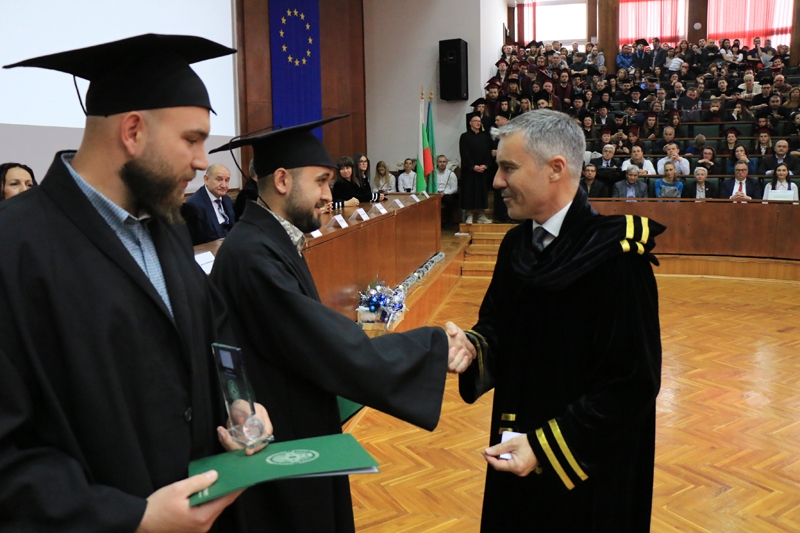
Crystal plaques for “Most successful Erasmus+ student of the class of 2024” received Bozhidar Iliev and Stanislav Raychev from Agricultural Engineering major by Prof. Dr. Dimo Atanasov, Vice-Rector for Scientific and International Activities and Institutional Coordinator of the Erasmus+ Program.
The university’s long-standing partners from the company BASF presented all the honorees with original gifts on their graduation.
At the ceremony, the Management and the Academic community of the Agricultural University – Plovdiv expressed their gratitude and recognition to professors Malgozhata Berova, Doicho Dimov and Emilia Mihailova for their long-term contribution to the development of the Agricultural University – Plovdiv and agricultural science in Bulgaria.
The leader of the class of 2024 and winner of the Rector’s Award, Miglena Gercheva, thrilled the audience with her speech and thanked on behalf of herself and her colleagues for the acquired valuable knowledge and experience.
Mariyana Georgieva from the Business Economics major and all AU graduating students pronounced the graduation oath.
Mr. Stefan Dimitrov, Chairman of the AU Board of Trustees, congratulated the young colleagues and wished them success in their chosen profession.
A special award was honoured to Zdravko Zhelev, Agricultural Engineering major, third-year student – gold medalist in the discipline 50 m back at the National University Swimming Championship 2024.
The name of the Agricultural University – Plovdiv was also popularized through the sports successes of the children from the swimming club “Higher Institute of Agriculture“ with coach Mila Meleva – state champions for 2024. They deservedly received their diplomas and gifts on the stage at the Auditorium.

The vocal performances of Nikolay Ivanov from the Academy of Music, Dance and Fine Arts “Prof. Asen Diamandiev” evoked a palette of emotions in all present, and the Varna Dance of the Student Dance Group “Thracian Youth” demonstrated the refined beauty of Bulgarian folklore.
-
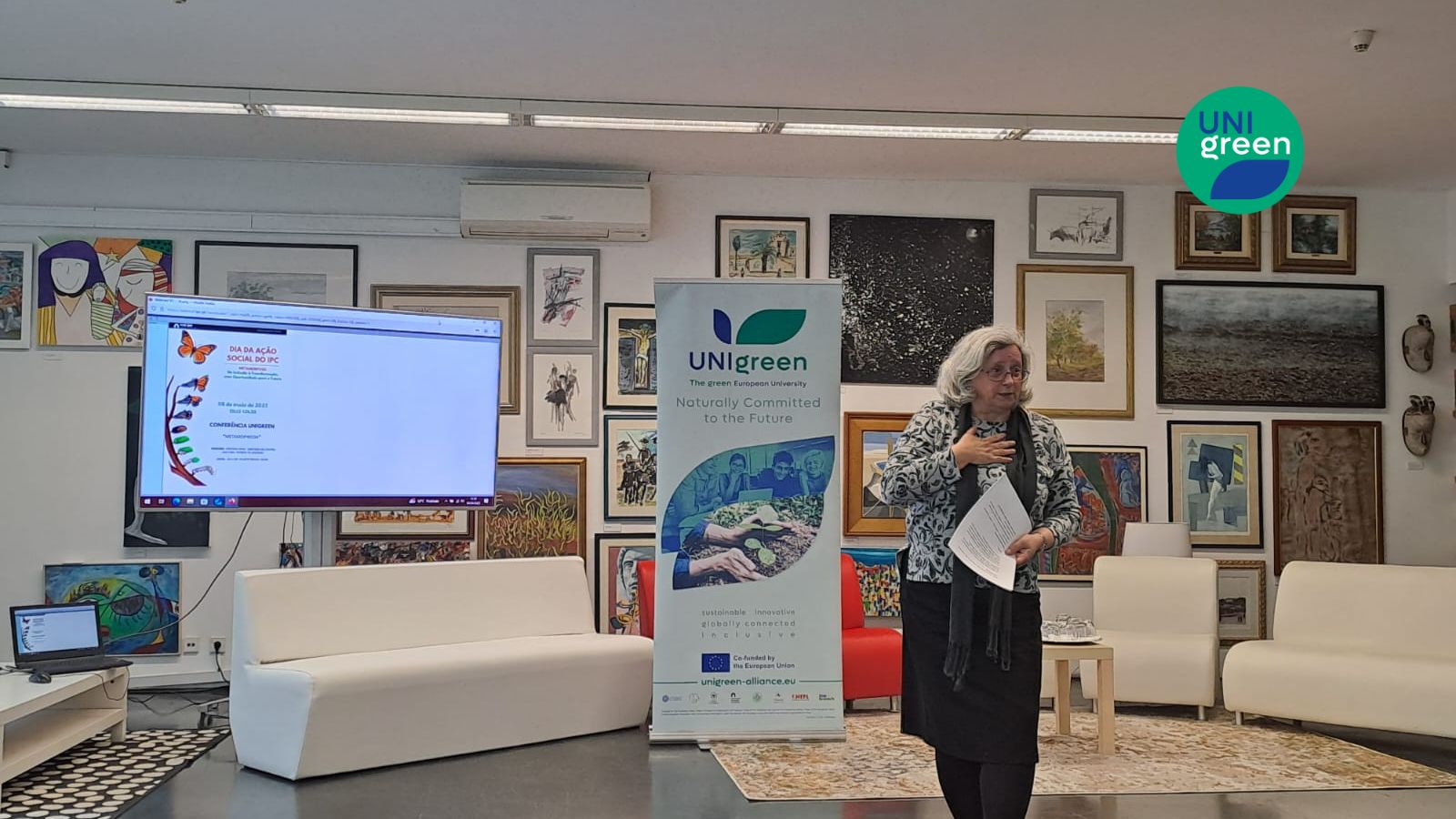
Conference on Metamorphosis promotes gender equality and respect at PUC
Professor Cristina Faria, director of the Penedo da Saudade Cultural Centre of the Polytechnic University of Coimbra (PUC), held a conference entitled ‘Metamorphosis: From inclusion to transformation, an opportunity for the future’, as part of the PUC’s Social Action Day programme, which took place at ISCAC.
At the session, after the presentation of the work carried out by UNIgreen’s WP5 group, concepts and attitudes that support the transformation of this European University into a truly inclusive and multicultural institution were discussed using a quiz, taking into account, among other aspects, the issues of gender equality and respect for difference’. Regarding the subject of the conference, Cristina Faria said that ‘the metamorphosis of any institution is based on its capacity for transformation. For a diverse, inclusive and multicultural UNIgreen, we have to move towards this metamorphosis, understanding what needs to be done to successfully realise this metamorphosis.’
-
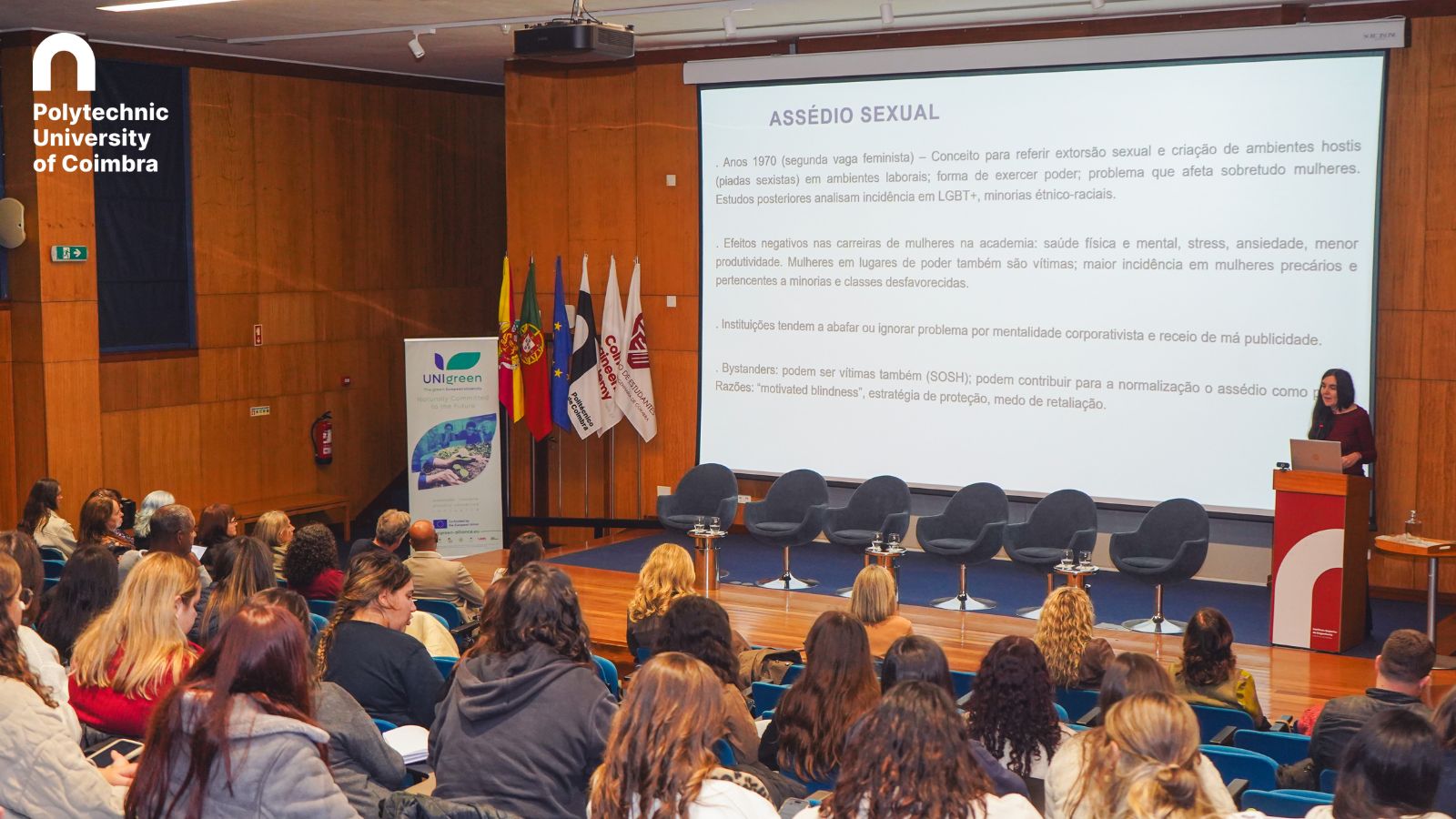
Debates discrimination and harassment in higher education
Around a hundred people took part in the 2nd Gender Equality and Non-Discrimination Meeting: reflect, prevent and act, which was held on 12th November at the Higher Institute of Engineering of the Polytechnic University of Coimbra (PUC).
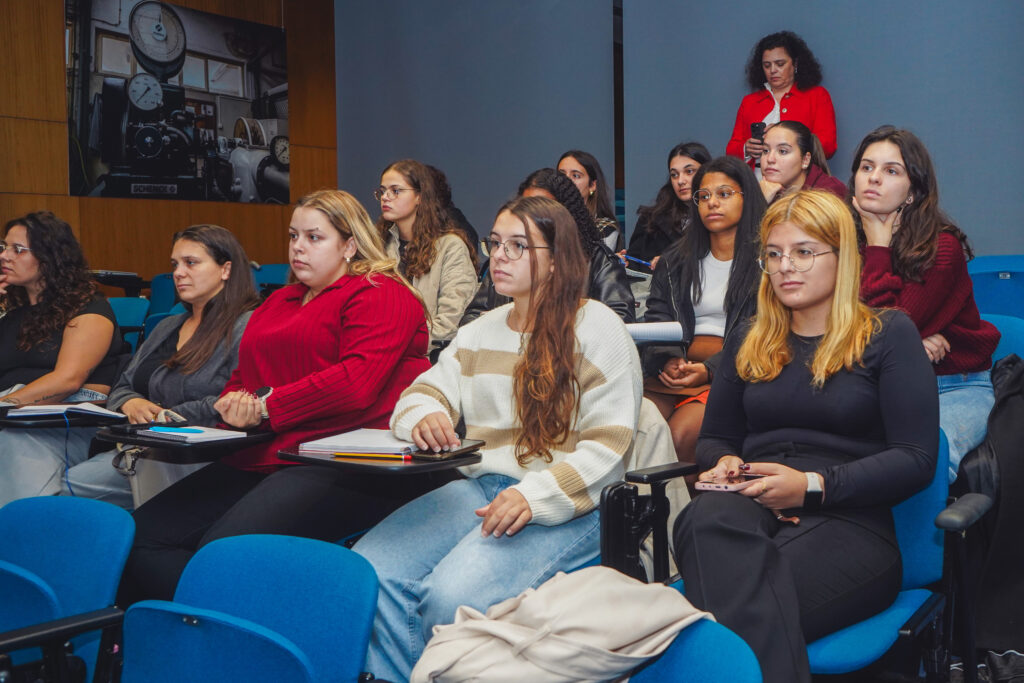
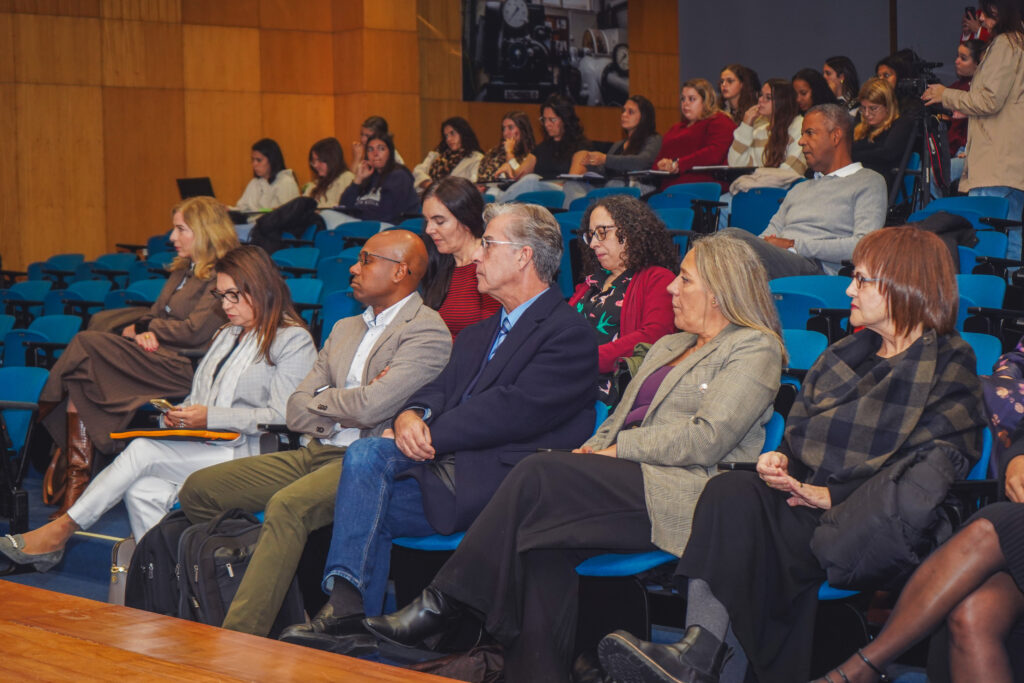
Organised by PUC’s Commission for Gender Equality and Non-Discrimination, the event aimed to promote critical reflection and debate on issues such as abuse, sexual harassment and other forms of discrimination, with a special focus on the academic context.
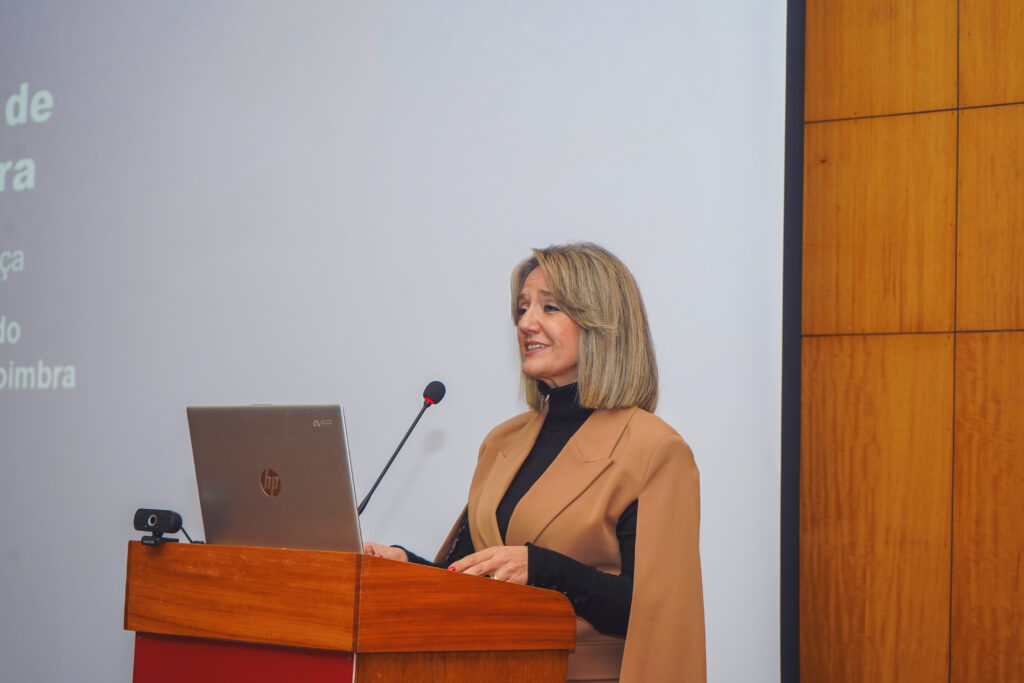
Over the coming weeks, awareness-raising sessions will be held in various PUC departments, led by representatives from WP5. These sessions aim to present and discuss the topic of intersectionality, promoting dialogue and the sharing of perspectives between students and teachers. At the same time, posters, flyers and other awareness-raising materials developed by the students of ‘Design for Them’ will be distributed, encouraging collective reflection on diversity, inclusion and equality in higher education.
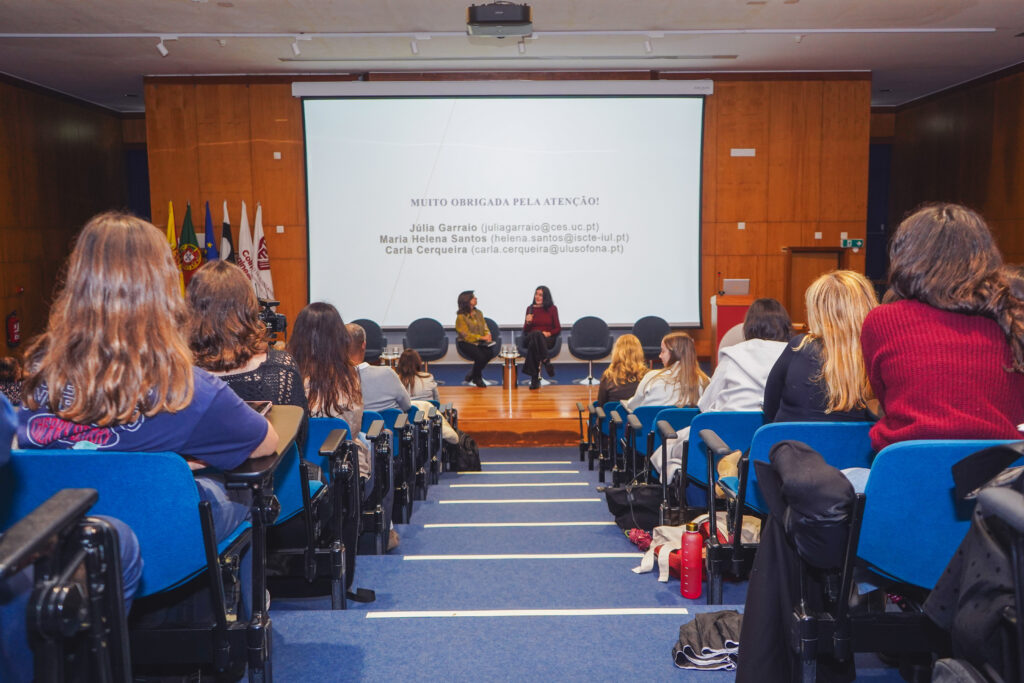
Highlights of the programme included the conference entitled “Abuse, Sexual Harassment and Discrimination: some reflections based on a study of the Portuguese Academy‘ by Júlia Garraio, a researcher at the Centre for Social Studies at the University of Coimbra (CES/UC), and the panel ’Abuse, Harassment and Discrimination: contexts, vulnerabilities and strategies”, with the participation of several guests.
-
EC pushes for boost in Biotechnology
On 20 March 2024, the European Commission proposed a series of targeted actions to boost biotechnology, which is one of the scientific areas in which UNIgreen specialises.
Among the actions proposed are the reinforcement of biotech-related skills through upskilling and reskilling opportunities, as well as enhancement of research infrastructures thanks to the development of the Industrial Biotechnology Innovation and Synthetic Biology Accelerator.
At the same time, the Commission is committed to stimulating market demand for bio-based products by ensuring they are recognised for their lower environmental impact compared to traditional petrochemical alternatives.
These new initiatives solidify the role of biotechnology, which the European Commission considers to be “one of the most promising technological areas of this century” due to the contributions it offers to “modernise (…) agriculture, forestry, energy, food and feed sectors and industry”.
Since biotechnology can also help achieve “a more competitive and resilient EU, that provides better healthcare to its citizens, and succeeds in its green and digital transitions”, it is expected to play an important role as the green transition continues in the EU.
If you are interested in studying biotechnology or update your skills to better answer labour market needs, make sure to follow us on social media and subscribe to our Quarterly Newsletters to be the first to know about new courses and training opportunities in biotechnology.
The complete EC Press Release is available here: https://ec.europa.eu/commission/presscorner/detail/en/ip_24_1570
-
EcoFest at UNIMORE: students for sustainability
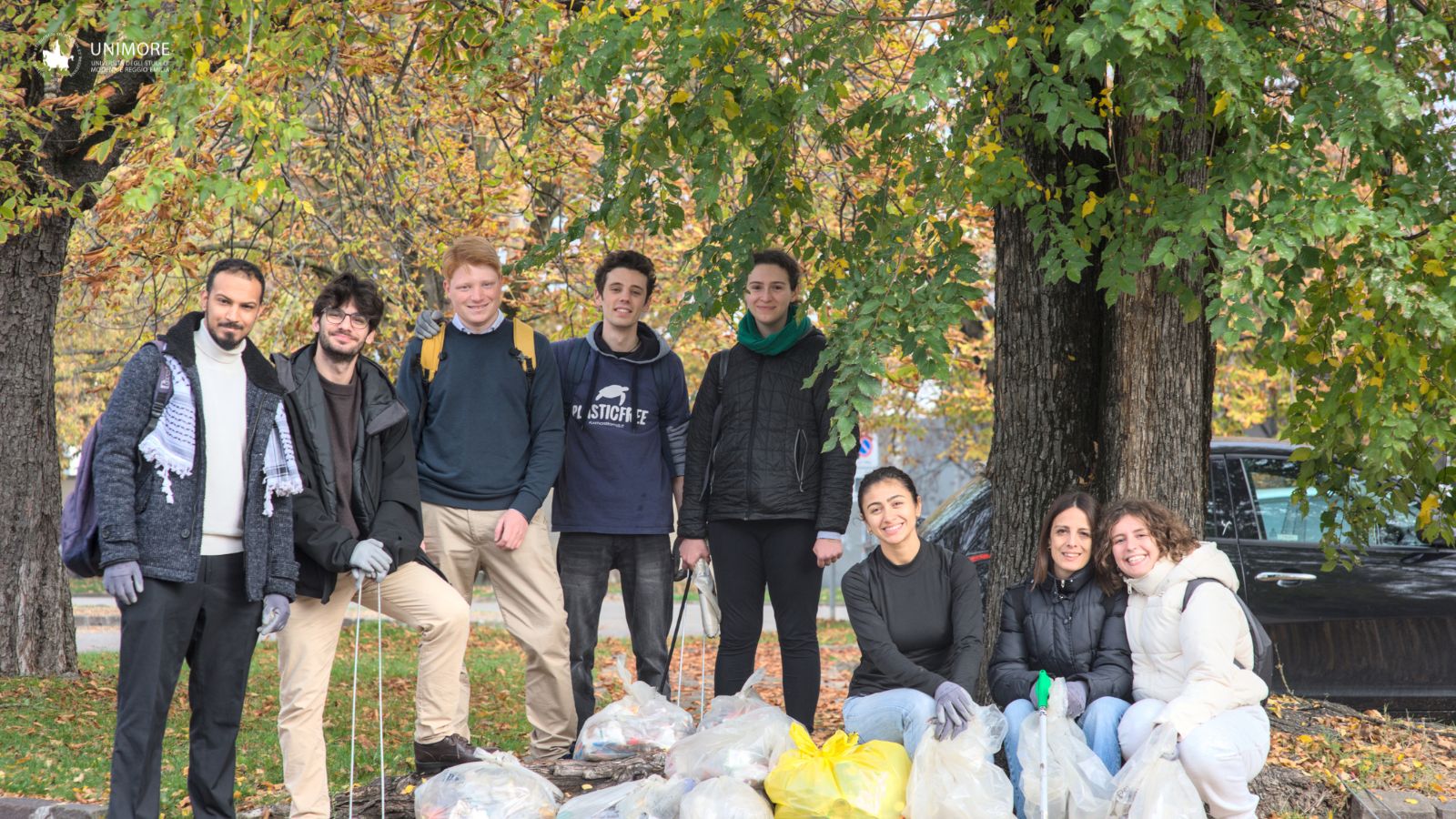
On November 8 and 9, EcoFest took place, a festival focused on the environment and sustainability, organized by a UNIMORE student association.
The program included guided tours of the botanical garden, swap parties, and city clean-up activities, alongside discussions on urban regeneration and sustainable food systems and agri-food supply chains involving lecturers, researchers, and local associations.
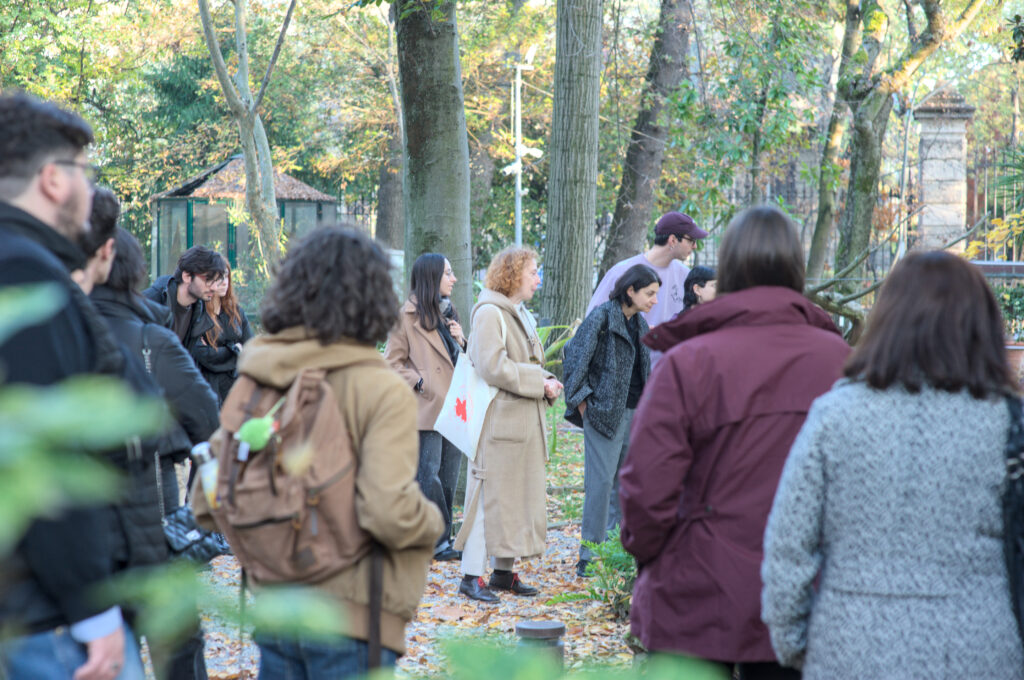
The festival concluded with a special event featuring science communicator Ruggero Rollini, chemist and author for Superquark+.
-

Equality Days at AUP: From Pay Transparency to Breaking Stereotypes
As part of the UNIgreen Alliance’s Equality Days, the Agricultural University – Plovdiv organised two key events addressing some of today’s most pressing social challenges: the Gender Pay Gap Seminar and the interactive workshop “Smash the Stereotypes.” Both activities, held on 11 and 17 November 2025, highlighted the university’s strong commitment to equality, diversity, and inclusion.
Gender Pay Gap Seminar: Understanding Inequalities to Foster Change
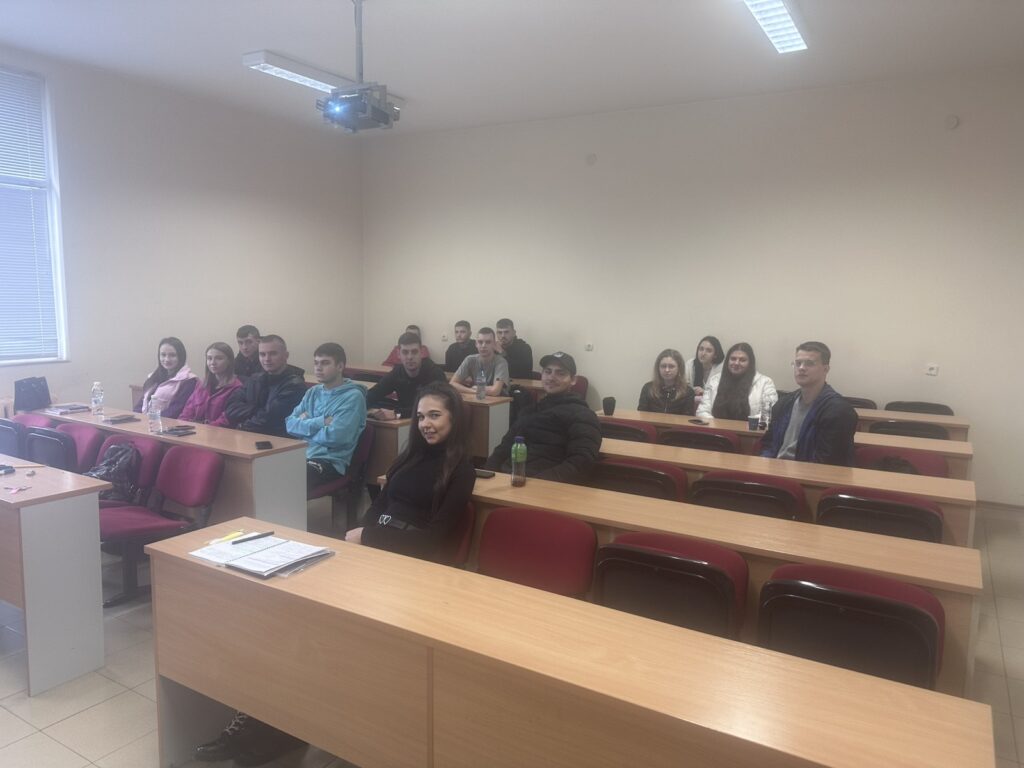
On 11 November 2025, students gathered for a highly engaging seminar on the gender pay gap, jointly organised by Work Package 5 and Work Package 2 of the UNIgreen Alliance. Led by Assoc. Prof. Rositsa Beluhova-Uzunova, the session explored the root causes, consequences, and policy responses related to persistent wage inequalities between men and women.
Participants learned about the difference between the unadjusted pay gap, which reflects overall earnings disparities, and the adjusted gap, which takes into account education, occupation, working hours, and sector. The seminar also examined the social and structural factors shaping pay inequality, from career progression barriers to long-term effects on pensions and financial security.
A significant part of the discussion focused on EU policies, including the EU Gender Equality Strategy 2020–2025, the Work-Life Balance Directive, and the Pay Transparency Directive (2023). These instruments aim to promote fairness, transparency, and accountability in employment practices across Europe.
The session concluded with a reflection on the role of universities and research institutions in promoting gender equality through inclusive policies, awareness-raising initiatives, and institutional commitment. The Agricultural University – Plovdiv reaffirmed its dedication to fostering a more equitable academic environment within the UNIgreen Alliance.
Replay Available: Watch the Seminar Again
Workshop “Smash the Stereotypes”: Seeing Beyond Labels
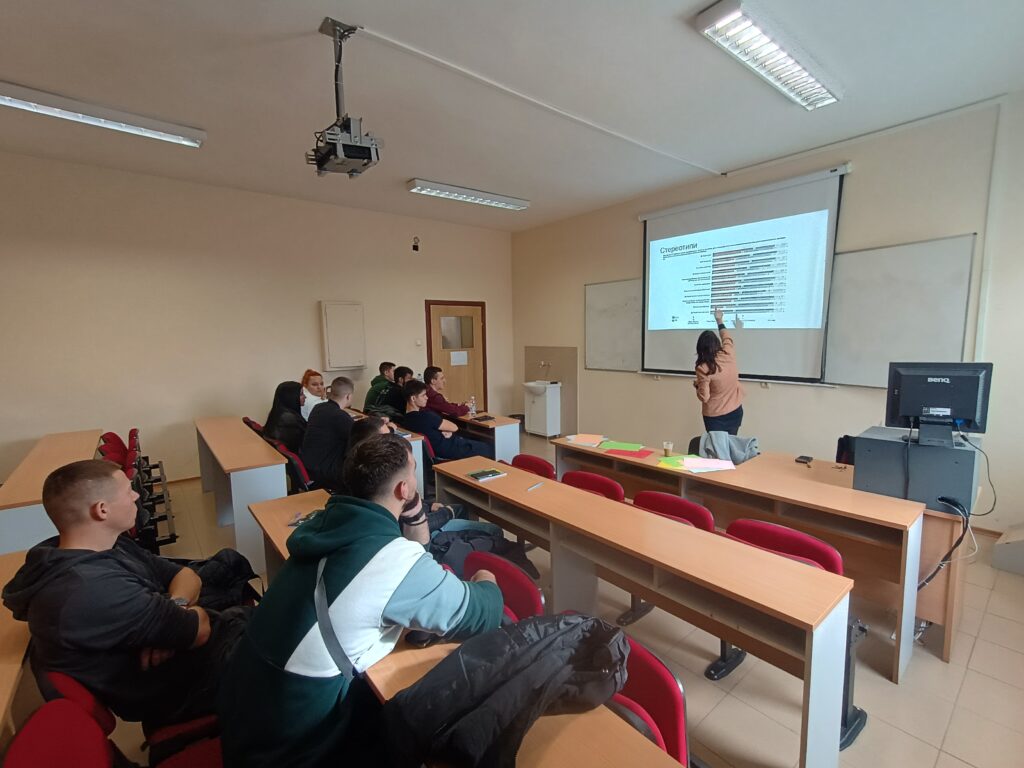
On 17 November, the dynamic workshop “Smash the Stereotypes” invited students to explore how social labels and prejudices continue to shape everyday interactions in Bulgaria. Led by Assoc. Prof. Rositsa Beluhova-Uzunova and Chief Assistant Prof. Krum Hristov, the session combined playful activities with deep social reflection.
The workshop opened with the icebreaker “Guess the Label.” Participants wore sticky notes bearing labels such as “gay,” “mother with three children,” “Muslim,” “teenager,” or “autism.” Without seeing their own label, students interacted with one another and then tried to guess the identity they had been assigned. The activity sparked laughter but also meaningful insight into how quickly and unconsciously people rely on social categories.
The second part of the workshop addressed a series of common stereotypes written on colourful sheets of paper, including “Men don’t cry,” “Women belong in the kitchen,” “Older people don’t understand technologies,” and “People with depression are just weak.” Students discussed how these clichés continue to influence societal attitudes, affecting gender roles, minority groups, rural communities, and mental health.
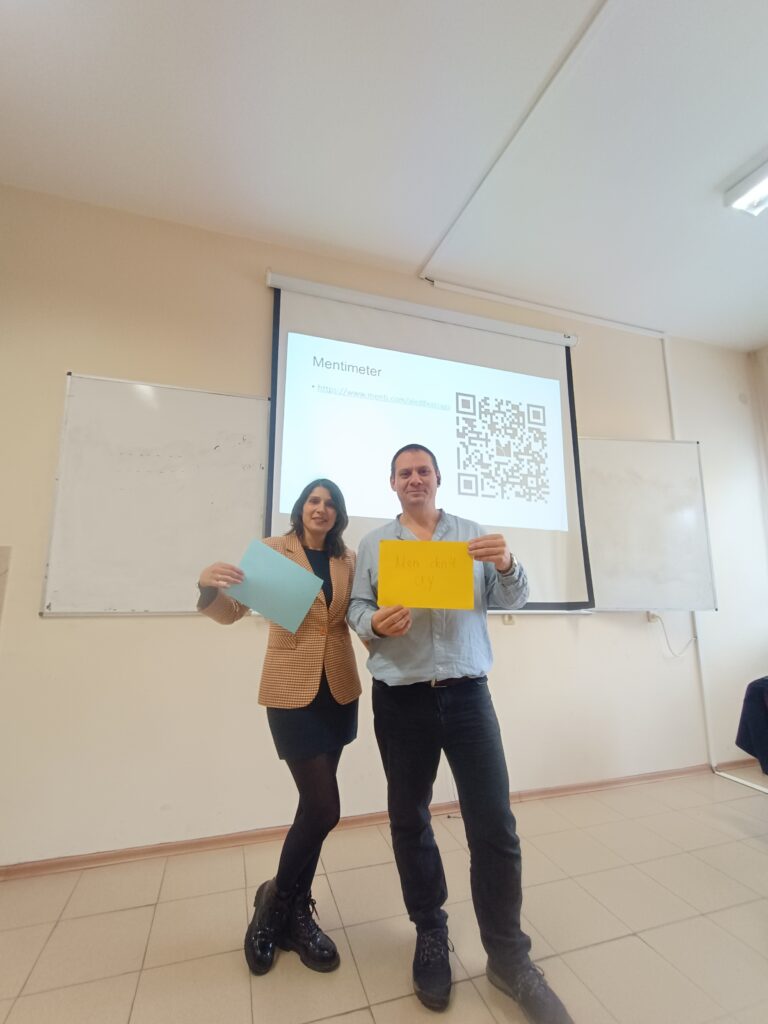
Using Mentimeter, participants then shared their perceptions of how stereotypes operate in Bulgarian society. The group’s responses showed that, despite progress in recent years, deep-rooted biases still shape opportunities and public attitudes.
The workshop closed with a collective message: stereotypes limit both people and societies, and dismantling them is essential for building empathy, respect, and sustainable human development.
A Shared Commitment to Equality
Through these two complementary events, the Agricultural University – Plovdiv and the UNIgreen Alliance demonstrated their ongoing dedication to promoting equality, inclusion, and social awareness. By combining knowledge, reflection, and interactive learning, Equality Days provided students with valuable tools to recognise inequalities and contribute to meaningful change in their communities.
A global article summarising all Equality Days actions across every UNIgreen campus will be published soon, stay tuned!