
-
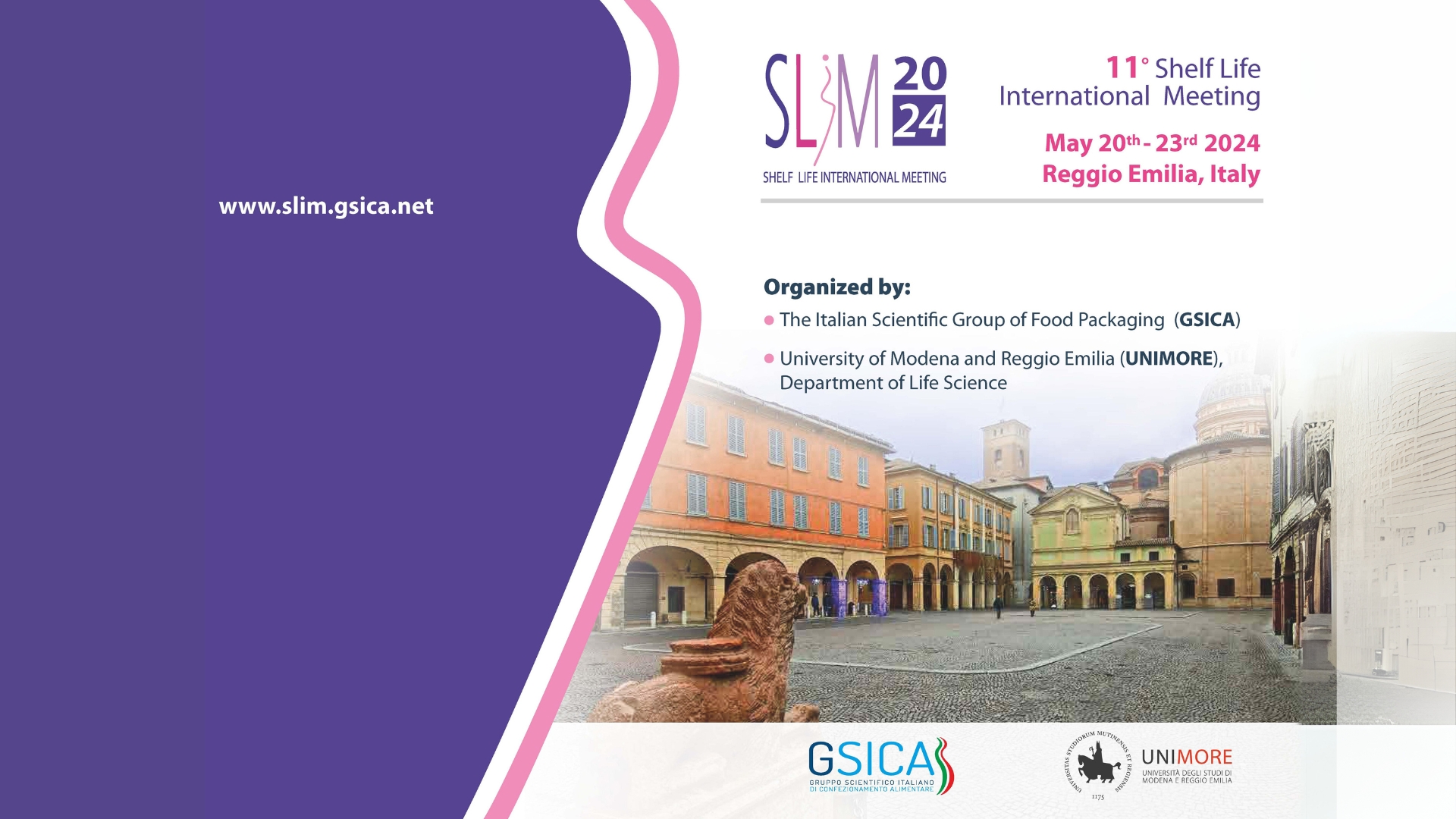
Shelf Life International Meeting held by UNIMORE- Reggio Emilia Campus
The UNIMORE Department of Life Sciences, in collaboration with the Italian Scientific Group for Food Packaging (GSICA), hosted the 11th edition of the Shelf Life International Meeting (SLIM), an international conference dedicated to food technologies and food packaging.
The conference was held from 20 to 23 May 2024, at Palazzo Dossetti – Reggio Emilia Campus, where researchers from over 15 countries gathered to present the state of the art in international research on technologies serving the stability of food products and the development of innovative packaging materials.
“The Shelf Life International Meeting conference,” according to Professor Fabio Licciardello of UNIMORE, chair of the conference, “was established exactly 20 years ago, promoted by the Italian Scientific Group for Food Packaging. The 11th edition returned to Italy, in Reggio Emilia, an area with a strong agri-food vocation.”
The SLIM intensive scientific programme, consisting of about 130 contributions (presentations and posters), focused on the most recent knowledge related to food shelf life, including new, safe and sustainable materials and technologies supporting greener food packaging and food waste management processes. The programme also offered the opportunity to visit some important companies of the Emilia Food Valley.
The conference was structured into four sessions:
- Shelf Life Assessment and Prediction
- Innovative Technologies for Shelf Life Extension
- Trends in Packaging Materials Development
- Technical and Safety Issues of Recycled and Sustainable Packaging
Each session was introduced by a keynote lecture:
- Packaging Design for Reducing Food Waste (Helén Williams, Karlstad University, Sweden).
- Active Packaging and Waste Valorization: A Real Opportunity for Food Sustainability? (Sara Limbo, University of Milan, Italy).
- Chemical Safety and Risk Assessment on Bioplastics for Food Contact (Ana Rodríguez Bernaldo de Quirós, University of Santiago de Compostela, Spain).
- Safety Assessment of Mechanical Recycling Processes of PET to Be Used for Materials and Articles in Contact with Food (Remigio Marano, EFSA).
-

Student Voices at the JIC in Plovdiv: Building a Stronger UNIgreen Alliance
Interview with Karolina Czarnecka, representative of SGGW at the student meeting in Plovdiv.
Key Student Priorities for Shaping the Role of Students within the UNIgreen Alliance
The key conclusion from our discussions was the need to redefine the role of the student from a passive recipient of education to an active co-creator of the alliance. Although students were frequently mentioned during the sessions in Plovdiv, our direct perspective was missing. That is why our priority became ensuring that students have a genuine voice in both advisory and decision-making processes. We are not asking only for a symbolic seat at the table, but for a structurally guaranteed right to be heard. We want UNIgreen to be an organisation created with students, not just for students. This sense of agency is our strongest motivation.
The Value of a Structured Student Body within UNIgreen
As a co-author of this concept, I see clear benefits on both sides. For UNIgreen, having students involved in every Work Package helps avoid what is often described as “operational blindness.” Students bring a fresh perspective and highlight issues that may be invisible to academic staff but are crucial from our point of view. This makes the alliance’s solutions more accurate and user-friendly. For students, it presents a unique opportunity for professional development and firsthand experience in managing an international project. The structure also enhances transparency; when students understand how the organisation functions, they naturally become its ambassadors at their home universities. This is fundamental for building an engaged UNIgreen community the vision we discussed in Plovdiv.

Innovative Joint Study Programmes for the Future of UNIgreen
This was a fascinating challenge, given the diversity of our academic interests. Ultimately, we agreed that the most significant potential lies in interdisciplinarity. In my view, UNIgreen should offer hybrid programmes that combine natural sciences with digital competencies. The market needs specialists who understand both agriculture and, for example, artificial intelligence or data analysis. Here, the alliance has a unique advantage its ability to exchange knowledge across different climatic zones, from northern to southern Europe. For this reason, I would focus on programmes such as AgriTech or Climate-Smart Agriculture, where technology meaningfully supports sustainability goals. This is the kind of innovation students are looking for.
From Principles to Practice: Reducing UNIgreen’s Ecological Footprint
For our generation, authenticity is essential, which is why the topic of greenwashing sparks strong emotions. We believe UNIgreen should begin the change with itself walk the talk. It is not enough to teach about ecology; pro-environmental principles must be implemented in everyday operations. Some specific tools we propose include introducing a “green standard” for meetings, minimising printing by going paperless, using digital materials, offering sustainable catering based on local products, and including travel-related carbon footprints in project cost calculations. Such actions build credibility. By demonstrating that UNIgreen follows the principles it promotes, the alliance strengthens trust and sets an example for students.
Engaging Students as Active Contributors within UNIgreen
The key is to give students real challenges, rather than pre-defined tasks. One idea that has gained considerable enthusiasm is based on the Challenge-Based Learning model. When a Work Package encounters a problem, it can present it to students who are eager to treat it as a project and propose unconventional solutions. Students at SGGW and other universities want to feel that their work matters and has an impact. Involving them as consultants or solution creators builds a sense of belonging much more effectively than passive participation. Of course, for those with less time, there are still other ways to contribute through promotion or social media; however, it is the opportunity for the agency that truly attracts leaders.
-
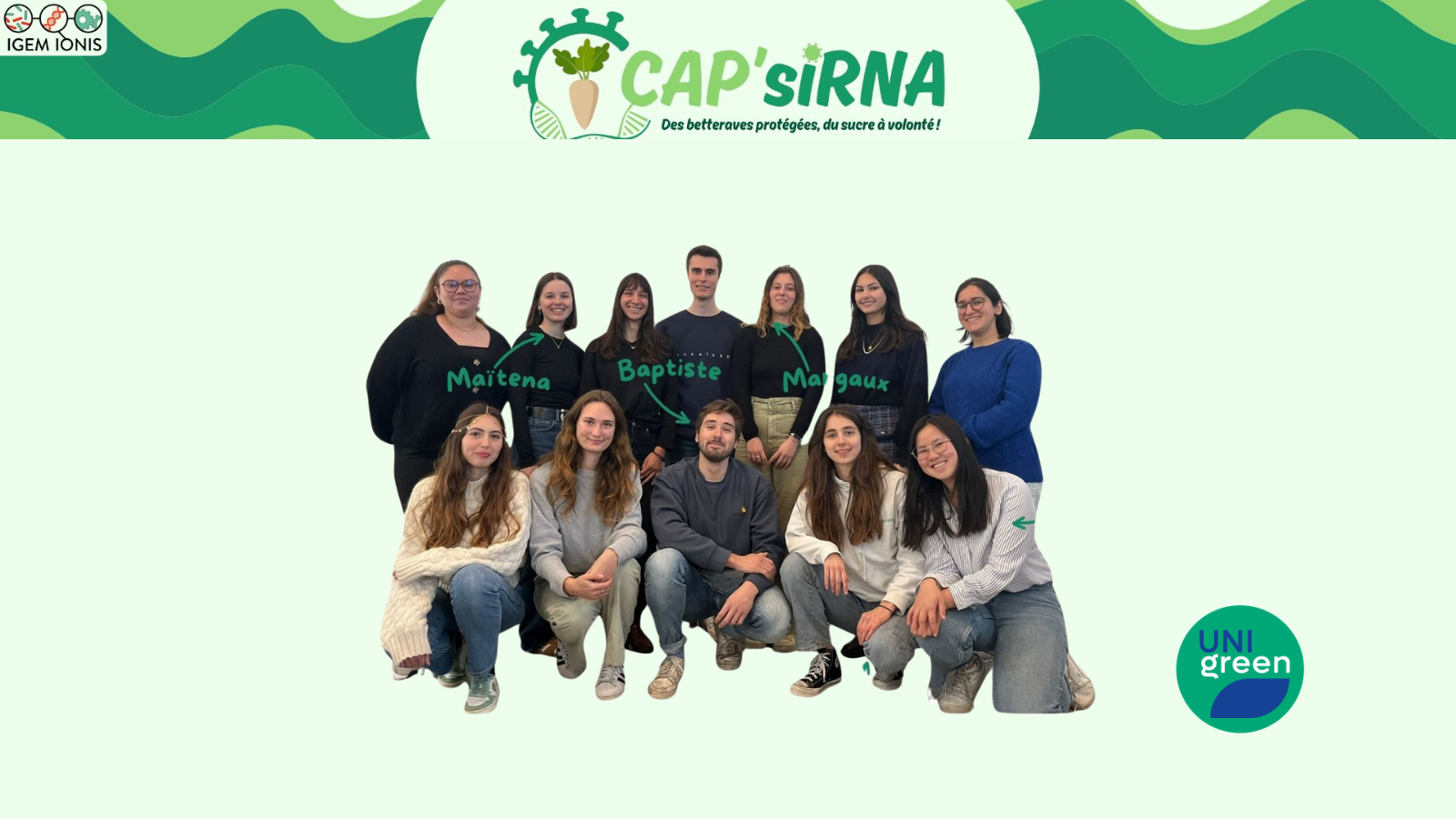
Student-led project aims to fight against Beet Yellows Virus
A team of 12 students from SupBiotech is spearheading a fundraising initiative to fight against Beet Yellows Virus (BYV) threatening sugar beet crops. This is organised within the scope of the CAP’siRNA project, as part of the international iGEM competition, which specialises in synthetic biology.
Sugar beets represent a quarter of global sugar production and “play an essential role in bioethanol production”. This issue is critical to highlight as beet crops are heavily impacted by BYV, which has resulted in up to 40% sugar yield loss.
The goal of this fundraiser is to aid the team via the CAP’siRNA project to develop an effective solution to eliminating the BYV, drawing inspiration from natural plant defence mechanisms using a developed technology to reinforce sugar beet defences to fend off the virus.
All donations will go directly to the student team via the association iGEM IONIS and be utilised to finance various project aspects and activities such as market research, printing presentation materials and laboratory research.
To find out more information about the great work that CAP’siRNA is doing and to donate to their fundraiser, click here (in French): https://www.helloasso.com/associations/igem-ionis/collectes/cap-sirna-des-betteraves-protegees-du-sucre-a-volonte
-
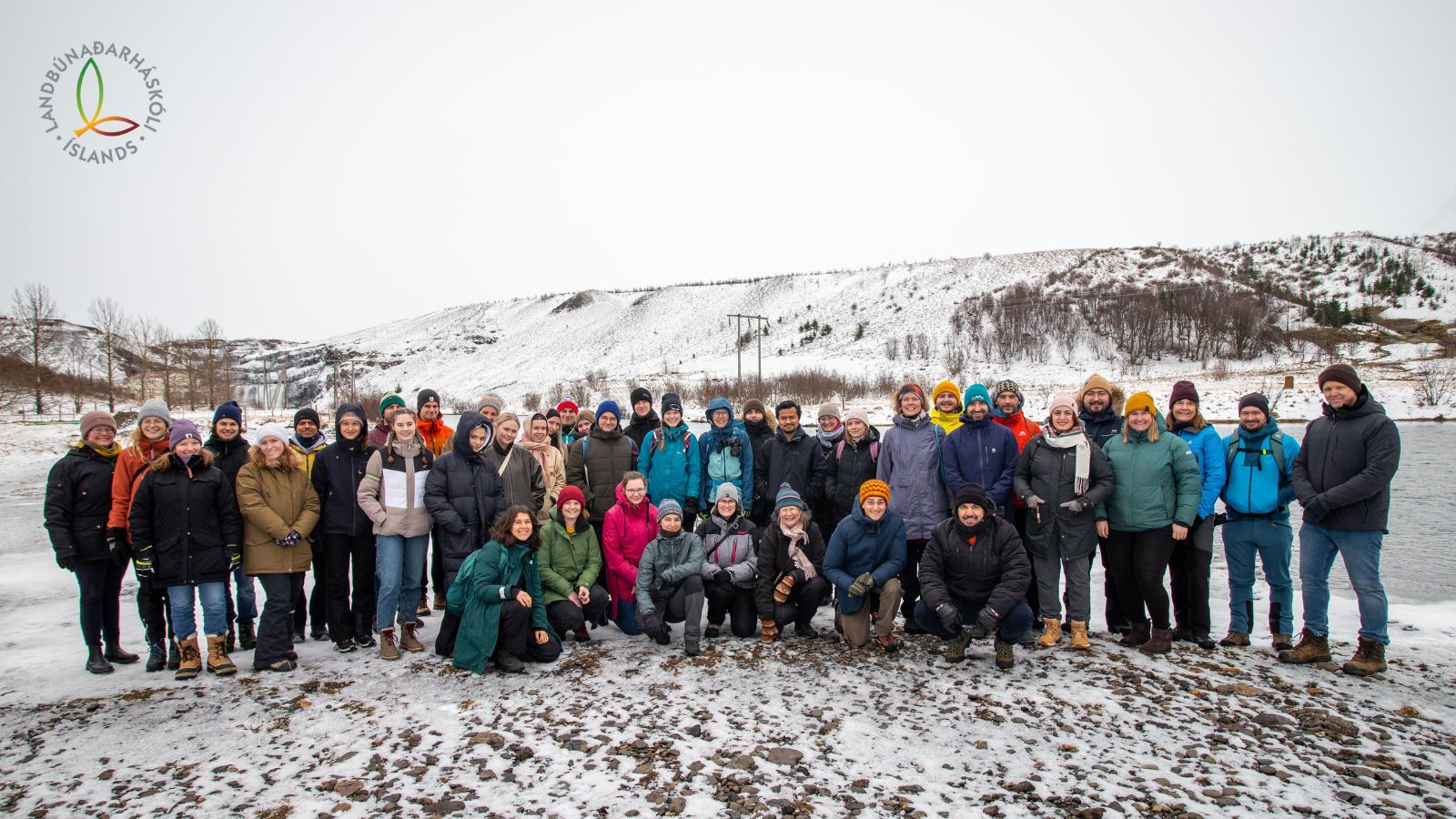
Students Discovered Arctic Realities at Polar Winter School
As part of the UNIgreen European University Alliance’s mobility initiatives, students from across Europe gathered in Iceland this winter to take part in the Blended Intensive Programme (BIP) Polar Winter School, organised by the Faculty of Environmental Sciences of the Czech University of Life Sciences Prague (CZU) in collaboration with the Agricultural University of Iceland (AUI).
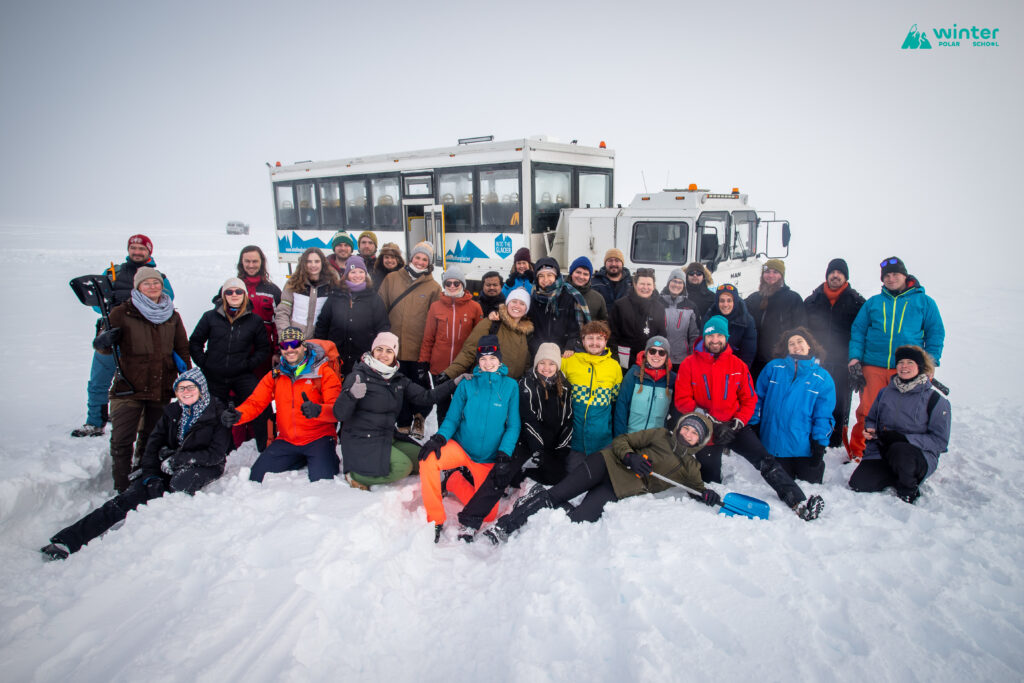
This unique programme, blending online and on-site learning, explored environmental challenges and climate change in Arctic and Subarctic regions. The course offered a multi-disciplinary perspective on ecosystem services, climate adaptation, sustainable land use, and community resilience critical themes for future environmental professionals.
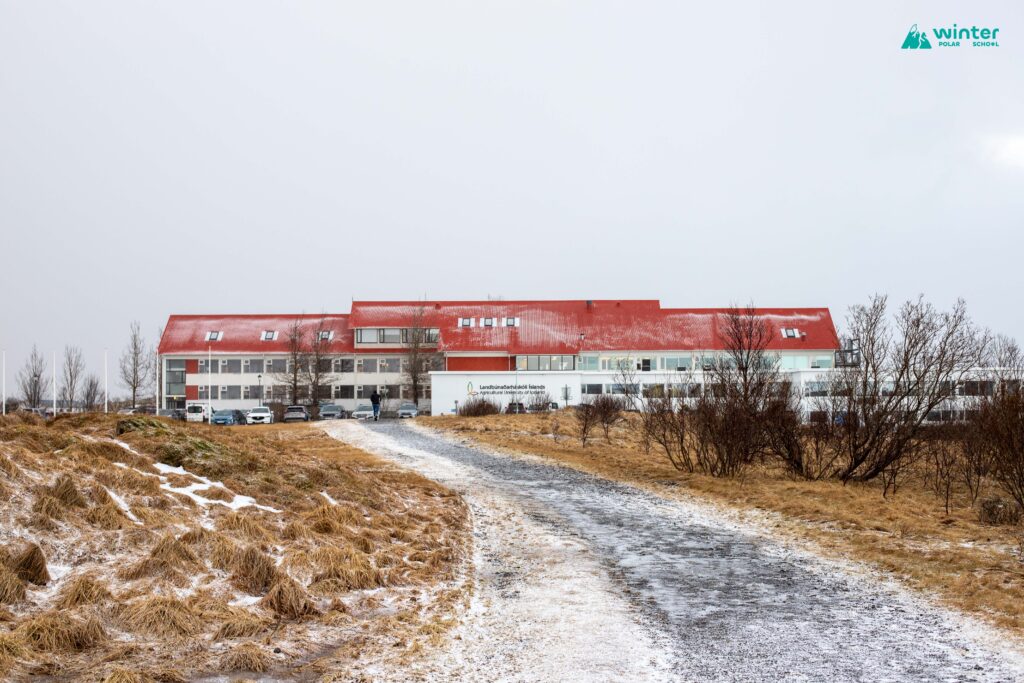
The winter school kicked off with an online preparation module in January, followed by a week-long physical component in Hvanneyri, Iceland, in March 2025. Students participated in lectures, group work, and field visits to Icelandic landscapes and communities impacted by climate change.
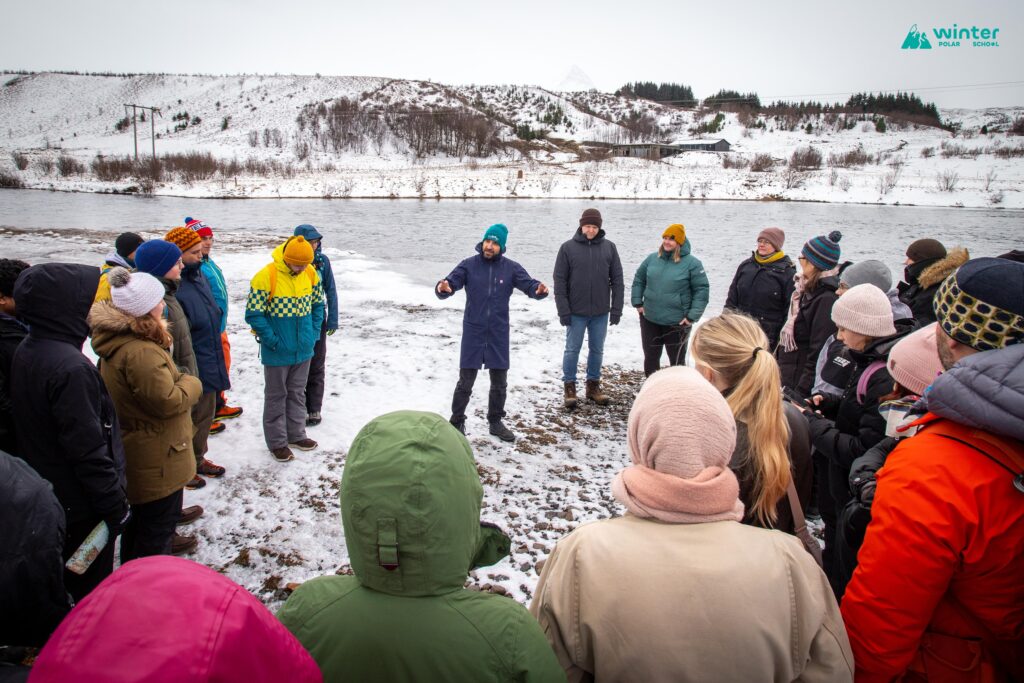

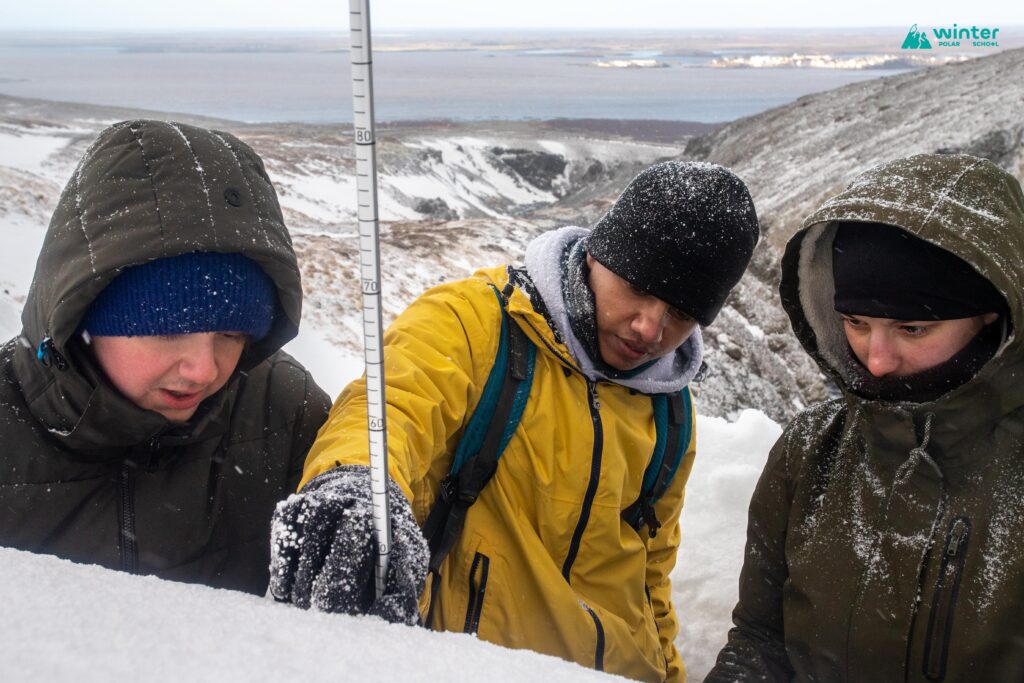
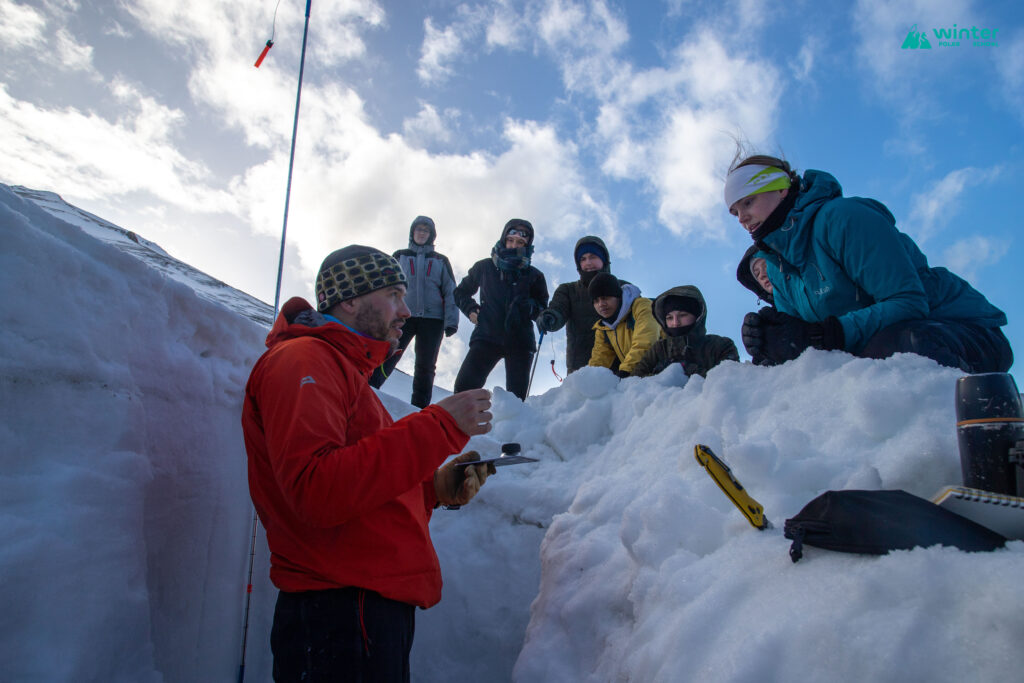

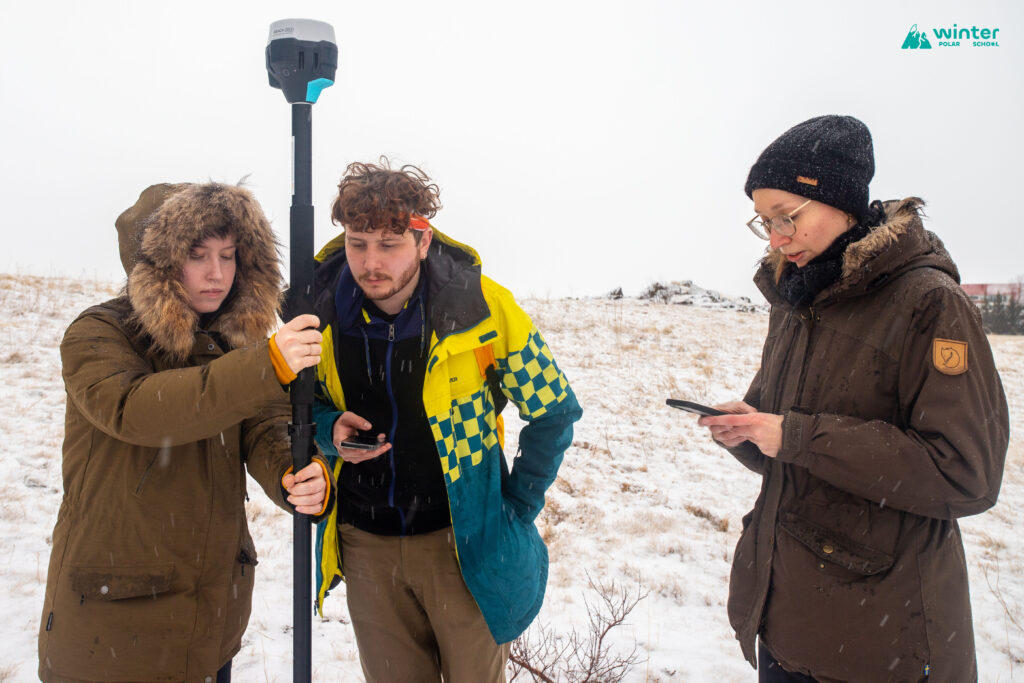
Participants appreciated the school’s interactive and international learning environment, which brought together students and academic staff from various UNIgreen partner institutions. According to one student, “It was a truly eye-opening experience—not only academically but also personally. Being in Iceland in winter, discussing global challenges with people from different countries, made the topic feel real and urgent.”
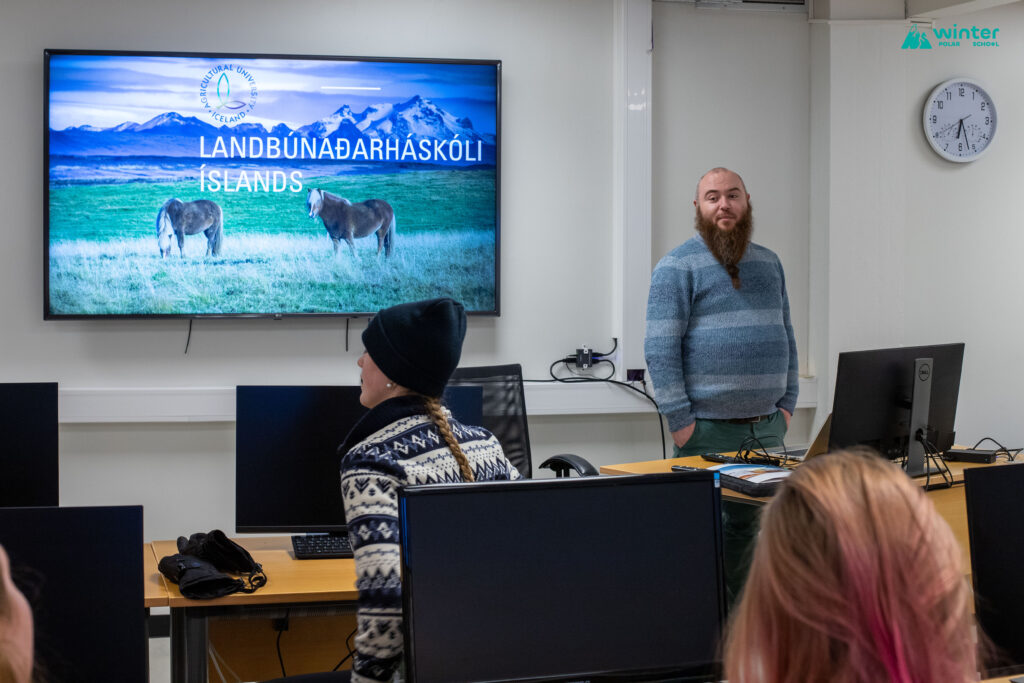

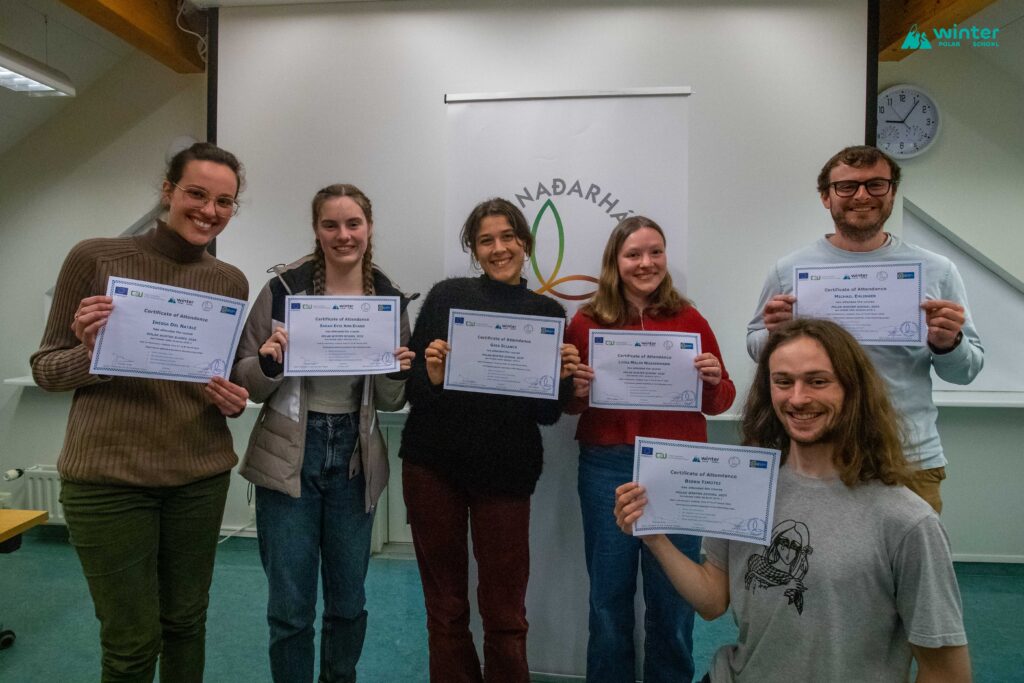
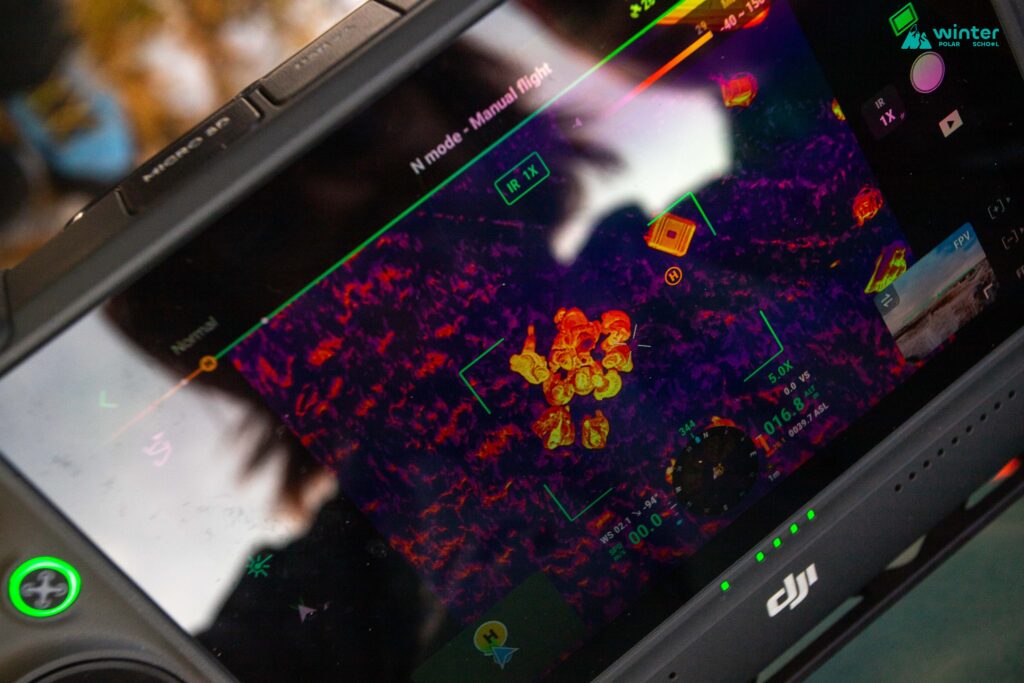
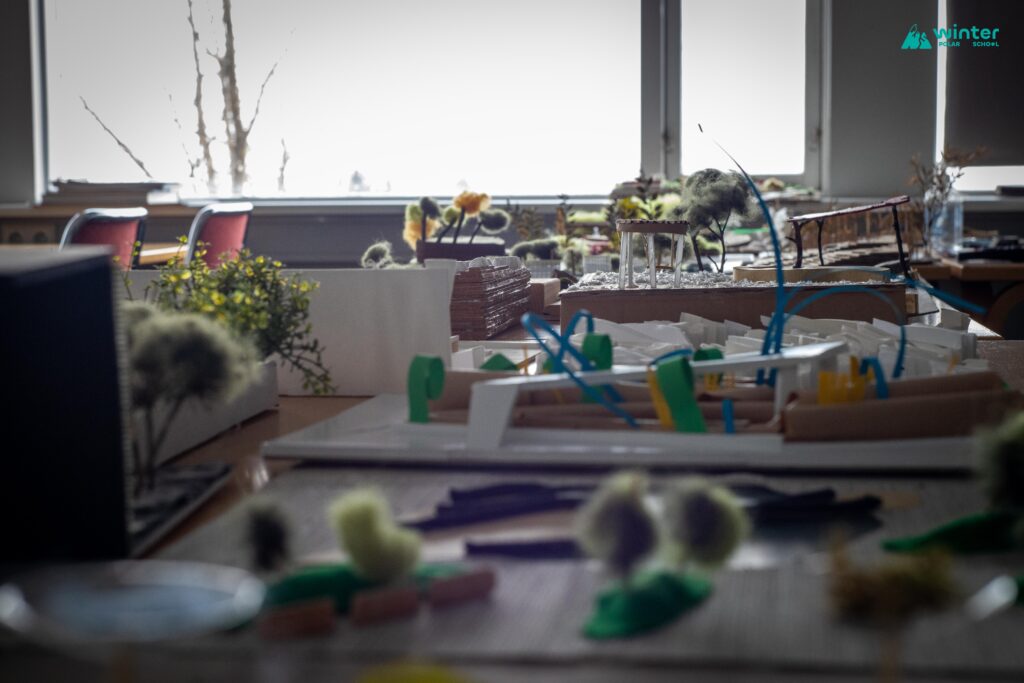
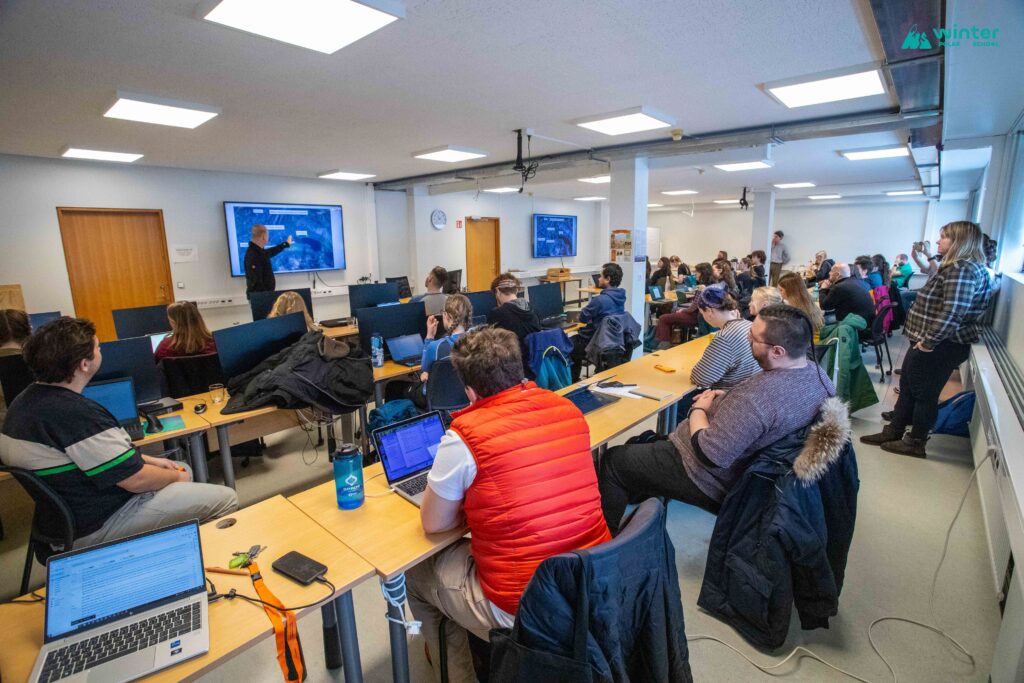
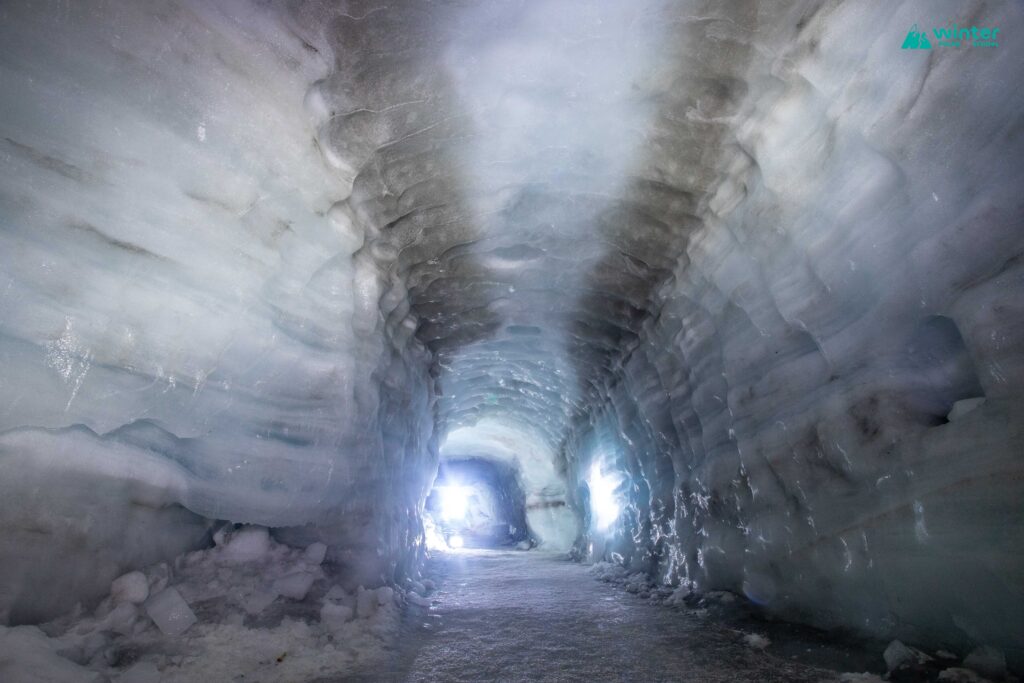
The BIP Polar Winter School is part of UNIgreen’s commitment to promoting green mobility and interdisciplinary collaboration, helping students develop a deeper understanding of environmental issues through hands-on, cross-cultural experiences.



-
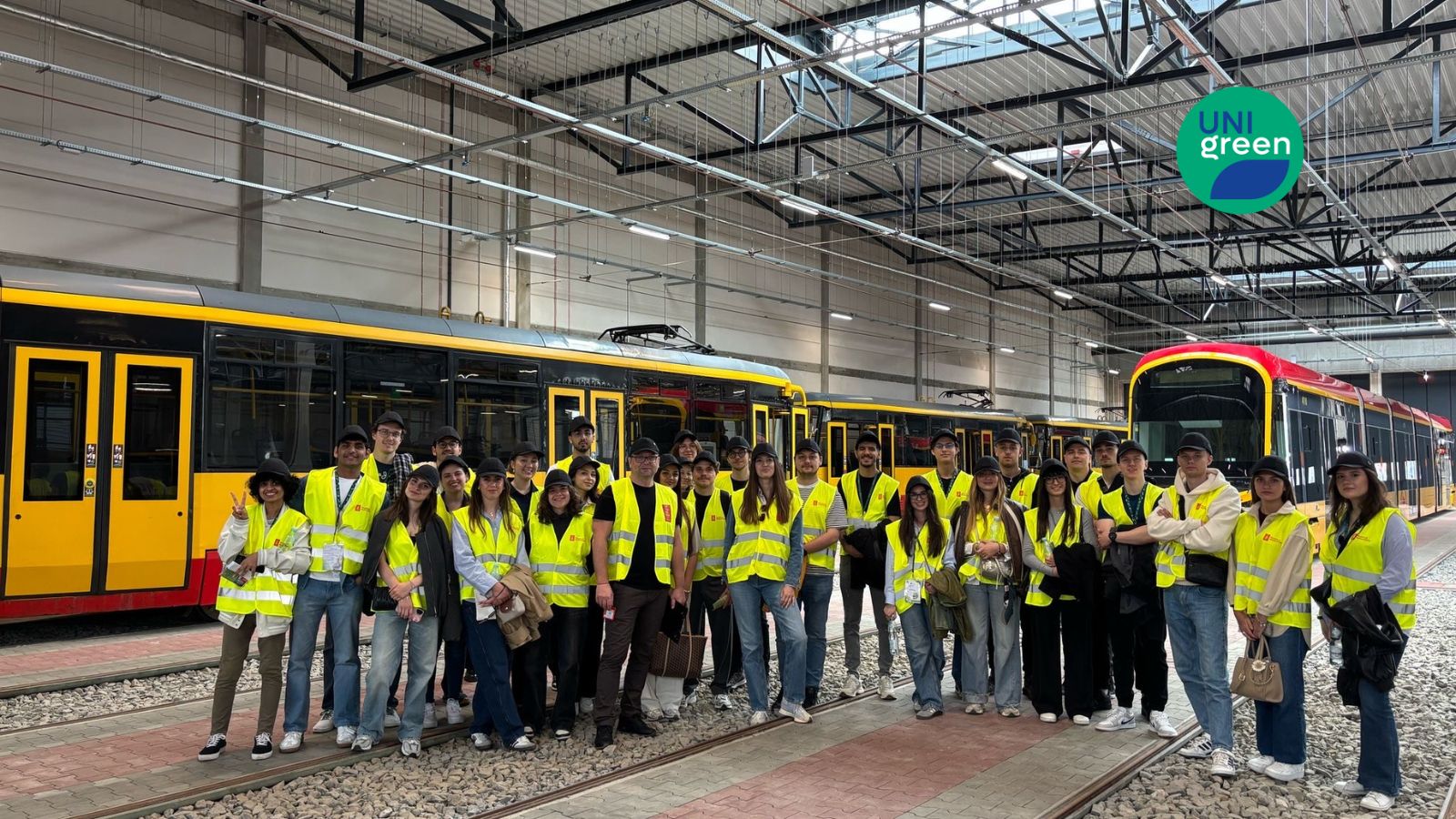
Students from Europe Propose Joint Solutions for Sustainable Logistics
The SGGW campus in Warsaw once again became a platform for exchanging knowledge and practical experience in the field of sustainable and innovative logistics solutions. The participants of this international meeting were students who are part of the UNIgreen alliance. From May 19th to 24th, 2025, as part of the Blended Intensive Programme (BIP) course “Sustainable Logistics: Trends and Innovative Practices”, 22 students from countries including Italy, Spain, Romania, Slovenia, and Croatia took part.

Over the course of five intensive days, the participants explored the theoretical foundations of green and innovative solutions in transport and logistics and visited several logistics companies. Among the sites visited by the students were the DPD sorting center in Brwinow, an innovative tram depot in Annopol, and other sustainable elements of urban infrastructure in Warsaw.

The course included not only lectures and study visits but also practical workshops led by representatives from both business and academia. These workshops focused on real-world challenges related to sustainable and resilient supply chains. The students developed their own proposed solutions to case studies, which they then presented.

-

SupBiotech distinguished for CSR
Strong testimony to the will of iron dedication to Corporate Social Responsibility (CSR), SupBiotech Engineering School of Biotechnology topped the Studyrama ranking for engineering schools most integrating CSR principles into their operations. SupBiotech placed seventh in the 2024 Studyrama’s rankings of engineering schools in France, which classifies institutions in terms of commitment to social and societal responsibility.
This difference comes after the 2024 RSE HappyIndex®AtSchool published by ChooseMyCompany. This research evaluates the institution’s potential to correctly integrate sustainable development in strategic planning and the overall effect of such CSR initiatives.
The progress of SupBiotech ranks underlines ongoing work in the area of enhanced CSR impact and embedding sustainability practices both within the curriculum and the campus activities. That would be a tangible way of recognising both the involvements of engineering education and institutional practice based on ethical practice and sustainability, real commitment to social and environmental responsibility of SupBiotech.
More details at: https://tinyurl.com/SupBiotechCSR
-
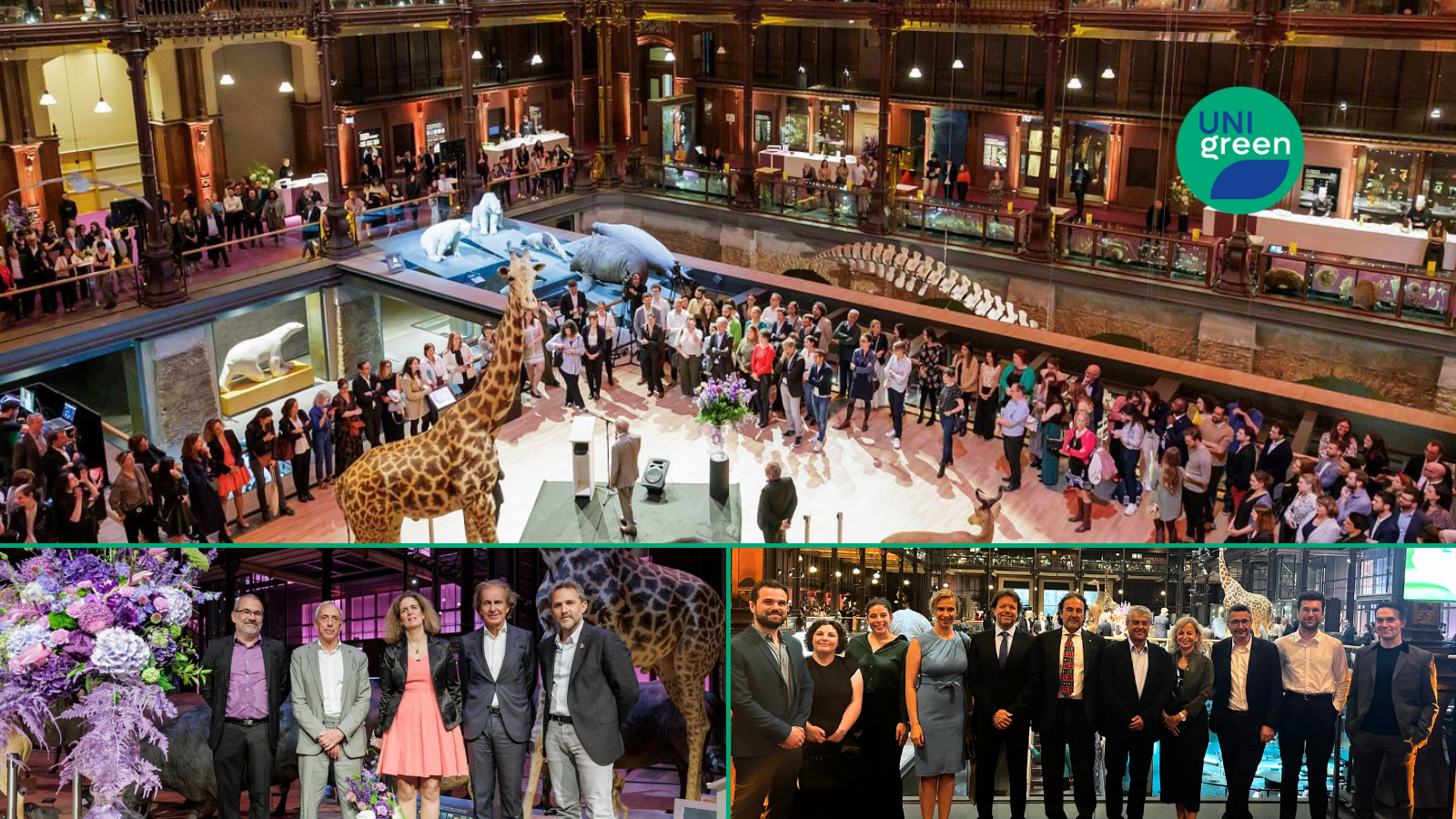
SupBiotech turns 20 —A moment to remember!
Last Tuesday evening, 18 June 2024, marked the 20th anniversary of SupBiotech. To celebrate the occasion, students, alumni, professors, staff, UNIgreen Alliance Members, and international partners gathered at La Grande Gallerie de l’évolution in Paris, near the Jardin des Plantes.
The festive celebration amassed nearly five hundred attendees in the gallery’s grand halls. The evening soirée commenced with guests chatting and arriving, enabling them to admire and wander around the museum’s marine and wildlife installations.
At eight o’clock, Engineering Cycle Dean of Studies Thierry Picaud stepped onto the stage to kick off the evening’s speeches, sporting one of the very first whitecoats that the first class of thirty-five students wore.
Following his exchange, the Executive Director and founder of the IONIS Education Group, Marc Sellam, paid homage to the hard work and dedication of the group, staff, professors, and students to establish SupBiotech as a world-renowned and prestigious school in biotechnology. Following suit, Fabrice Bardèche, Executive Vice President, echoed his remarks, honouring this momentous occasion in SupBiotech’s history.
Mr. Bardèche warmly welcomed the founder and Executive Director, Dr Vanessa Proux, on stage. Her inspiring words and years of dedicated service at SupBiotech have been instrumental in developing the school into a major player in the biotechnological sector in France and internationally. Her leadership and vision have been a guiding light for us all.
Several esteemed UNIgreen Alliance Members from Spain, Italy, and Belgium, along with other international partners from across Europe and North America, made a special journey to participate in the commemorative ceremony. Their presence underscored the global reach and impact of SupBiotech, making this a truly international celebration.
SupBiotech is proud to celebrate 20 years of dedication and upholding its mission of training multidisciplinary, international, creative, and innovative engineers and looks forward to celebrating another 20 more!
-
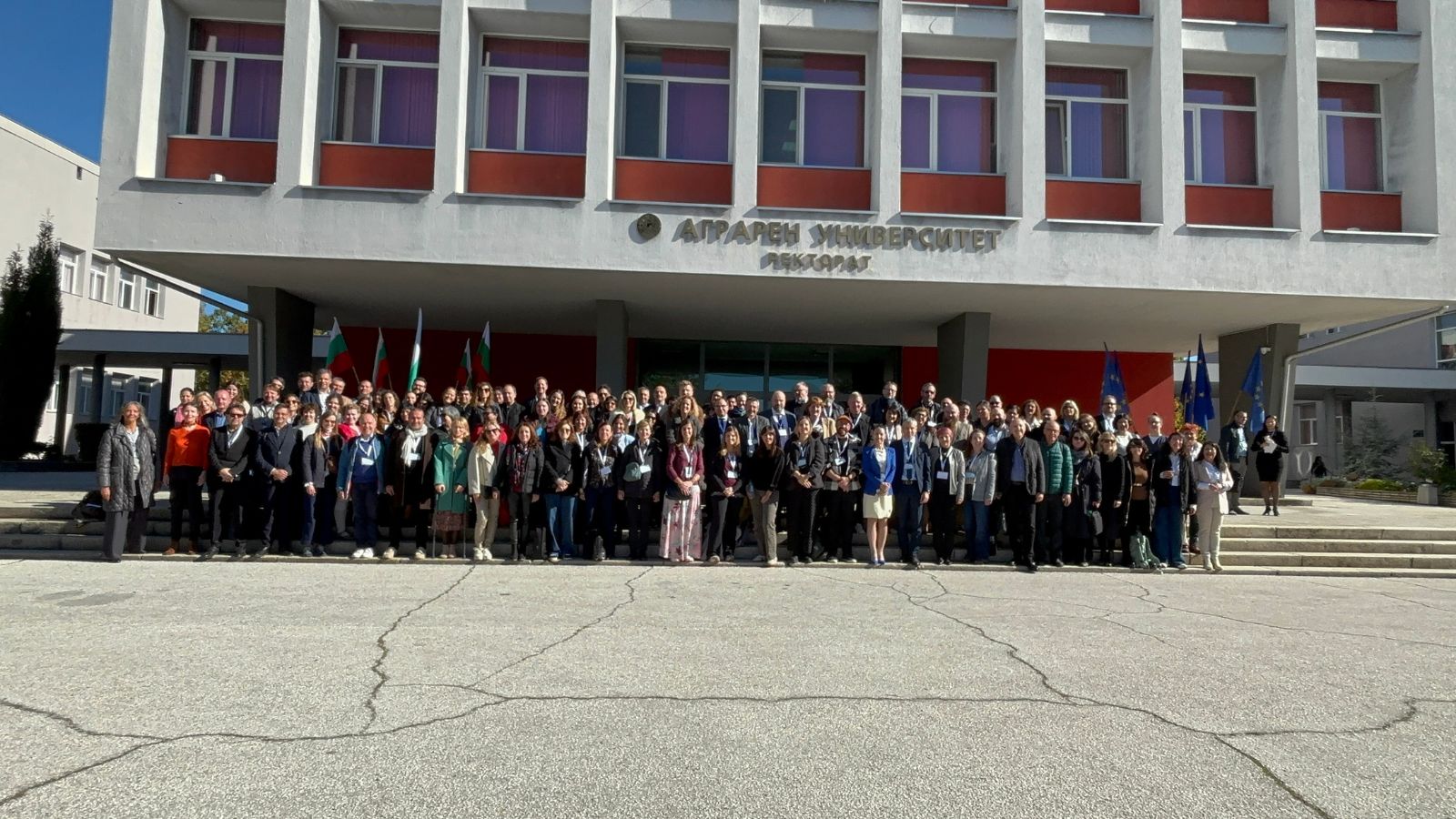
Sustainable Future: UNIgreen Milestones at JIC
At the end of October, the UNIgreen European University Alliance successfully held the 3rd Joint International Centre (JIC), meeting at the Agricultural University of Plovdiv (AUP), bringing together partners from across Europe for three days of collaboration, innovation, and strategic planning.
UNIgreen, The Green European University, unites eight higher education institutions dedicated to excellence in Sustainable Agriculture, Green Biotechnology, Environmental and Life Sciences. As the Alliance moves beyond its establishment phase, it continues strengthening its foundations while expanding its strategic ambitions for long-term impact in education, research, innovation, and community engagement.
A Three-Day Meeting Focused on Collaboration, Innovation & Sustainability focusing on:
Student Participation: A First for the JIC
For the first time, students from UNIgreen institutions took an active part in the JIC. Their contributions, ideas, and enthusiasm enriched discussions, strengthened the co-creation approach, and demonstrated UNIgreen’s commitment to inclusiveness and student-centred development. Their engagement marked a novel milestone for the Alliance.
Strengthening Governance & Alliance Communication
One key outcome of the JIC was the Agreement to hold more frequent Management Panel meetings, improving horizontal and vertical communication across the Alliance. This step will reinforce transparency, coordination, and coherence as UNIgreen enters a new phase of implementation.
Cultural Programme & Campus Experience
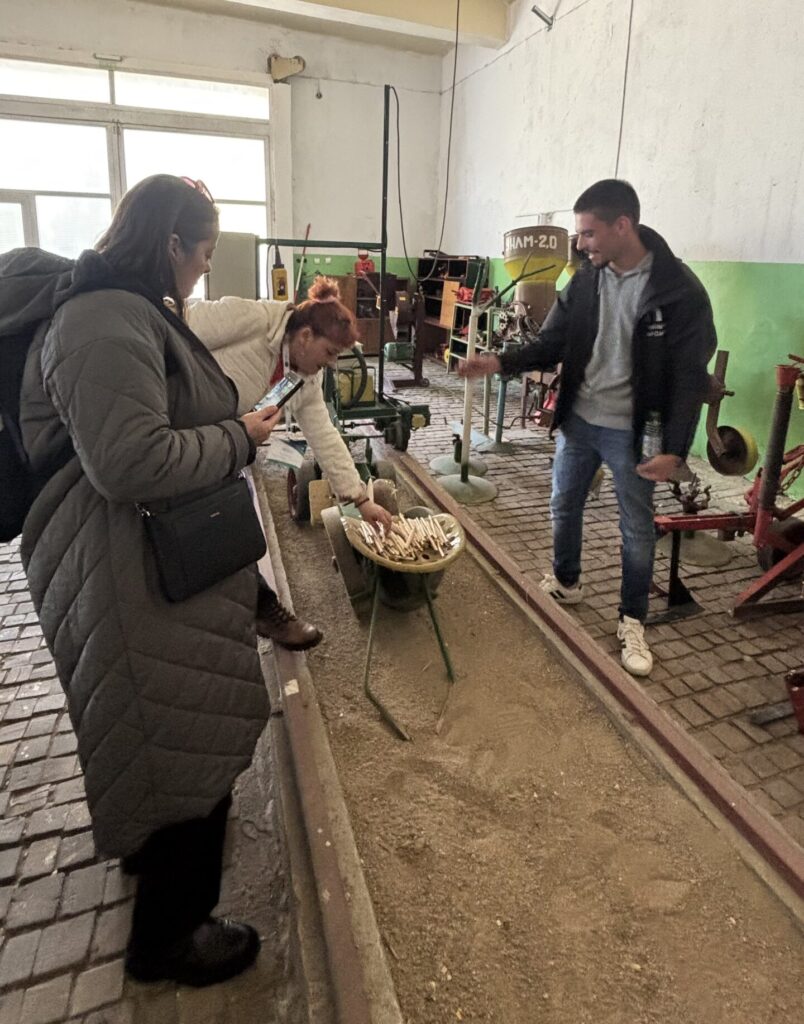
Participants had the opportunity to explore AUP and the region of Plovdiv. Activities included visits to university facilities, cultural sites, and opportunities to experience local traditions. These moments helped deepen ties among partner institutions, reaffirming the strong sense of community within the UNIgreen family.
A Renewed Commitment to a Sustainable Future
UNIgreen left Plovdiv with renewed momentum and shared purpose. The 3rd JIC reaffirmed the Alliance’s commitment to building a sustainable, innovative, and inclusive European University network, one that is ready to address the challenges of the green transition and shape the future of higher education in Europe.
JIC Programme
Day 1 – Celebrating Tradition and Innovation
The meeting opened with the celebration of the 80th anniversary of the Agricultural University of Plovdiv, under the motto “Traditions Meet Innovations.” Participants attended plenary sessions highlighting UNIgreen’s achievements and the collective progress toward becoming a leading European University in its field.
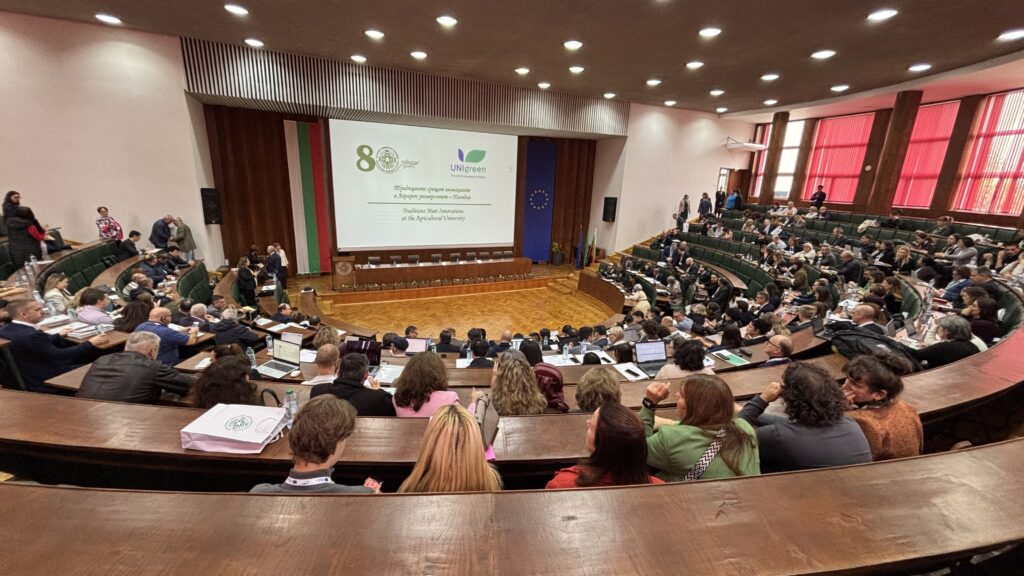
Working groups engaged in strategic discussions, reinforcing the Alliance’s shared mission and long-term vision.
Day 2 – Advancing Joint Work Across the Alliance
The second day was dedicated to teamwork and operational progress across all work packages. Over 100 participants collaborated on:
- advancing joint research initiatives through the Joint Research Centre;
- further developing joint, double, and European degree programmes at bachelor’s, master’s and PhD levels;
- strengthening communication, dissemination, and student engagement across institutions;
- accelerating campus greening actions and sustainability commitments.
The meeting also highlighted the role of the newly established UNIgreen Clusters, bringing together researchers, students, and industry representatives. These clusters aim to reinforce regional impact, engage local communities, and prepare graduates for a rapidly evolving labour market.
Day 3 – Quality, Impact & the Future of UNIgreen
On the final day, partners engaged in sessions focused on:
- quality assurance and consistent monitoring of outputs;
- impact measurement for long-term sustainability;
- the workshop “Beyond Numbers: Driving Impact and Excellence Across Projects,” supporting a shift toward more strategic, meaningful, and evidence-based impact generation.

-

The 2025 Bio-based innovation challenge at AUP
On June 16, 2025, the Agricultural University – Plovdiv proudly hosted the national round of the “BIO-BASED INNOVATION STUDENT CHALLENGE EUROPE” (BISC-E) 2025 which empowering green innovation through student engagement.

Five student teams representing the Agricultural University – Plovdiv, the University of Food Technologies, Plovdiv University “Paisii Hilendarski,” Trakia University – Stara Zagora, and the Center of Plant Systems Biology and Biotechnology (CPSBB) participated in the national competition. Over several months, the students diligently developed their creative ideas in the field of bio-based innovation and technology, aiming to advance to the European finals.
The Rector of Agricultural University – Plovdiv Associate Prof. Boryana Ivanova, officially opened the forum and inspired the participants to pursue their goals with determination and illustrate their proposed solutions’ broader socio-economic and environmental benefits.

All five teams presented impressive and forward-thinking innovation projects. The Agricultural University – Plovdiv was represented by the teams “BioTrackers” and “InnoBioCrops” (in collaboration with CPSBB). The University of Food Technologies competed with the team “Bio Entrepreneurs,” while Plovdiv University presented the team “Planta Pharma” in partnership with CPSBB. Trakia University participated with the team “Business Club – Trakia University.”
The creative presentations were evaluated according to six criteria by a distinguished jury composed of Mr. Georgi Gatev, Mayor of the “Trakia” District of Plovdiv; Mr. Stefan Dimitrov, Director of Neochim Dimitrovgrad; and Assoc. Prof. Dr. Georgi Georgiev, Director of the Center for Entrepreneurship at the Technical University of Sofia, Plovdiv Branch.
The winner of the closely contested competition was the team “Planta Pharma” from Plovdiv University, in collaboration with CPSBB. The winning team will participate in an online training session alongside national winners from other European countries and will continue developing their concept to compete at a high level.

Vice-Rector Prof. Dimo Atanasov addressed the audience that strategic dissemination of student-led innovation highlights the growing importance of international academic collaboration in advancing sustainable development and bioeconomy education.
As the national coordinator of BISC-E 2025, Prof. Atanasov awarded all participants certificates and gifts, encouraging them to seek innovative approaches to global challenges continually.
The event clearly illustrated the transformative potential of green education, interdisciplinary research, and innovation-driven learning, which are core principles of the UNIgreen Alliance. Through initiatives like BISC-E, students are empowered to contribute to a more sustainable and circular bioeconomy which reflects the UNIgreen Alliance’s commitment to fostering excellence, sustainability, and impact in European higher education.
-
The first UNIgreen Student Conference was a success
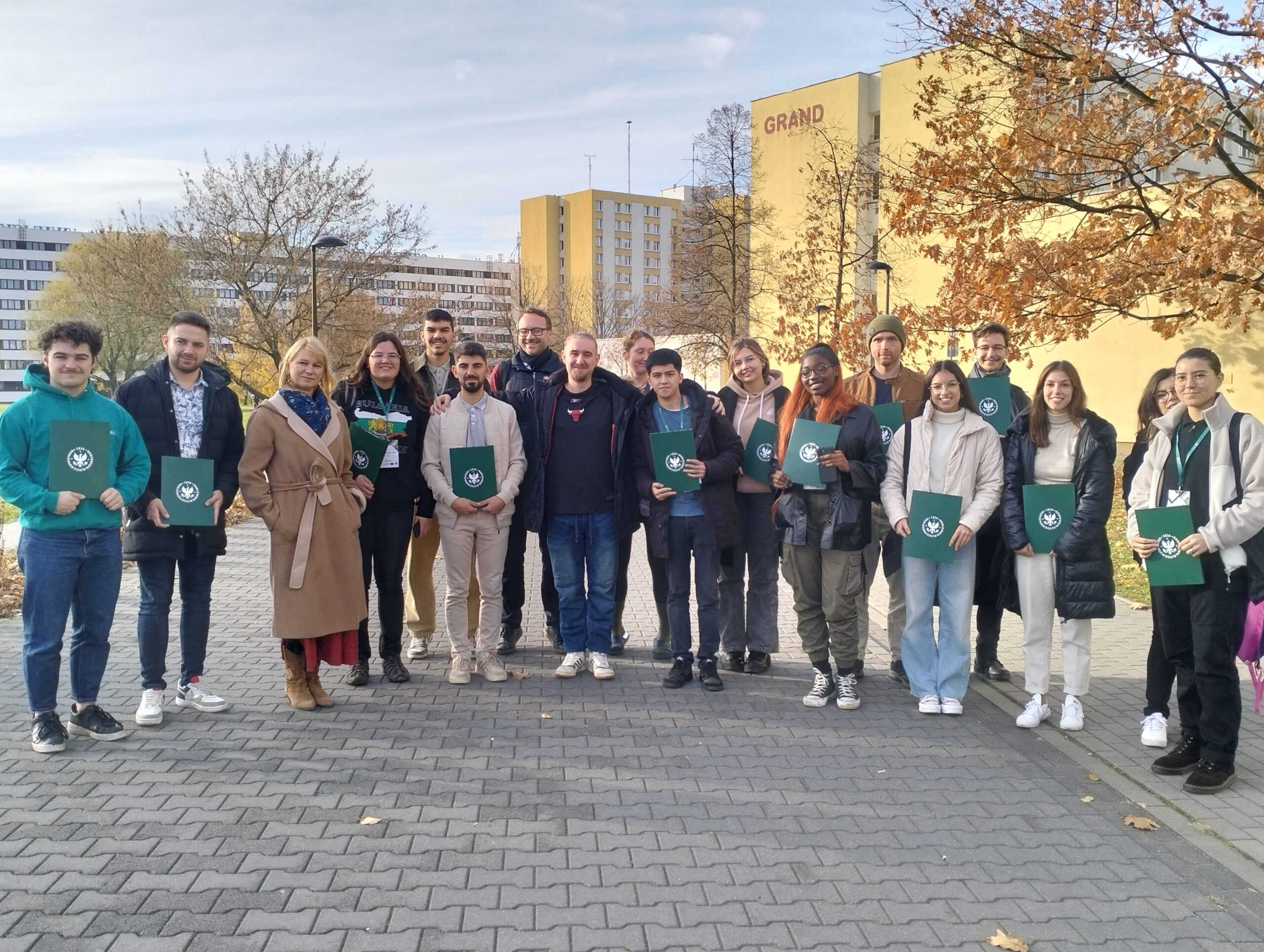
The first UNIgreen Student Conference organized by students for students took place on 8-10 November at SGGW.
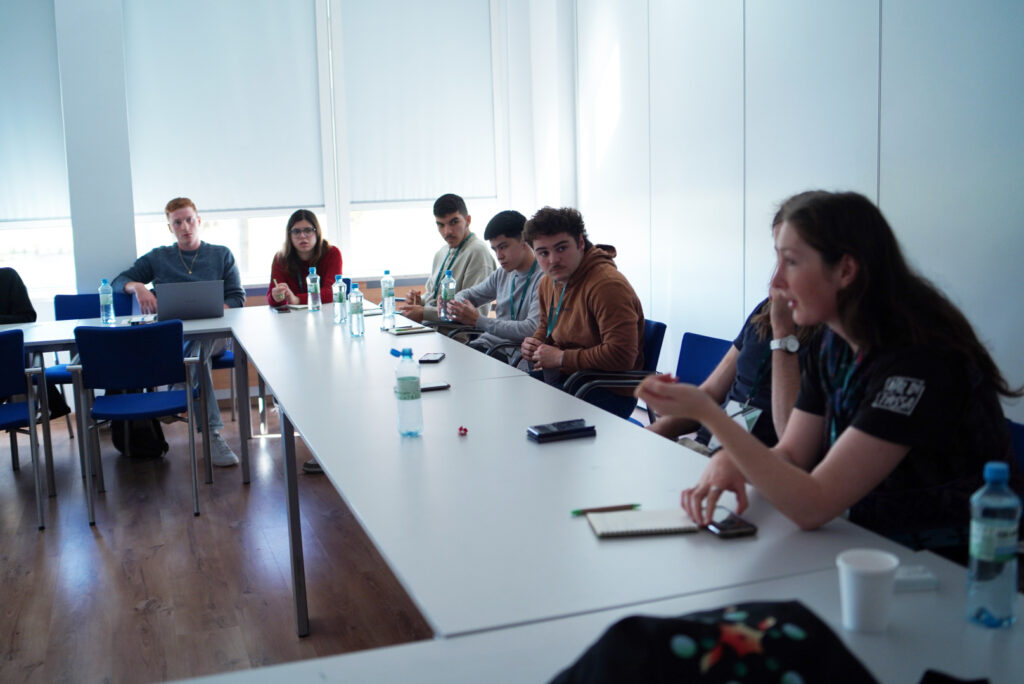
During the three days meeting, the students talked about their role in the UNIgreen alliance and the most important goals that the alliance should pursue from their perspective. The program also included time for getting to know each other, visiting one of the local experimental plants of SGGW and visiting the city of Warsaw.
Summing up the three-days meeting, the students stressed that their knowledge of the alliance’s tasks had increased significantly. They would also like to be actively involved in all substantive areas of the alliance. A large part of the discussion focused on sustainability and environmental protection. Students would like everything that happens within the alliance to be subordinated to a genuine concern for the environment.
The meeting in Warsaw is to be the beginning of intensive cooperation. The students are already planning another in-Person meeting in about one month and intensive cooperation on a daily basis using means of remote communication.
Prof. Marta Mendel, the Vice-Rector for the International Cooperation, summed up the conclusions and expressed satisfaction that the meeting in Warsaw brought so many interesting discussions, but also concrete findings. Presenting certificates to the participants of the meeting invited them to consider returning to SGGW – also in the role of visiting students.
The meeting was attended by students from all universities of the Alliance. It was organized by the Student Council of SGGW.
-

The Impact of Population Growth and Urbanization on Sustainability
Our world is constantly changing due to population growth, urbanization, and technological progress. These shifts are transforming economies, societies, and the environment. While technology has improved our lives, it has also put significant pressure on natural resources. To move forward sustainably, we must understand these impacts and find solutions that balance development with environmental responsibility.
Over the past 200 years, Earth’s population has grown at a remarkable rate. In 1800, our planet was home to approximately 1 billion people. By 2023, that number had surpassed 8 billion.
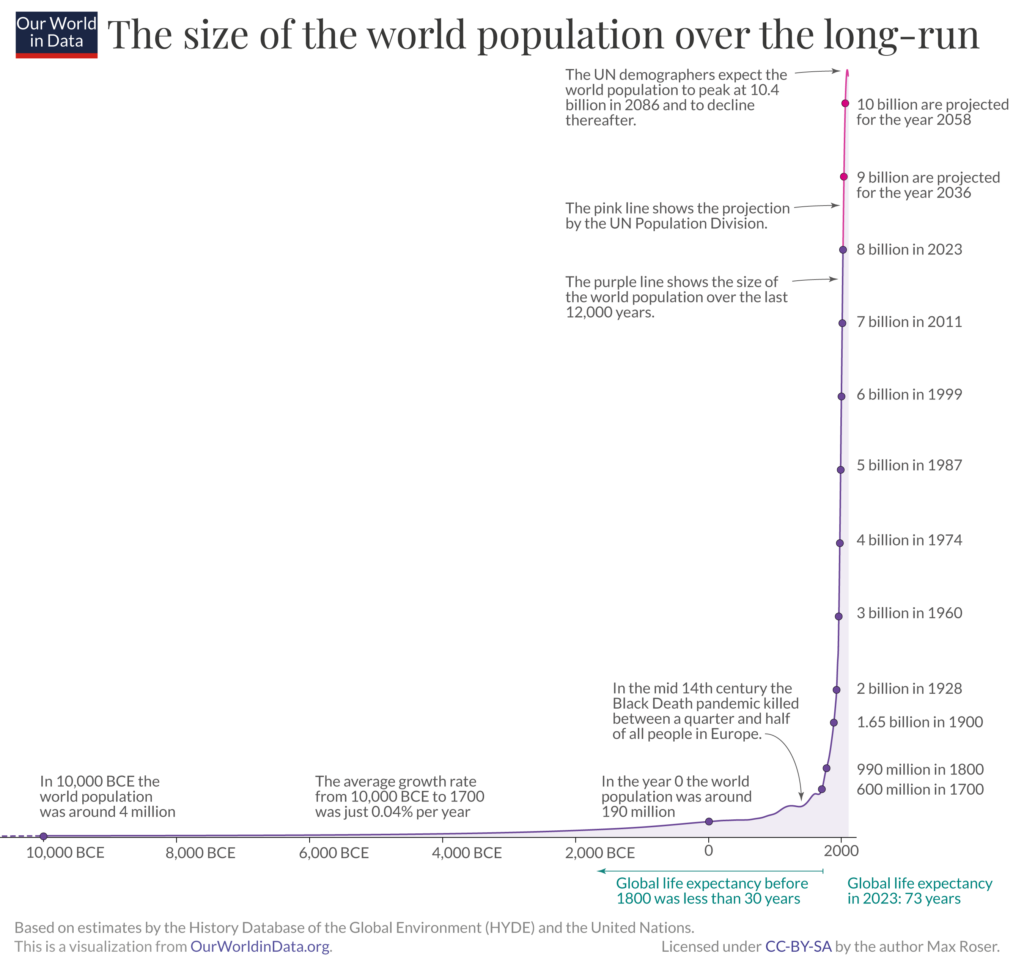
The time between each additional billion decreased dramatically at first. It took about 128 years (until around 1928) to reach 2 billion, but only 32 years more to reach 3 billion in 1960. The acceleration continued, with the 4th billion reached in just 15 years (1975) and the 5th billion in merely 12 years (1987).
Interestingly, population growth then stabilized somewhat. We reached 6 billion in 1999, 7 billion in 2011, and 8 billion in 2023—each milestone taking approximately 12 years.
Population growth is closely tied to advancements in medical care, food access, and economic development. The latter began with the transition from the age of wood to the age of steam—the First Industrial Revolution—when coal-fired boilers powered machinery. This was followed by the Second Industrial Revolution, marked by the shift to other fossil fuels like oil, which provided the energy needed for electricity production.
Electricity, in turn, enabled the Third Industrial Revolution centred on electronics, which led to the Fourth Industrial Revolution, characterized by the Internet and artificial intelligence. Given these technological progressions, one might expect a decline in demand for wood, particularly as a fuel source.
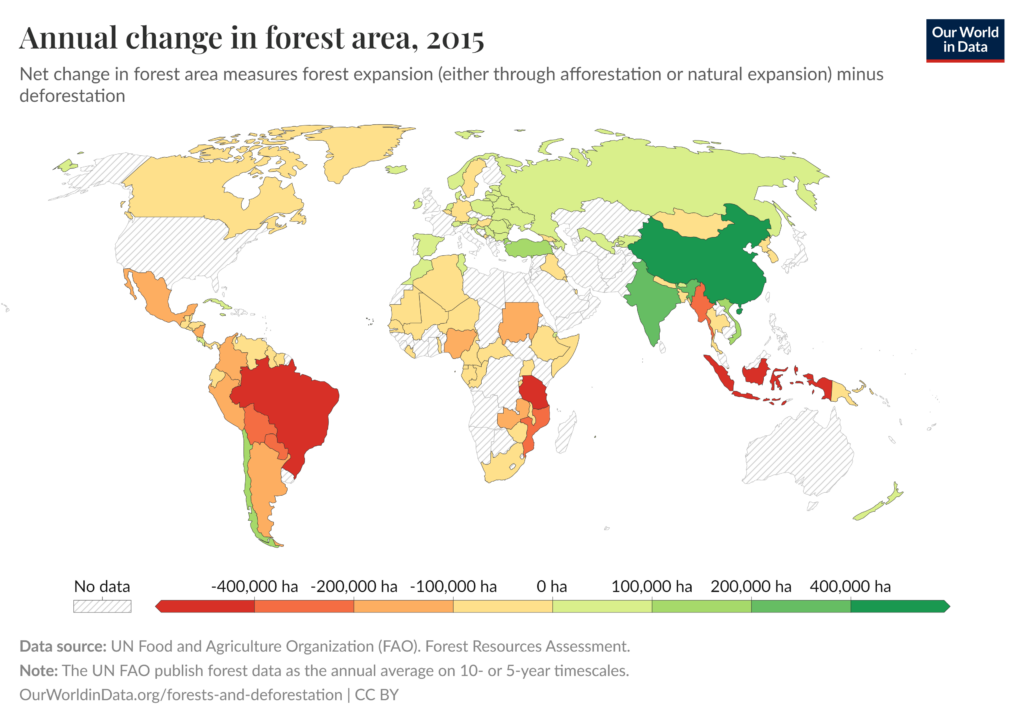
Meanwhile, demand for wood is actually growing, reaching enormous proportions in some parts of the world. In Kinshasa, the capital of the Democratic Republic of Congo, the majority of residents and factories depend on charcoal and firewood as their primary energy sources for both cooking and manufacturing.
It’s worth noting that coal mining requires substantial amounts of wood for constructing mine tunnels. Similarly, early oil extraction relied heavily on wooden structures to build oil wells. Economic development and increased food production also drive the need for agricultural land. This is one of the leading causes of deforestation in the Amazon region, where forests are cleared to make way for soybean farms and other agricultural operations.
Globally, we lost 81.7 million hectares of forest between 1960 and 2019, with the majority of this deforestation occurring in tropical regions, particularly in areas around the equator.
Simultaneously, a significant portion of our growing population is migrating to cities. While only about 2% of humanity lived in urban areas at the beginning of the 19th century (with uneven distribution—reaching 30% in some parts of Europe), today’s global average stands at 56%, with some countries exceeding 80% urbanization.
This social transformation has distanced humans from nature, potentially hampering our understanding of natural processes and our ability to manage increasingly altered environments properly. Without comprehensive education at all levels—from early childhood through university—that enables critical verification of information, people become more susceptible to appealing but factually unsupported claims.
Such misinformation creates unnecessary conflict and societal divisions. In our current international climate, these divisions should be minimized as much as possible.
At the same time, cultural development has heightened people’s awareness of their environmental impact. This increased social consciousness drives efforts to improve environmental conditions and foster greater concern for the common good. One manifestation is the growing desire for a voice in environmental decision-making—essentially, greater public participation in environmental management.
This trend is highly positive as it helps restore our diminished connection with nature. While there are various methods of social participation and different ways to gather public opinion, taking initiative and expressing views on environmental management must be paired with proper education and a thorough, rather than superficial, understanding of the issues.
This combination of engagement and knowledge allows for rational action. It helps people avoid being influenced by potentially demagogic arguments that, despite initial appeal, could ultimately harm the environment in the long term.
Environmental management is equally essential from the manager’s perspective, regardless of the type of land being managed. Whether discussing a multi-functional forest providing various benefits—tangible (timber, berries, mushrooms) or intangible (clean air, soil conservation, recreation)—or protected areas, the approach should be consistent and encompass two key aspects.
The first aspect responds to growing public pressure for responsible management and involves improved communication about planned decisions. Managers must effectively demonstrate to the public that these decisions are being made without causing harm to natural systems.
The second aspect acknowledges that management decisions should be firmly grounded in solid research evidence in our current era of scientific advancement.
In conclusion, population growth and urbanization have reshaped our relationship with nature. While challenges like deforestation, resource depletion, and misinformation arise, they also create opportunities for greater awareness and responsible decision-making. By prioritizing education, public engagement, and science-based policies, we can balance development with environmental protection. The future of our planet depends on our ability to stay informed, collaborate, and act wisely.
About the Author
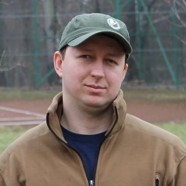
This article was written by Wojciech Kędziora, PhD from Warsaw University of Life Sciences, Poland.
Dr Wojciech Kędziora (Warsaw University of Life Sciences, Poland) is an early-stage researcher in the field of forest inventory, management planning, coarse woody debris, and dendrochronology in temperate forests. His PhD thesis was focused on National Forest Inventory data and assessing site index for Scots pine (Pinus sylvestris) in Polish lowlands. Moreover, he is also interested in the spread of mistletoe (Viscum album) in the pine forests of Central Europe. In his interests, he also conducts research in decision support systems and multi-criteria forest management.
-
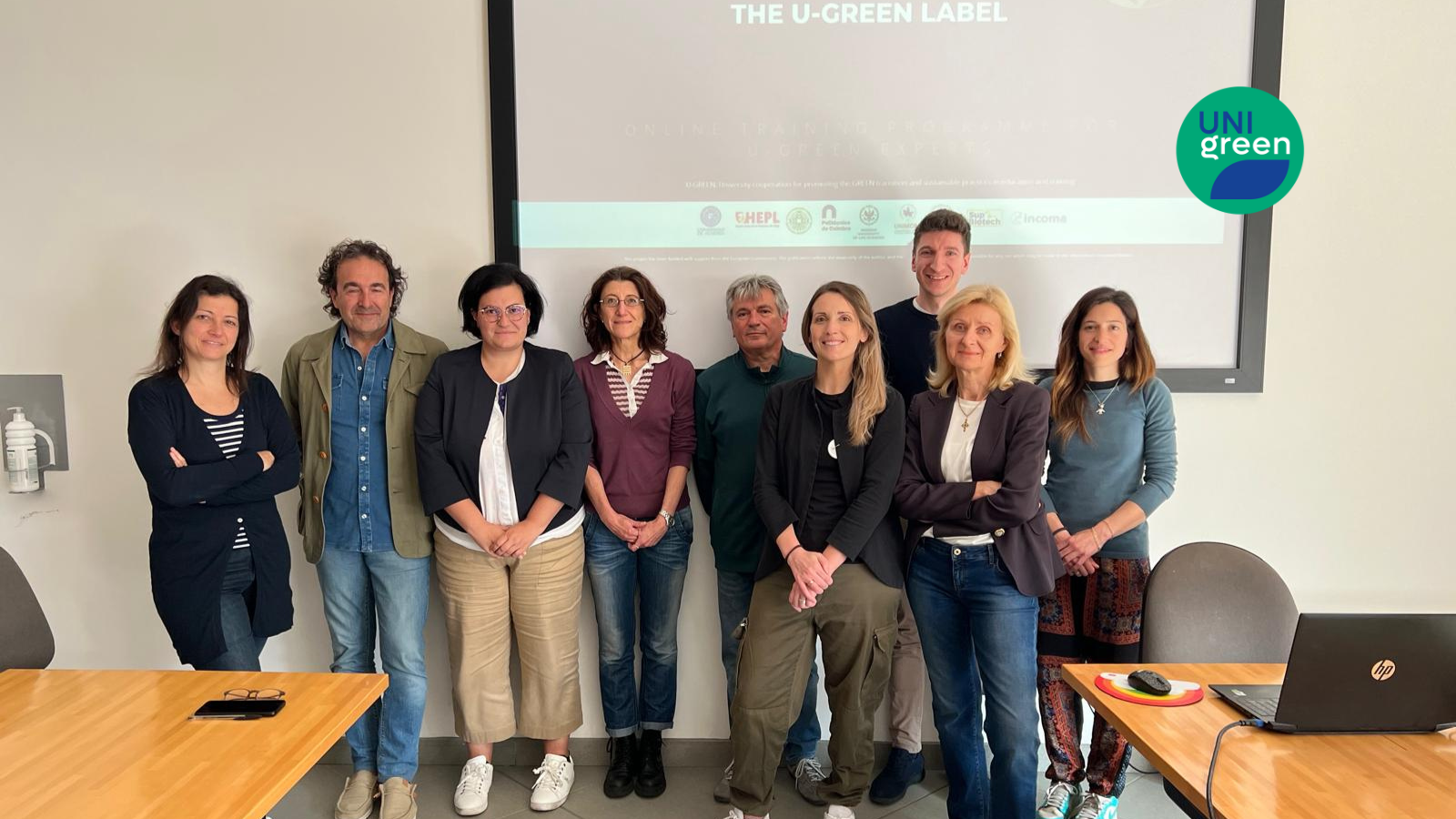
The training for U-GREEN Experts continues at UNIMORE
The University of Modena and Reggio Emilia (UNIMORE) held training for U-GREEN Experts, as part of Result 3 of the U-GREEN Project.
According to the U-GREEN approach (based on outcomes 1 and 2 of the project), Education and Training professionals are trained to support the green transition and carry out green and sustainable practices in their fields of operation.
U-GREEN Experts play a crucial role in the implementation of the U-GREEN Label. They will be equipped to perform self-assessments (for the first and second levels of the label) and peer-audits (for the third level). Their responsibilities include evaluating compliance with the criteria, providing recommendations, and awarding the label within the Consortium and to external stakeholders.
-
The UNIgreen Green Strategy
The vision of UNIgreen about research, development and innovation is that by 2026 UNIgreen is recognised in Europe and internationally as a green university promoting the green transition of the Alliance toward establishing an environmentally friendly, resource efficient and climate neutral European University that significantly impacts the achievement of the European Green Deal and UN Sustainable Development goals.
The UNIgreen Green Strategy is working to implement this vision by setting up the highest standards for promoting the green transition of the Alliance Higher Education Institutions (HEIs).
The Alliance Green Strategy sets up a 3-year intervention plan of initiatives towards transformation actions in 3 main areas (pillars), namely: Infrastructure & Resources; Administrative Management, Teaching & Learning; and Community Engagement and Awareness.
Now, when the UNIgreen is completing its second year, we answer the questions:
Are we aligning with societal needs?
UNIgreen has an acting Green Transition Unit of the UNIgreen Joint International Centre (JIC) that brings together a multidisciplinary team of experts supporting the implementation of the UNIgreen Green Strategy.
A Roadmap for the Green Transition of the UNIgreen outlines processes and interventions, which boost the UNIgreen impact and visibility in pursuing a climate-neutral, environmentally sustainable, and socially equitable Europe.
UNIgreen successfully promotes cooperation, knowledge and innovation transfer between Teaching, Research, Business, and Industry by integrating green instruments and strategies in its Knowledge Triangle Programme.
Do we communicate efficiently to society
The strategy aims at dissemination & diffusion of innovative green solutions & concepts in the local communities. Some examples are:
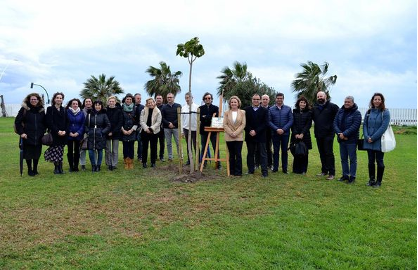
- Tree planting initiatives UNIgreen Day – environmental awareness & community involvement
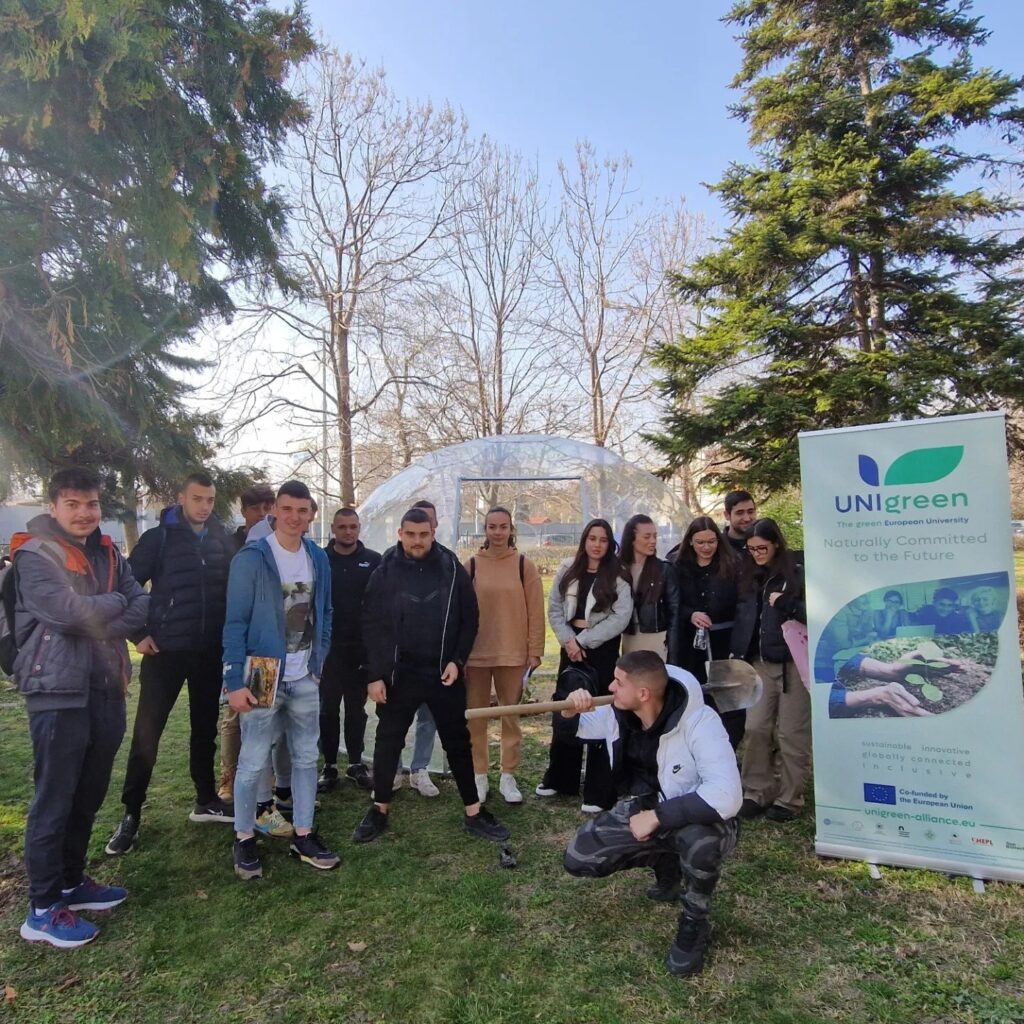
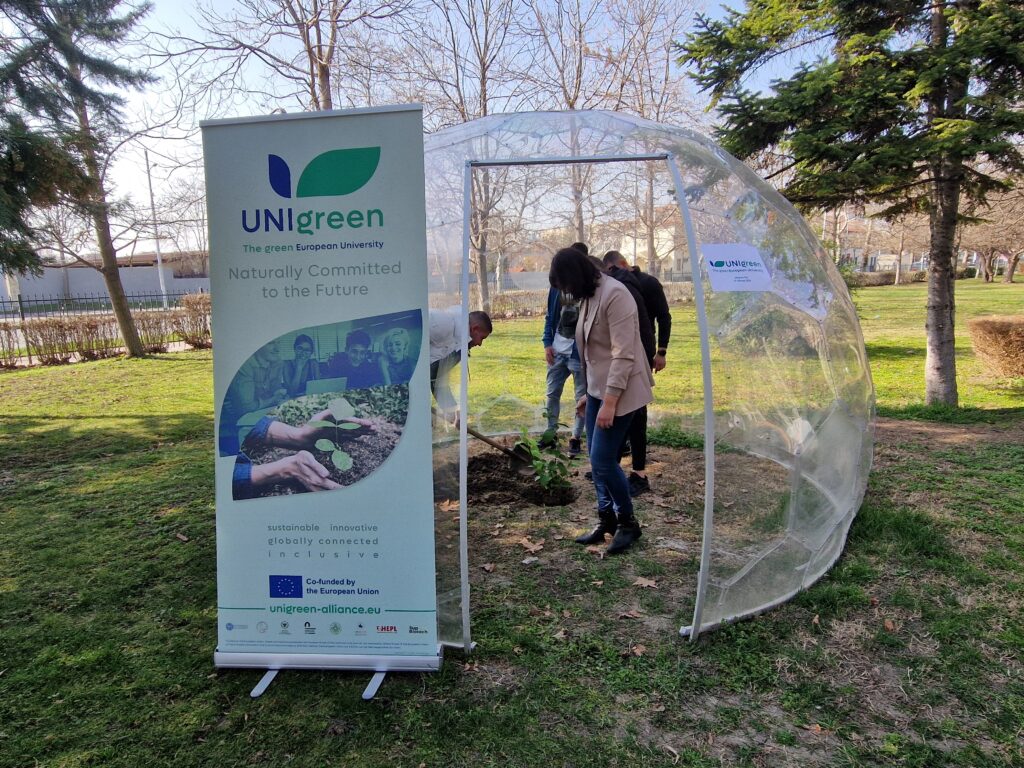
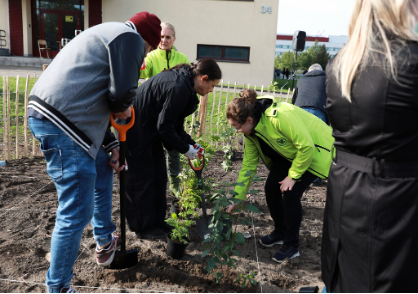
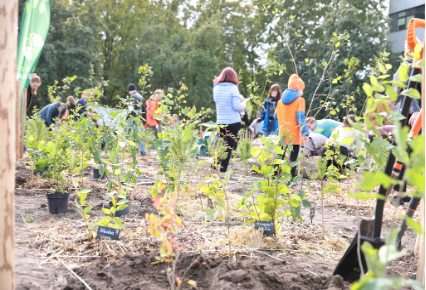
- Green Campus Event at SGGW, Warsaw University of Life Sciences (Poland)
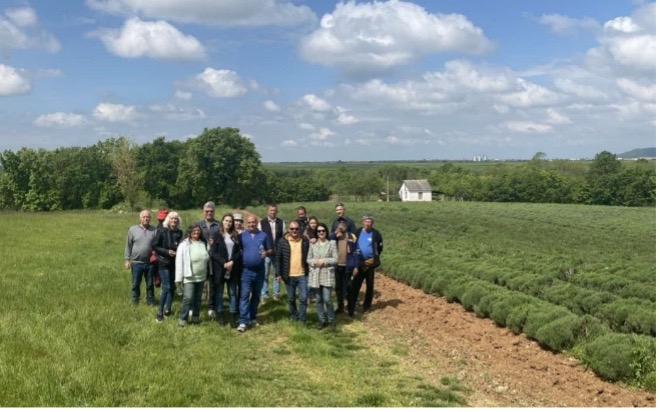
- Collaboration between Agricultural University of Plovdiv and Municipality Brezovo in Bulgaria by building and operating an Advisory Centre for organic agriculture, animal husbandry and beekeeping.
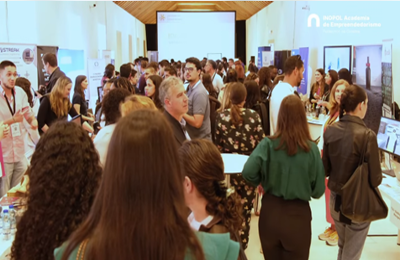
- Job Summit IPC & Science2Bussines: Polytechnic University of Coimbra (Portugal) event promoting employability & knowledge transfer, attended by 350+ students + 50 recruiting companies of different sectors.
UNIgreen successfully demonstrates a model of knowledge and skills transfer generated by the UNIgreen researchers carrying out interdisciplinary scientific and development projects incorporating the ecology and climate issues for sustainable development.
The UNIgreen Ecological Footprint Compensation Programme is operating with different initiatives towards promoting the environmental sustainability of the Alliance.
The UNIgreen Green Strategy aligns its instruments with the Alliance Internationalisation Strategy, aiming to increase the formal knowledge transfer by increasing the number of international publications by UNIgreen researchers and PhD students and candidates, especially in green topics related to ecology and society. By 2030, the Alliance aims to achieve the ambitious goal of providing different forms of green mobility to its students.
Do we reflect the society signals?
UNIgreen successfully integrates instruments for facilitating smooth students’ transition to the labour market through skills alignment and soft skills development. First, there was an Analysis of the labour market demand for (practical & green) skills and then new courses/subjects with practical & green components in the Alliance HEIs curricula to acquire skills & learning outcomes in the domain Sustainable Agriculture, Green Biotechnology and Environmental and Life Sciences was suggested.
- Development joint BSc, MSc, PhD programs in Science, Technology and Agri-food Biotechnology and suggesting and observing adoption of green topics, related to the EU Green Deal and the SDGs. The UNIgreen International Doctoral School offers PhD mobility for specialisation and advanced knowledge of PhD students and PhD holders, such as seminars, workshops, open courses, mentoring and financing that are targeting green topics relevant for ecology and society and using a multidisciplinary approach.
- Ease the access the to the labour market for graduates by observing industry guests-lecturers in classes e.g. part of UNIgreen study programs or UNIgreen HEIs and business experts on knowledge transfer & IPR, Business-Angels network sponsored by UNIgreen, jointly design and implement (business or industrial innovation) collaborative projects with business partners, support to early-stage and established entrepreneurs in the UNIgreen domain through training, mentoring and financing, thus complementing the SURES Programme, Challenge labs – competitions for business ideas experimentation & collaboration, promoting brainstorming & peer exchange, presenting student business projects (within the Alliance and internationally), Access to mentors (business, researchers, professors, entrepreneurs, alumni), with a special focus
The implementation of the UNIgreen Green Strategy will lead to:
- Extended national & EU funding for “greening policy” of the Alliance & its initiatives
- Promote greening of the HEI campuses
- Adapting the Knowledge Triangle Program with green business
- Lower the ecological footprint by green mobility & alternative sustainable heating sources, promoting digital tools & virtual forms of learning, working & mobility, promoting awareness of EU sustainability plans at institutional scale, use sustainable means to compensate CO2 emissions & address climate change.
About the Author

This article was written by Prof. Vladislav Popov from Agricultural University of Plovdiv, Bulgaria.
Prof. Vladislav Popov, PhD is an acting Professor at the Dept. of Agroecology at the Agricultural University of Plovdiv, (AUP), Bulgaria. Lecturer at the AUP since 1996. Internationally recognised researcher, expert and adviser, experienced in leading high-profile (inter)national R&D projects in agroecology, organic agriculture and bioeconomy in the EU-27, Balkans, Caucasus, Central Asia and East Africa. Bulgarian delegate in the Standing Committee of Agricultural Research (SCAR) at the European Commission (EC) and a Vice-Chairman of the LifeWatch ERIC. A National Coordinator and Chairman of the Executive Board of the National Scientific Programme (NSP) of the Ministry of Education and Science (MES) of Bulgaria “Healthy Foods for Strong Bioeconomy and Quality of Life” (2018-2023) and NCP “Smart crop production” (2021-2024). Expert of the European Training Foundation, the EIT-Food and the FAO. An author of 100+ scientific publications, books, manuals, etc. A coordinator of the UNIGreen University Alliance Work Package 6 “Transfer of knowledge, society and ecology”.