Collaboration, Transparency, and the Future of Student Engagement
The European Universities Student Ambassadors Forum (EUSAF) gathered student representatives from alliances across Europe for three days of collaboration, training, and exchange at SGH Warsaw School of Economics. For UNIgreen, this edition was an opportunity to observe how alliances work together, how students shape European higher education, and how we can strengthen our own governance and engagement structures.
I arrived in Warsaw on 1 July, one day prior to the official start of the forum. By coincidence, I met two other French representatives taking the same flight. That same evening, we met other student representatives already in Warsaw. The early arrival set the tone for the entire event: informal, open, and collaborative.
Workshops: Cooperation, Roles, and Transparency
The first full day of the conference was dedicated to structured activities designed to simulate cooperation, negotiation, and decision‑making – the core skills ambassadors need when representing their alliances.
Fantasy World Simulation: Roles and Collective Strategy
In the first workshop, participants were assigned fictional roles in an imaginary world. As the “rogue,” my task was to manage team decisions and help coordinate our strategy. Despite the initial confusion, our group developed a detailed scenario involving mountain tribes and the construction of a tunnel connecting them. The exercise demonstrated how clearly defined roles can support cooperation, even when the topic is unfamiliar or undefined at the start.
Kitchen Resources Game: Limited Inputs, Shared Outcomes
The second workshop asked each participant to write down the “most important kitchen object,” which later became an ingredient for a team‑based cooking challenge. Teams had to negotiate, trade, and combine their limited resources to create a meal. The activity highlighted how alliances must collaborate despite unequal resources. It also showed the importance of creativity in alliance governance.
Game Theory Exercise: Transparency and Collective Benefit
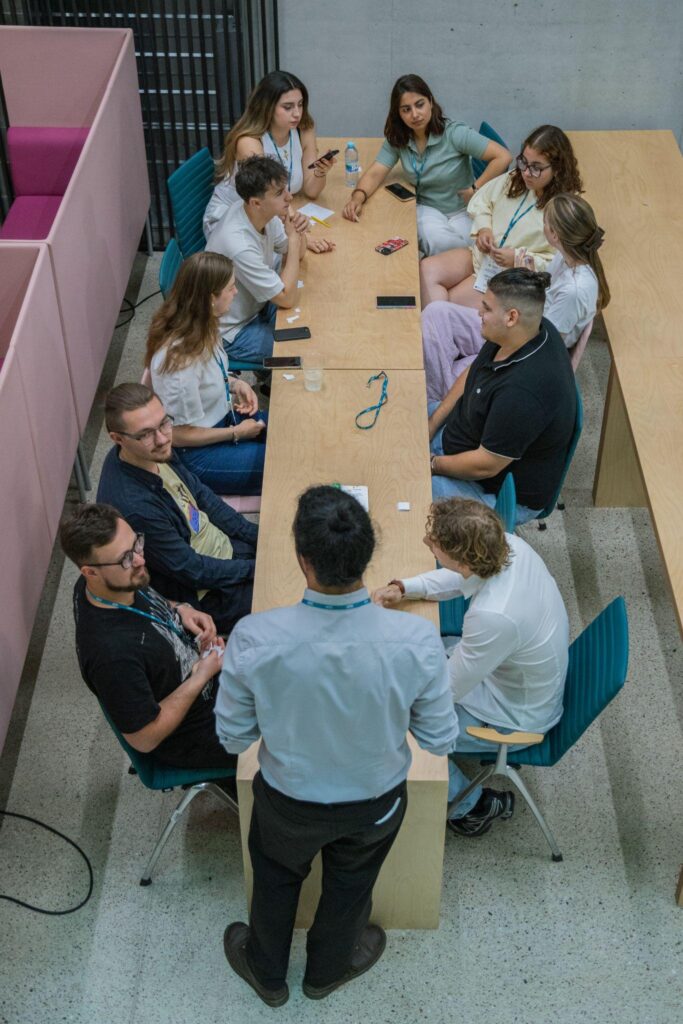
The final workshop introduced basic game theory. Each participant received ten coins and chose how many to contribute to a shared pool over ten rounds. The total was multiplied by a factor of 1.5 and redistributed equally. When contributions were anonymous, participants tended to hold back. Once contributions became public, cooperation increased dramatically. The lesson was clear: transparency builds trust, and trust increases collective benefit – a principle that applies directly to alliance governance.
Poster Session and Open Discussions
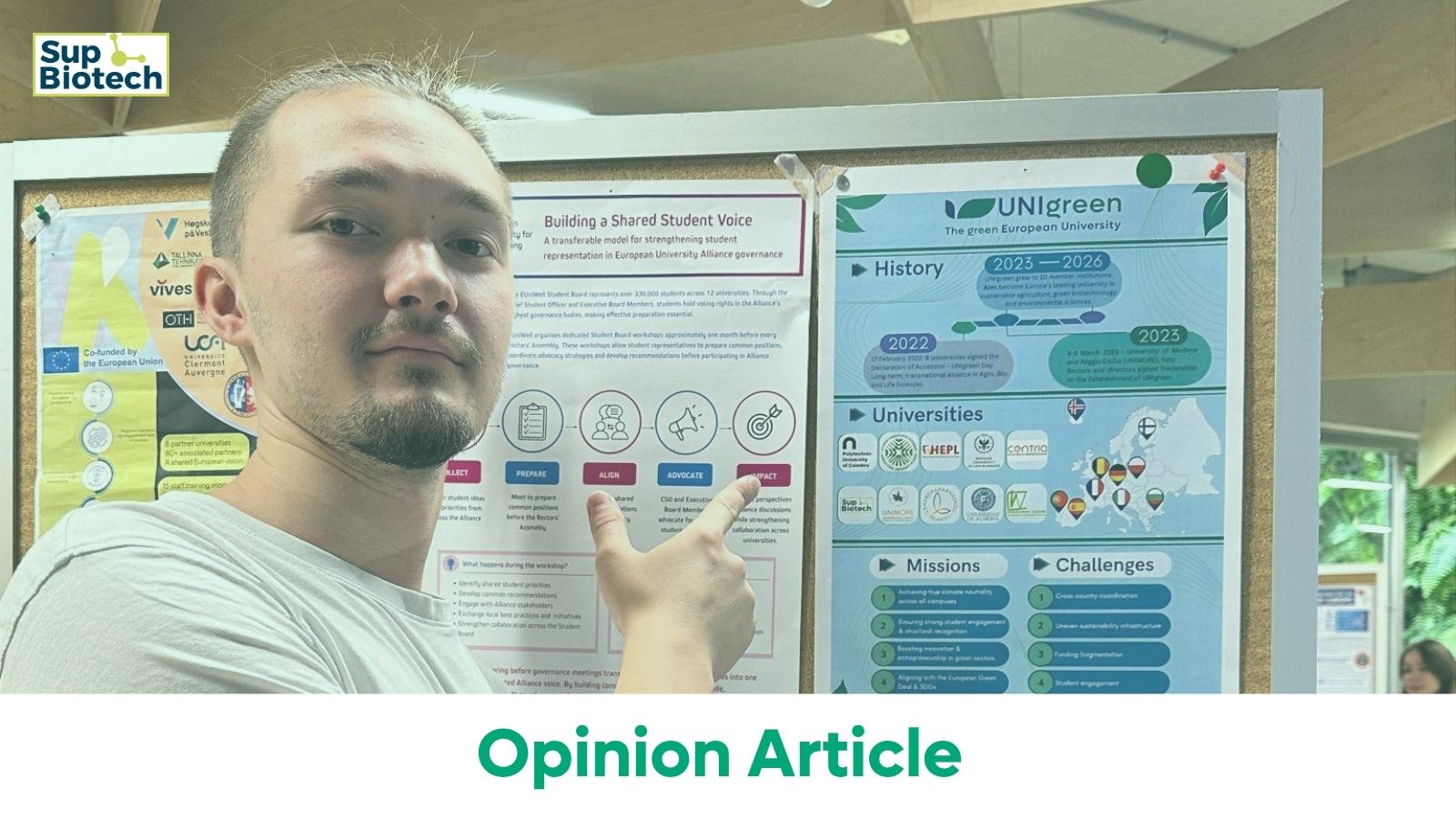
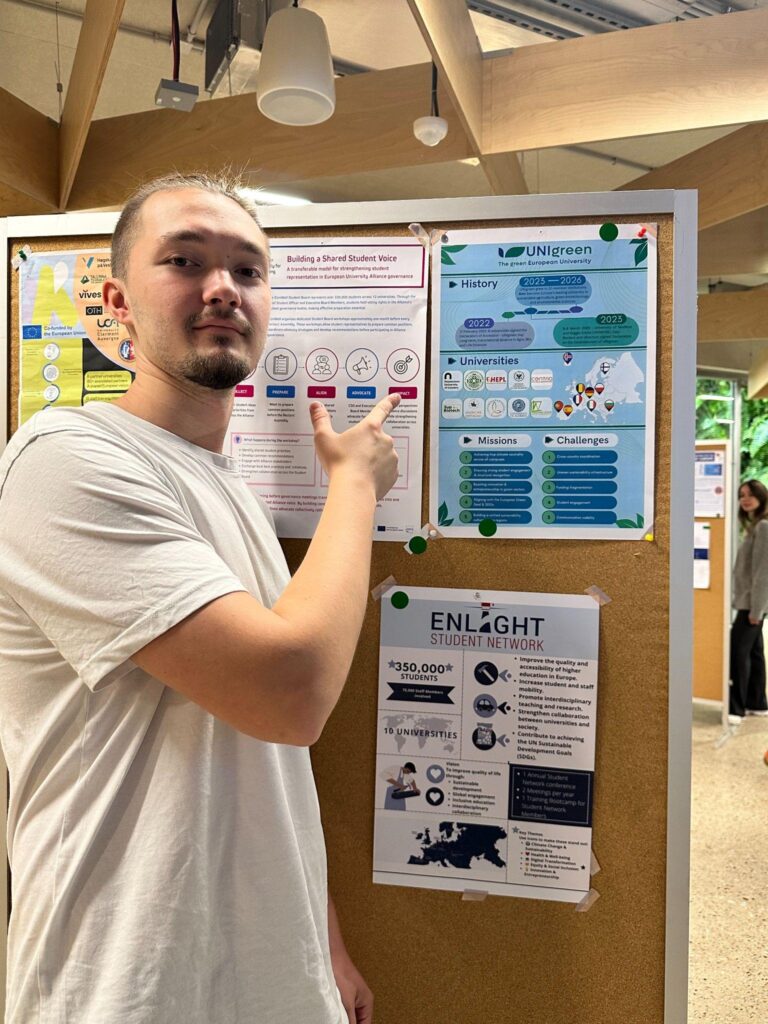
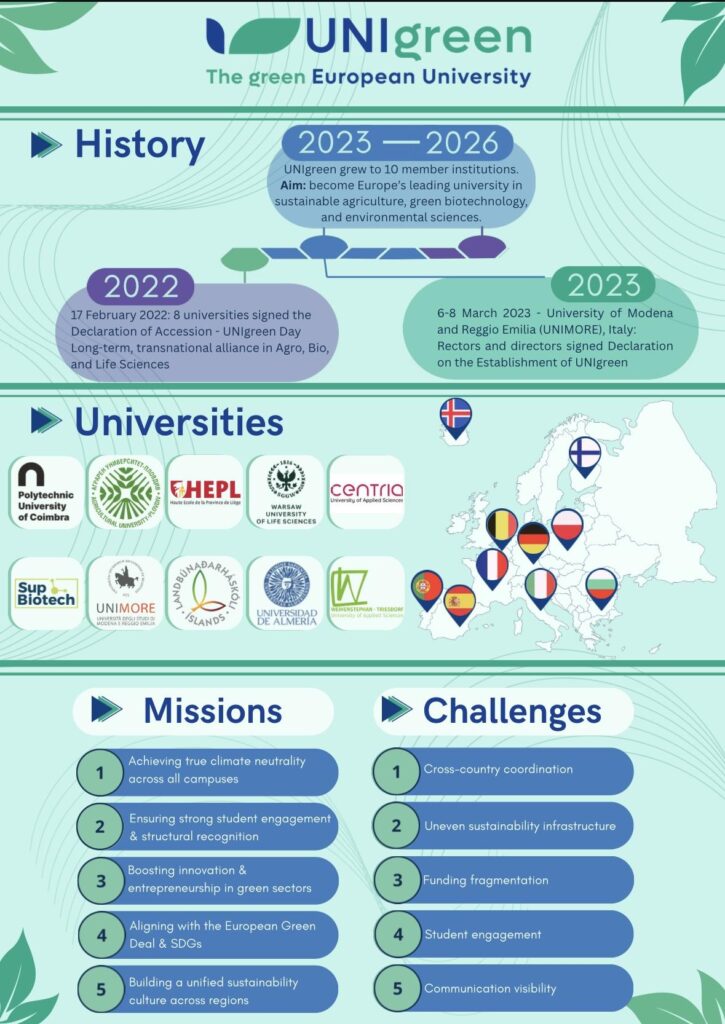
On 4 July, ambassadors presented posters showcasing their alliances. Participants voted for the best posters, and the top four were invited to present their alliance’s mission, activities, and challenges. This session revealed a common pattern: every alliance struggles with financing, unequal contributions, governance complexity, student engagement, and communication visibility.
Later, students organized open discussion groups on current societal issues. I joined a session on data collection and targeted advertising – a reminder that student concerns extend far beyond academic issues.
Insights for UNIgreen: Engagement Through Real Opportunities
Across conversations, one theme kept returning: student engagement. Many ambassadors expressed frustration that students often do not understand what their alliances are, do, or how they can contribute. But, in my opinion, for UNIgreen, the solution may be simpler than it seems.
UNIgreen should focus on creating real opportunities that students can immediately see and join – on top of the learning activities and Blended Intensive Programmes (BIPs):
- Green campus projects where students propose and implement sustainability ideas.
- Inter‑university research projects aligned with UNIgreen’s mission in green biotech, agriculture, and environmental sciences.
- Visible, practical initiatives that show students how the alliance can support their academic and professional growth.
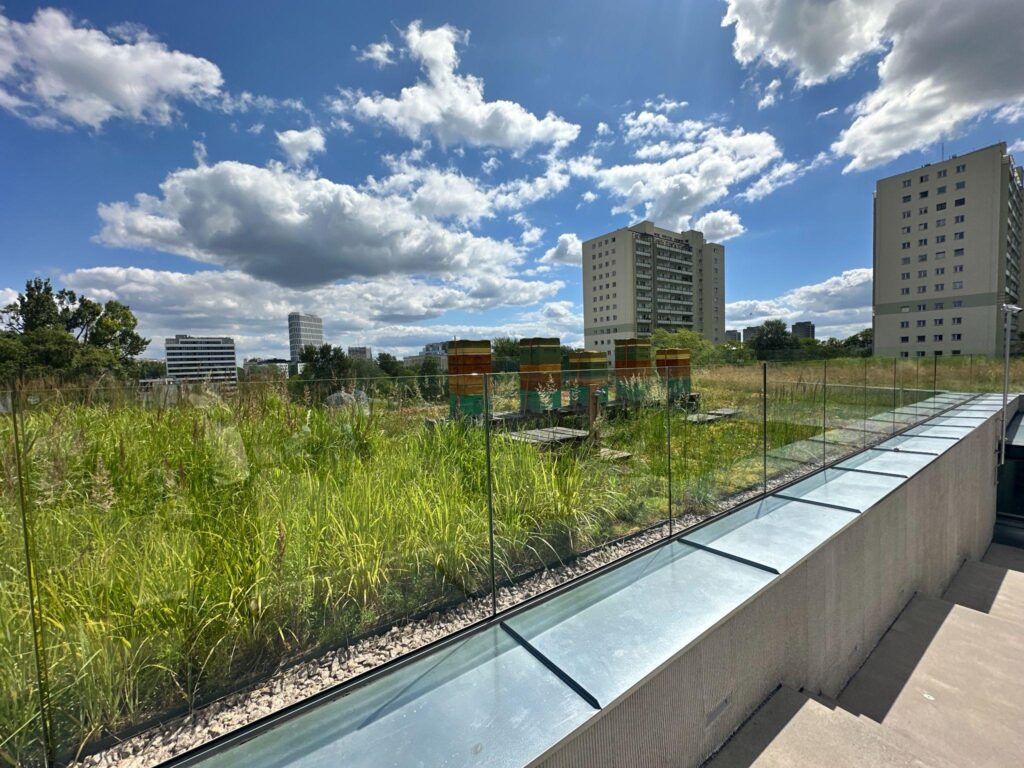
During the forum, I noticed how SGH integrates sustainability into its campus: green walls, rooftop gardens, and even beehives. These small but meaningful elements create a sense of environmental responsibility and are visible from the first moment. UNIgreen could adopt similar initiatives across member universities, turning sustainability from a concept into a lived experience. It is also a great opportunity to engage students, the main stakeholders of a sustainable campus, who already have the skills and knowledge to contribute.
When students see real impact, engagement follows naturally.
Conclusion: Alliances Work When Students Work Together
EUSAF 2026 demonstrated that collaboration between alliances is not only possible – it is necessary. The atmosphere throughout the event was one of openness, curiosity, and shared purpose. I spent the forum networking, learning about other alliances, and explaining UNIgreen’s mission. These conversations confirmed that UNIgreen’s positioning in sustainability, green biotechnologies, and environmental sciences resonates strongly with the wider academic community.
The forum also reinforced a simple truth: alliances succeed when students are empowered, informed, and involved. For UNIgreen, this means strengthening visibility, creating opportunities, and ensuring that student representatives have both the tools and the mandate to act.
EUSAF was not just a conference – it was a reminder that students are ready to contribute. Now, alliances must give them the space to lead.
About the Author
By Vladislav Surighin, UNIgreen Student Representative at EUSAF 2026, Warsaw, 2-4 July 2026.