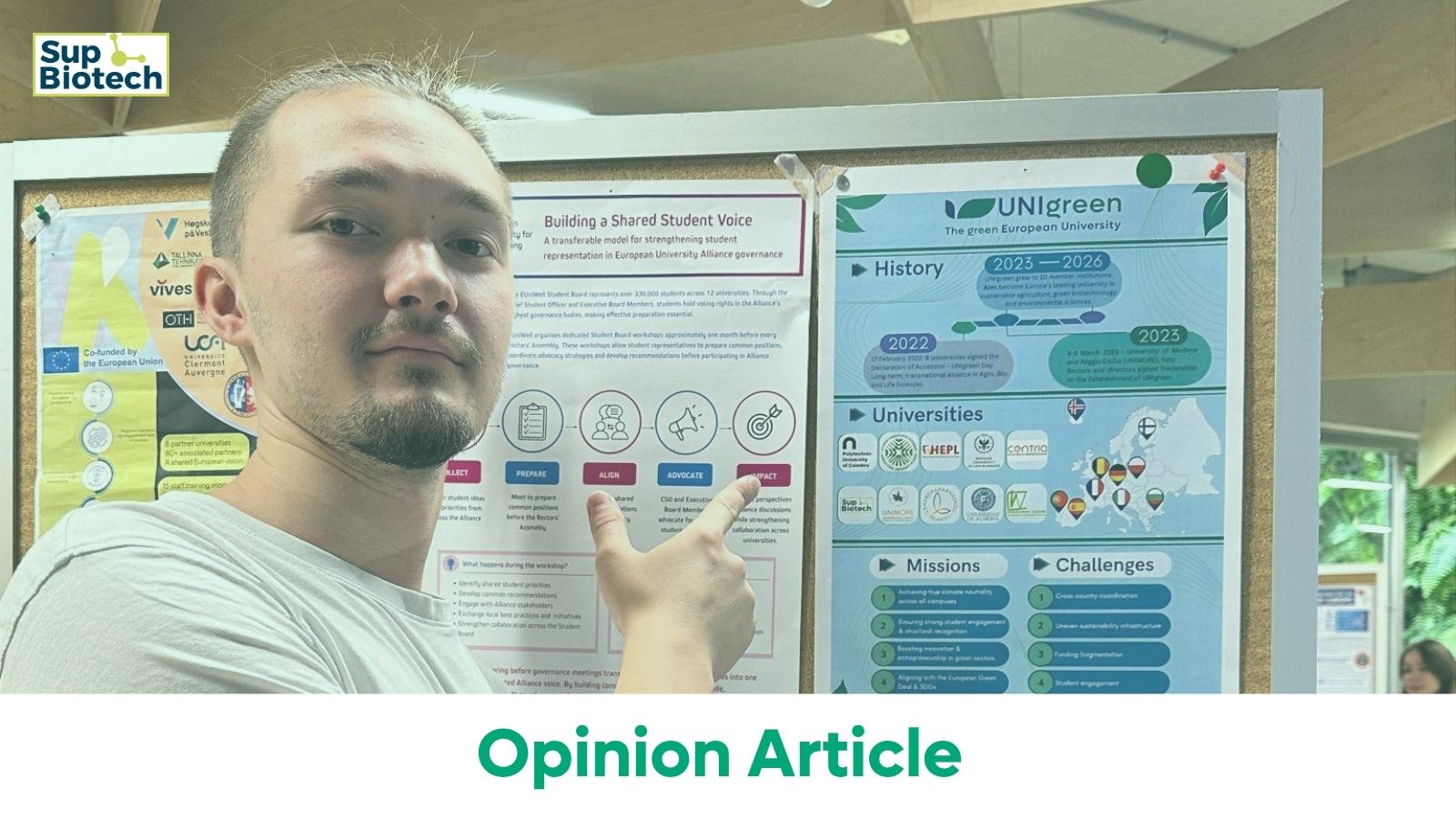

In February 2026, student representatives from across the UNIgreen Alliance gathered at the Polytechnic University of Coimbra during the Annual Summit to actively contribute to the Alliance’s future development. The Summit brought together academic leaders, coordinating bodies, and students from partner universities across the Alliance. More than a formal meeting, it marked a shift in perspective: students were not present as observers but engaged participants in discussions regarding governance, priorities, and long-term vision. This involvement reflects a growing recognition that the strength of UNIgreen lies in collaborative decision-making process and student engagement.
What are the students really asking for?
In this Alliance, students are increasingly clear about one central demand: structural recognition. Participation should not be punctual or symbolic; it should be part of institutional structure. We want our role to be clearly defined, acknowledged, and integrated into decision-making processes. Strong institutions are shaped with students, not for them.
This demand is related to the importance of coherence. If sustainability is presented as a core value, it must be reflected not only in lectures but also in campus practices, strategic priorities, and everyday choices. The idea of “think globally, act locally” captures this expectation well; sustainability cannot remain theoretical. It must be visible, authentic, and consistent within the institutions that promote it.
Students are also calling for stronger interdisciplinary and future-oriented education. The challenges ahead require more than specialised knowledge. Green skills, ethical reasoning, digital literacy, and anticipatory thinking are increasingly seen as essential. Students want learning environments that prepare them to adapt, collaborate across disciplines, and respond responsibly to global uncertainty.
Clearer communication channels across universities, accessible information about opportunities, and shared digital spaces for collaboration are frequently highlighted as priorities. Students don´t simply want more initiatives; we want them to be understandable, accessible, and connected. The ongoing development of common platforms, shaped in part by student feedback, reflects a shared commitment to making opportunities more visible and accessible.
Student participation is not about visibility. It is about responsibility. When students move from being consulted to being embedded in processes, policy development becomes more inclusive and more aligned with the realities of academic life. Governance bodies increasingly acknowledge the importance of this dynamic, which reinforces trust and shows that collaboration is just not theoretical. The result is not only stronger decision-making processes, but a stronger Alliance.
Connecting innovation with sustainability: academic progress rooted in responsibility
I personally feel that innovation in UNIgreen is not understood as growth at any cost, but as a progress guided by responsibility. Students are offered academic initiatives such as the Innovation challenge or other interdisciplinary projects that reflect this approach. During a Blended Intensive Programme at the Warsaw University of Life Sciences, I had the opportunity to explore how green infrastructure and circular economy principles can create resilient and sustainable cities. I analysed alongside other international students how nature-based solutions, biodiversity strategies, and circular economy initiatives are integrated into real urban planning. For me, this experience made innovation tangible because it applied collaborative problem-solving rooted in sustainability.
I have also seen this approach reflected in other UNIgreen initiatives, from sustainable strategies in health sciences to responsible cosmetic formulation and carbon footprint workshops such as the Two-Tones initiative. What stands out to me is that sustainability is not treated as a separate topic, but as a principle across multiple disciplines. Research-based learning, cross-border collaboration, and applied academic experiences allow students to engage directly with real-world challenges, particularly in areas related to food systems, environmental transitions, and green technologies.
Conclusions
Beyond strategic discussions, I have personally witnessed how student participation can translate into concrete action. During UNIgreen Day at the University of Almería,some students took part in a collaborative workshop where researchers and us worked together to generate proposals in order to improve the environmental sustainability of our campus. Through a structured and participatory dynamic, we developed practical ideas that were intended to be presented directly to the university’s rectorate. That moment showed me the essence of the importance of student involvement: dialogue that can potentially move upwards and influence institutional decisions
Experiences like this show that participation, innovation, and sustainability are not abstract concepts within UNIgreen. When students are given space to contribute and clear pathways for their ideas to be heard, engagement becomes authentic. It reinforces my belief that sustainability is not only something we study, but something we actively shape in our own academic environments.
By strengthening student engagement today, UNIgreen contributes to forming professionals who are not only technically competent, but ethically grounded and socially responsible. This matters because the future leaders of our institutions, industries, and communities are sitting in today’s classrooms. Empowering students now is not symbolic, it is an investment in a more conscious and prepared future.
About the Author

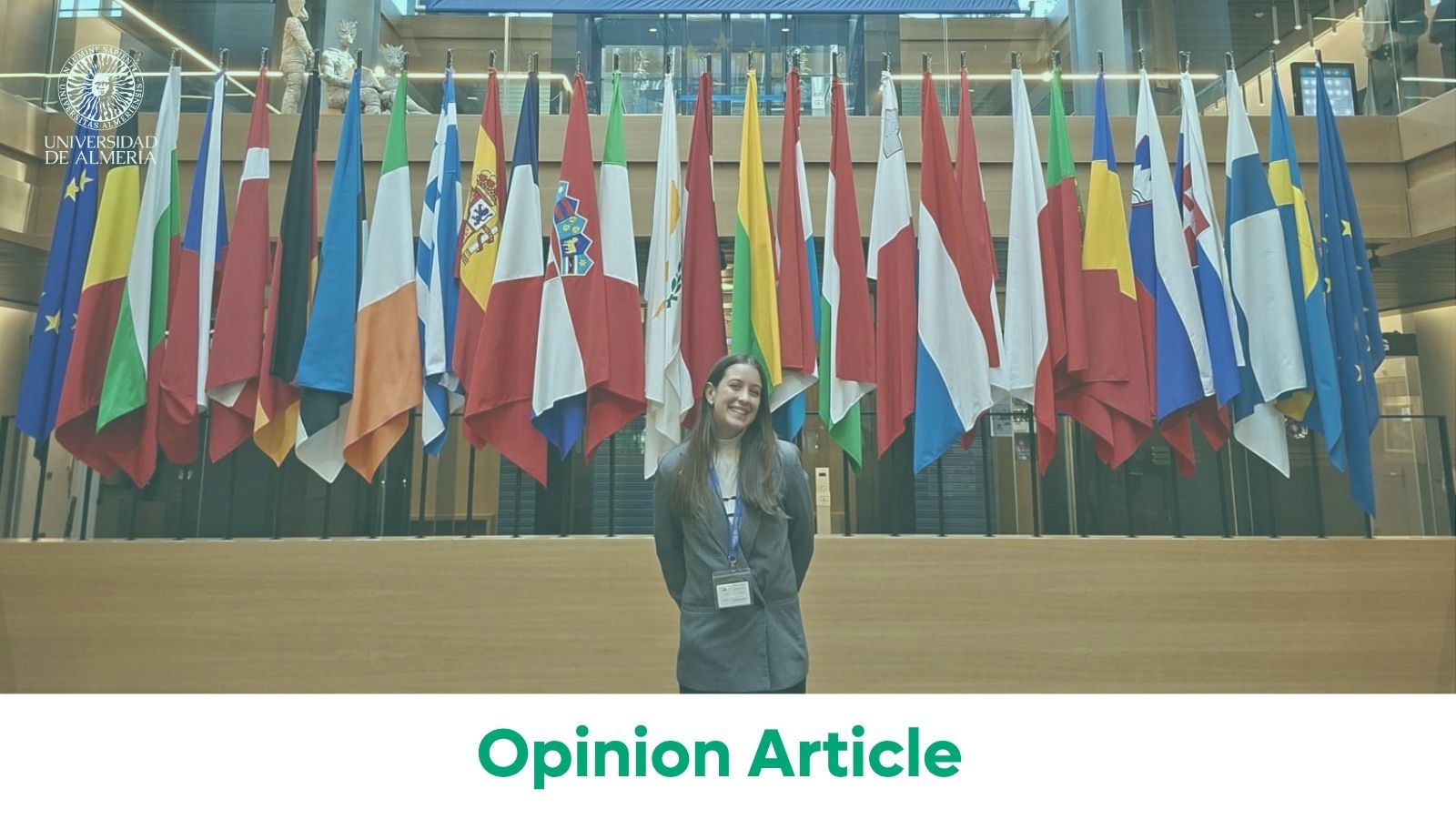
This article was written by Gema Vega, a Biotechnology student at the University of Almería, Spain
She is interested in the practical applications of science, particularly in sustainability and environmental challenges, and in how research knowledge can be translated into real-world solutions. She has gained experience in interdisciplinary teamwork and international academic environments through her participation in various international programmes.