Could you briefly introduce yourself?
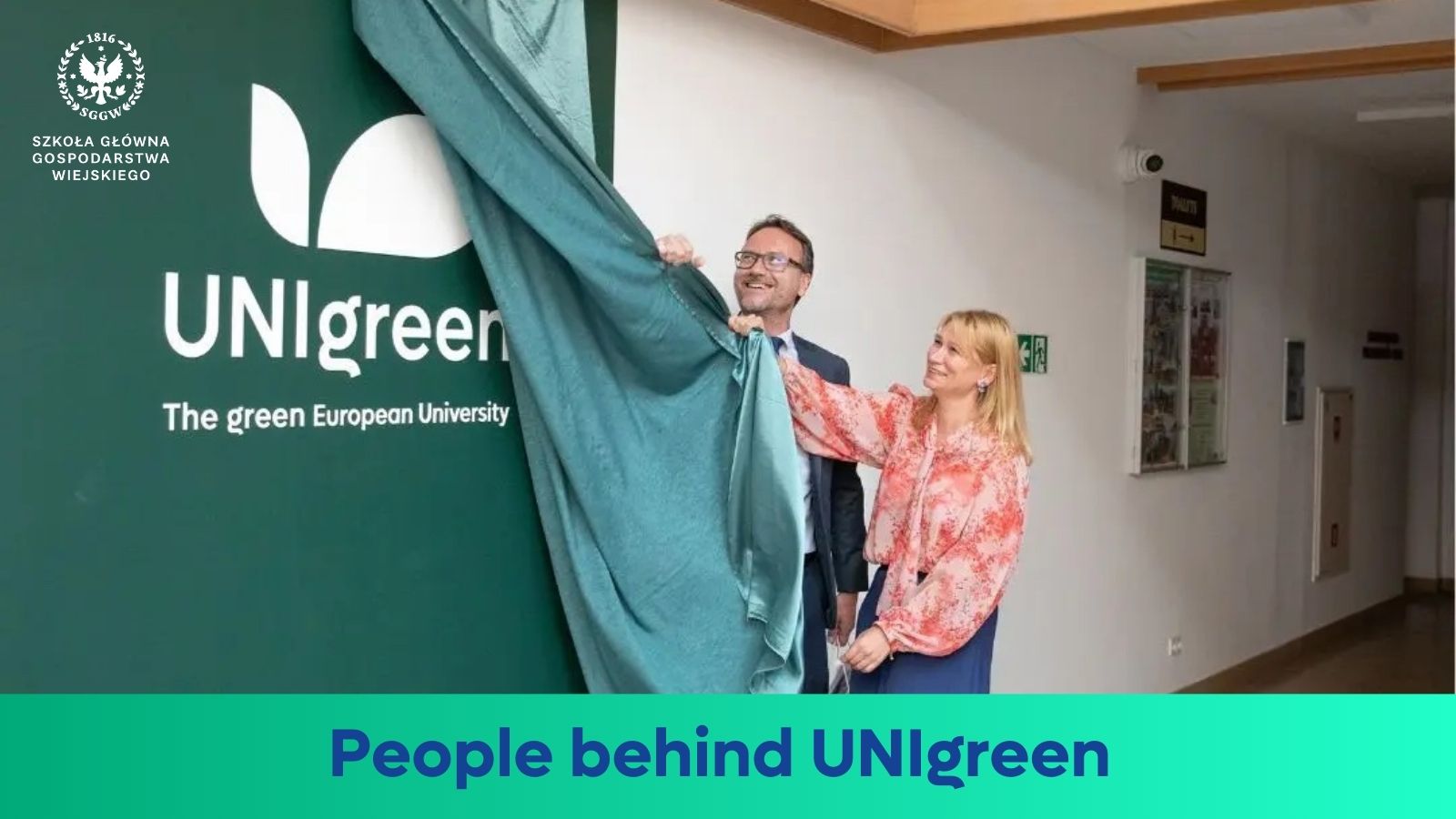
My name is Karol Chrobak. I am an Associate Professor at the Warsaw University of Life Sciences (SGGW), working at the Institute of Sociological Sciences and Pedagogy. My academic work is deeply rooted in philosophy; I am teaching a range of subjects, including the history of philosophy, logic, ethics, and political philosophy. In my research, I am focusing on areas closely related to sociology, including social ontology and social and political philosophy. Within the UNIgreen alliance, I am the SGGW Local Project Manager. Additionally, I serve as a member of the Board of Directors and the WP1 project team.
Can you share a concrete way in which UNIgreen is having a positive impact?
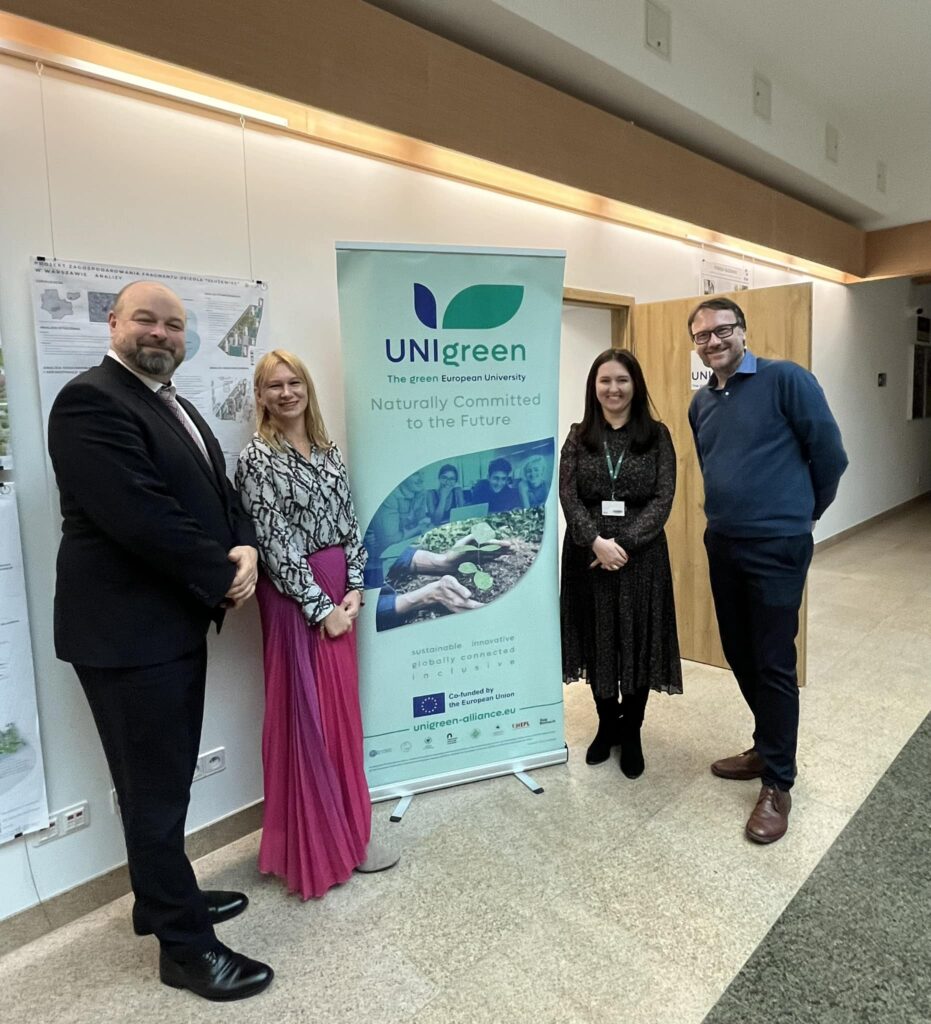
For me, the added value of the UNIgreen Alliance is building a community of people. In a nutshell, the initiative aims to create a network that connects academic centres from various European countries. Such a community is expected to include everyone from the academic community: students, academic teachers, researchers, and administrative staff. UNIgreen aims to offer everyone real benefits from international cooperation, such as flexible study paths, a broad exchange of researchers working on common projects, and a forum for teachers and staff to share their experiences. For SGGW specifically, the value lies in strengthening our international visibility and credibility, enabling a well-coordinated team to speak with one voice and represent our university with confidence and ambition.
What’s a lesson you’ve learned from working with such a diverse and international team?
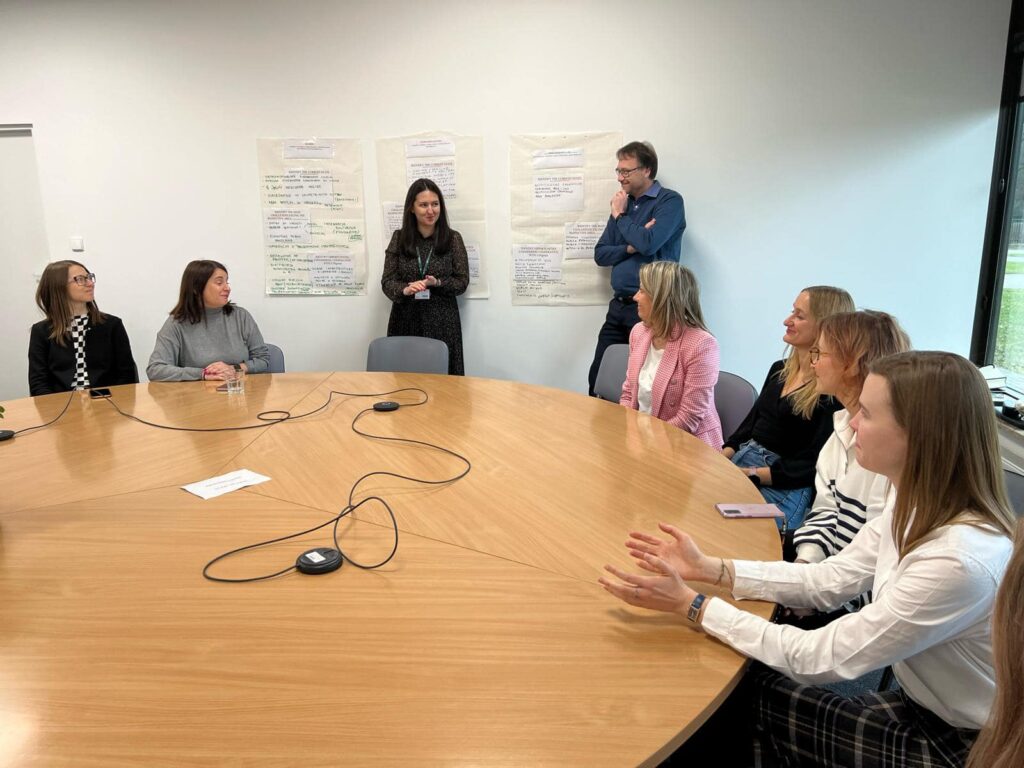
If I had to describe one lesson I have learned from UNIgreen, it would be the importance of working within a “team.” To me, this means a community of people working together toward shared goals. I am also thinking of our university team, which has come to know one another very well over the past three years. All SGGW coordinators meet monthly at the university’s UNIgreen Office to share information from their respective areas and to collaborate on finding optimal solutions to the challenges we face. These meetings often develop into intense discussions that extend well beyond the scheduled two-hour timeframe. Through this exchange, we learn how to navigate differences and how to become stronger by working together.
If UNIgreen were a plant, how would you describe it?
UNIgreen can be illustrated by a group of trees connected by an invisible underground fungal system. Each tree grows independently, but the underground system makes cooperation possible by enabling the exchange of nutrients, signals, and support. What gives such a system strength and resilience is not uniformity, but mutual connection. In a similar way, UNIgreen aims to build closer collaboration among autonomous universities by improving communication, cooperation, and mutual exchange. The ambitious goal of the alliance is to create a strong network in which diversity is preserved, but shared challenges are addressed together through trust, learning, and joint effort.