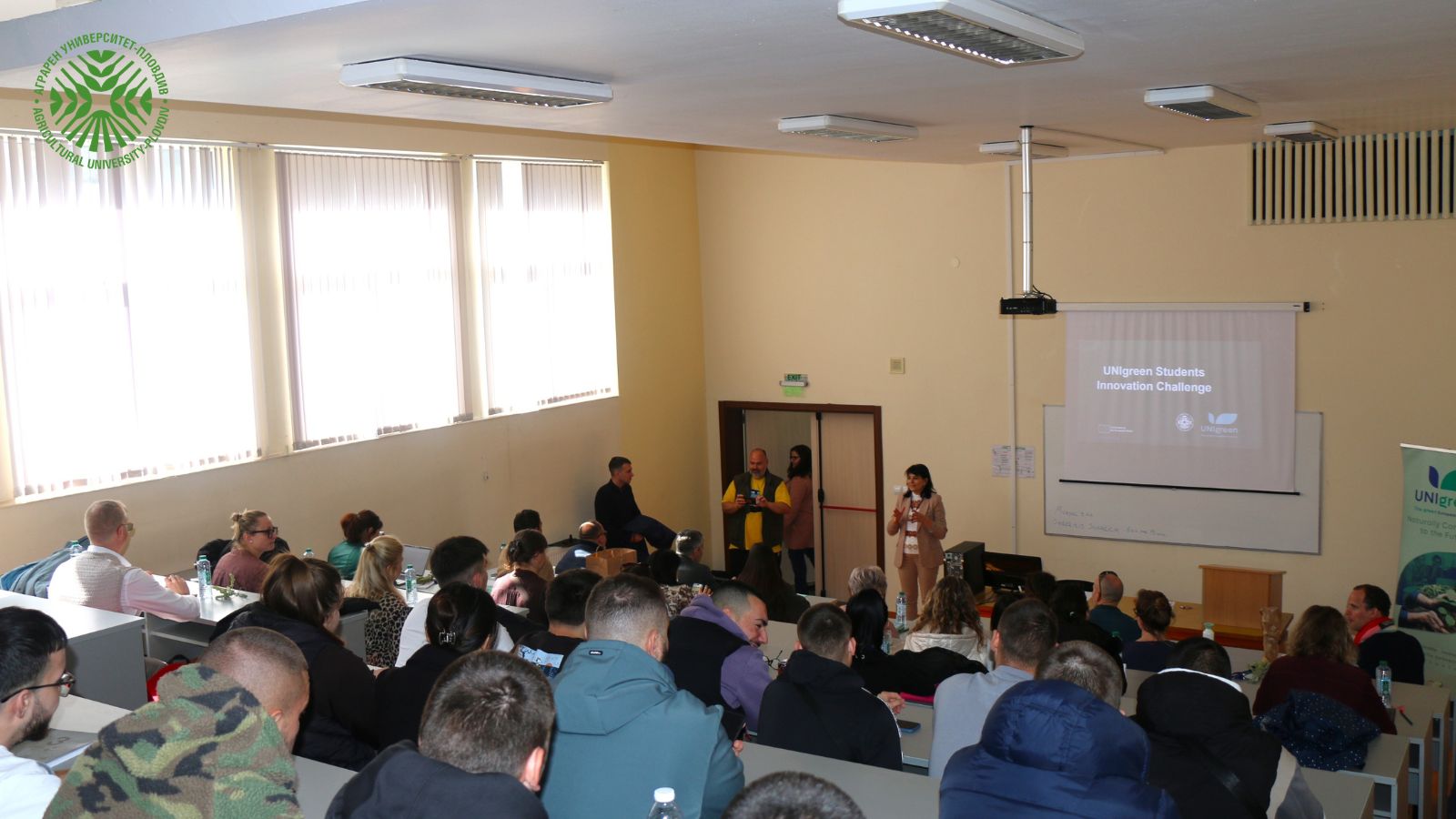

Interview with Karolina Czarnecka, representative of SGGW at the student meeting in Plovdiv.
Key Student Priorities for Shaping the Role of Students within the UNIgreen Alliance
The key conclusion from our discussions was the need to redefine the role of the student from a passive recipient of education to an active co-creator of the alliance. Although students were frequently mentioned during the sessions in Plovdiv, our direct perspective was missing. That is why our priority became ensuring that students have a genuine voice in both advisory and decision-making processes. We are not asking only for a symbolic seat at the table, but for a structurally guaranteed right to be heard. We want UNIgreen to be an organisation created with students, not just for students. This sense of agency is our strongest motivation.
The Value of a Structured Student Body within UNIgreen
As a co-author of this concept, I see clear benefits on both sides. For UNIgreen, having students involved in every Work Package helps avoid what is often described as “operational blindness.” Students bring a fresh perspective and highlight issues that may be invisible to academic staff but are crucial from our point of view. This makes the alliance’s solutions more accurate and user-friendly. For students, it presents a unique opportunity for professional development and firsthand experience in managing an international project. The structure also enhances transparency; when students understand how the organisation functions, they naturally become its ambassadors at their home universities. This is fundamental for building an engaged UNIgreen community the vision we discussed in Plovdiv.

Innovative Joint Study Programmes for the Future of UNIgreen
This was a fascinating challenge, given the diversity of our academic interests. Ultimately, we agreed that the most significant potential lies in interdisciplinarity. In my view, UNIgreen should offer hybrid programmes that combine natural sciences with digital competencies. The market needs specialists who understand both agriculture and, for example, artificial intelligence or data analysis. Here, the alliance has a unique advantage its ability to exchange knowledge across different climatic zones, from northern to southern Europe. For this reason, I would focus on programmes such as AgriTech or Climate-Smart Agriculture, where technology meaningfully supports sustainability goals. This is the kind of innovation students are looking for.
From Principles to Practice: Reducing UNIgreen’s Ecological Footprint
For our generation, authenticity is essential, which is why the topic of greenwashing sparks strong emotions. We believe UNIgreen should begin the change with itself walk the talk. It is not enough to teach about ecology; pro-environmental principles must be implemented in everyday operations. Some specific tools we propose include introducing a “green standard” for meetings, minimising printing by going paperless, using digital materials, offering sustainable catering based on local products, and including travel-related carbon footprints in project cost calculations. Such actions build credibility. By demonstrating that UNIgreen follows the principles it promotes, the alliance strengthens trust and sets an example for students.
Engaging Students as Active Contributors within UNIgreen
The key is to give students real challenges, rather than pre-defined tasks. One idea that has gained considerable enthusiasm is based on the Challenge-Based Learning model. When a Work Package encounters a problem, it can present it to students who are eager to treat it as a project and propose unconventional solutions. Students at SGGW and other universities want to feel that their work matters and has an impact. Involving them as consultants or solution creators builds a sense of belonging much more effectively than passive participation. Of course, for those with less time, there are still other ways to contribute through promotion or social media; however, it is the opportunity for the agency that truly attracts leaders.