Could you briefly introduce yourself?
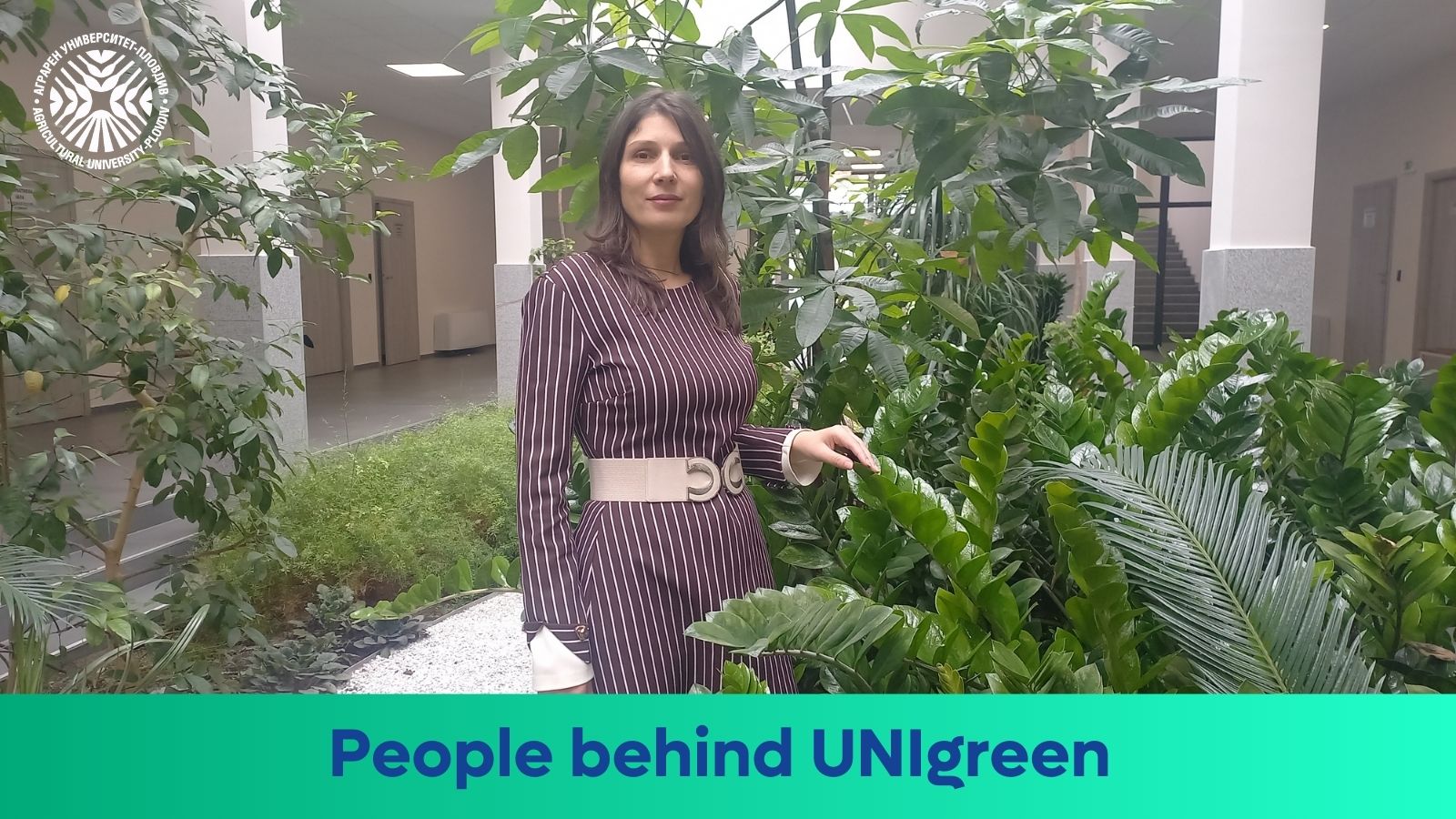
My name is Rositsa Beluhova. I am an Associated Professor at the Agricultural University – Plovdiv, Bulgaria. My academic background is in agricultural economics, regional development, bioeconomy, with a PhD from the Agricultural University – Plovdiv. I have extensive experience in teaching, supervising students, and participating in national and international research and educational projects related to sustainable agriculture, bioeconomy, and rural development.
In UNIgreen, I am actively involved in Work Package 2 – Teaching and Learning, where we contribute to the development of innovative, sustainability-oriented curricula, pedagogical approaches, and collaborative educational activities aimed at strengthening the green transition in higher education.
Can you share a concrete way in which UNIgreen is having a positive impact?
One concrete way UNIgreen is making a positive impact is by strengthening the integration of sustainability into higher education through innovative teaching and learning approaches. UNIgreen promotes interdisciplinary curricula, experiential learning, and student-centred methodologies that directly address the green transition in agriculture, biotechnology, and environmental sciences. At the Agricultural University – Plovdiv, this approach supports the development of future professionals with both technical expertise and sustainability-oriented competences. By fostering collaboration between universities, researchers, students, and local stakeholders, UNIgreen contributes to building resilient educational ecosystems that respond to societal needs, support sustainable agriculture, and enhance the long-term competitiveness of rural and regional economies.
What’s a lesson you’ve learned from working with such a diverse and international team?
One important lesson I have learned from working within the diverse and international UNIgreen team is the value of openness and mutual understanding in effective collaboration. Bringing together partners from different academic cultures, disciplines, and national contexts requires clear communication, flexibility, and respect for different perspectives. This diversity enriches decision-making and leads to more innovative and inclusive solutions, particularly when addressing complex challenges such as sustainability and green transition. Working in UNIgreen has shown me that successful international cooperation is not only about sharing expertise, but also about building trust, learning from different institutional practices, and co-creating common approaches that benefit all partners and their local communities.
If UNIgreen were a plant, how would you describe it?
If UNIgreen were plants, they would be a field of interconnected sunflowers, rooted deeply in European academic values yet always turning toward light, knowledge, and innovation. Their strong stems would symbolise resilient institutions and shared commitment to sustainability, while their wide, bright heads would reflect openness, collaboration, and inclusion. Like sunflowers that grow together, they would support one another, sharing resources and strength across borders and disciplines. Their seeds would represent the ideas, skills, and opportunities cultivated within the alliance, spreading across regions to nurture greener education systems, sustainable communities, and a more environmentally conscious future.