How Student Governance Should Work?
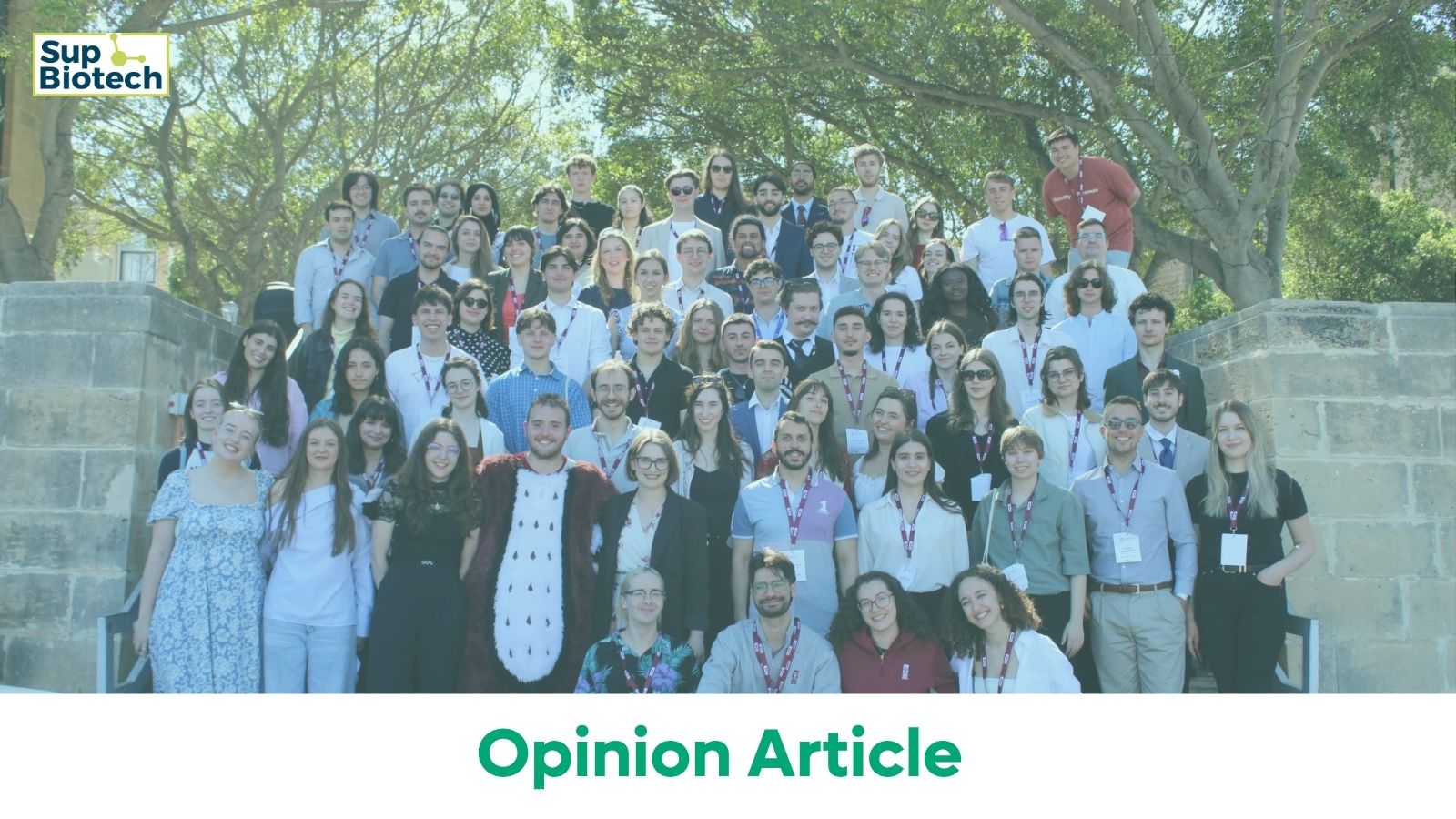
From 1-5 May, the UNIgreen Alliance was represented at the European Students’ Union Conference of Alliances III in Malta (ESU 2026) by myself, representing the first time our alliance took part in this forum. With over 60 student representatives from different alliances across Europe, the three days were a crash course in how alliances build student governance, fund initiatives, and fight for the student voice to be heard. We, the students, attended the conferences, debated on the controversial topics, shared our ideas and their implementation – all of it while networking and increasing our knowledge, skills, and expertise on student governance. I came back with one clear message for UNIgreen: if we want students to lead, we need to give them tools, trust, and real power.
Mapping Reality, Building Structures
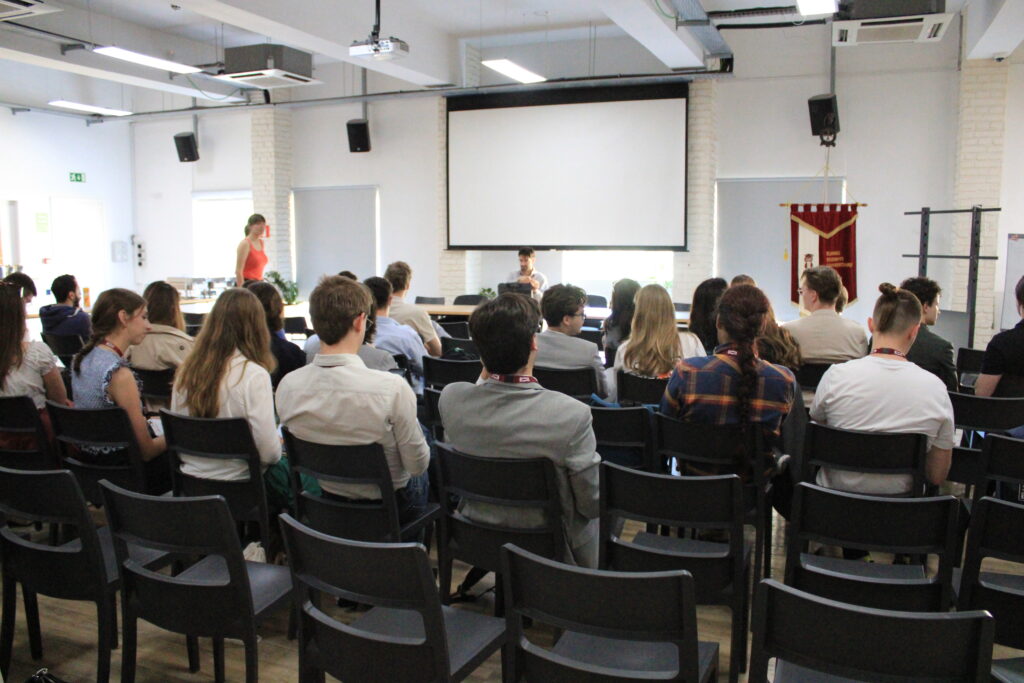
The conference opened with a direct dialogue with the European Commission, setting the tone: student voice matters at EU level. We, then, moved into open sessions mapping “the Reality of Students in Alliances” and discussing the reality of how inclusive and accessible student rights really are within Alliances.
Aurora’s student rights organization shared a striking case: they didn’t pass their funding request, but the organization was formed anyway.
Student governance and action can’t wait for budget approvals
Aurora
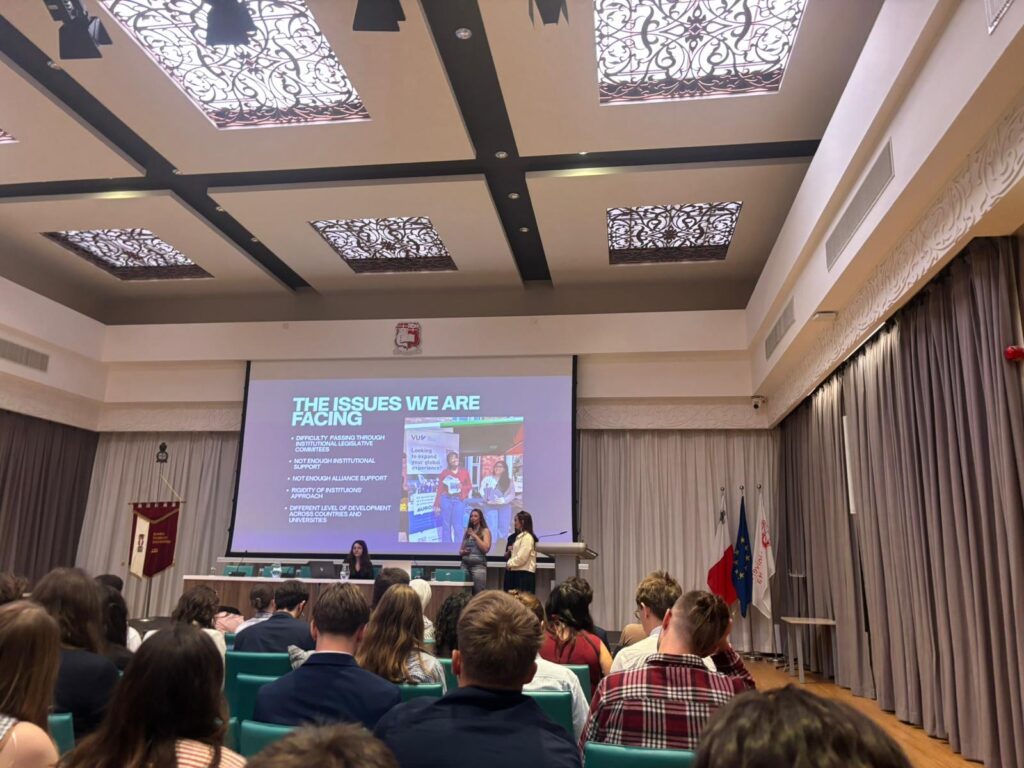
The ESU Committee laid out their strategic priorities, policy papers, and how statements become resolutions that shape European HE policy.
For me, the most practical takeaway came from workshops on student council structures. UNIgreen is still building ours, and hearing how others do it was beneficial. Some alliances have representatives appointed by the university administration. Others run full student elections. Some even adapt election rules across Alliance member universities.
Both models have flaws: no elections = no democracy; full elections usually result in a tiny turnout because students don’t know the alliance exists. One Finnish university even made a first-year course about their alliance mandatory – extreme, but it shows how deep the visibility problem runs.
From Workshops to Heated Debates
Day two dove into the operational side. After a session on alliance funding, I joined three workshops: Campaigning & Communication, Mobility & Funding, and Engagement & Motivation. With 60 representatives from wildly different contexts, the ideas were endless – but the challenge was the same: how do you engage students when they don’t know what an alliance is?
In the afternoon, I chose ECTS in Practice – where we assessed university courses for correct credit calculation – Student Involvement in QA, and Recognition of Credits & Prior Learning. The last one led to heated debates: students agreed that if a learning agreement is signed before mobility, universities must recognize the credits. Denying them afterward breaches both trust and the agreement itself.
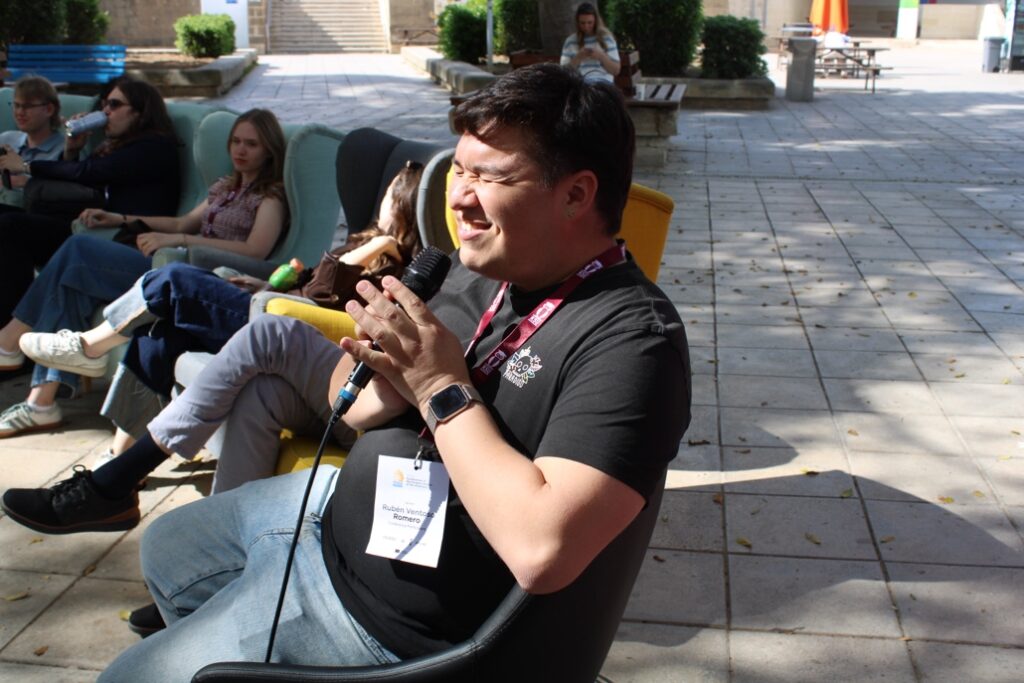
Then came the highlight of the ESU: the debate session. Split into subgroups, mic in hand for the first time for many of us, we had 20 minutes to prepare and then argue our side. My team had to argue against the idea that “to change university institutions we need to fight the system and rebuild from scratch.” We lost to more experienced debaters, but the exchange of perspectives from different countries was incredible.
The most heated topic? Quality vs. inclusion and accessibility in higher education. The room was literally split 50/50, and the winner was decided by rock-paper-scissors. That’s how contested – and how important these questions are.
SEA-EU and Further Networking
The final day started with a language café: groups of 5 teaching each other basic phrases, which was a great way to further network with students we hadn’t met yet. Then SEA-EU presented their work on Mediterranean sustainability projects – a strong example of alliances tying education to regional impact. SEA-EU’s Mediterranean projects showed how student input can drive UNIgreen’s own sustainability agenda. We closed with another European Commission dialogue, where reps didn’t hold back on questions regarding the alliances’ funding that is expiring in a couple of years, and student representation on both alliance and European level.
What does this mean for Us?
- We need elected representatives – but elections only work if students care. Right now, students mostly don’t know how the UNIgreen functions and how they could contribute. We must campaign, explain our mission, and show why this role matters. After we ensure the visibility, holding elections is mandatory for the representative’s positions.
- Compensate for the role. Across alliances, the strongest engagement came where student work is recognized – with funding, ECTS, or workload flexibility. If we expect representatives to drive UNIgreen forward, we can’t ask them to do it fully voluntarily on top of their full degrees.
- Give the student council actual power. Students want to participate in projects, but more than that, they want their voice to count. The council can’t be symbolic. It should function like a student union at the inter-university level: voting rights in governance, access to data, and a clear mandate to act. If students have academic or administrative issues, or project ideas, they should know the representative can help – not just “discuss” it.
- A great example is IN.TUNE’s “Equal Voice” model that gives students 1/3 of governing board seats with full voting rights. That’s already not consultation – that’s co-creation. UNIgreen should aim for the same: move from students as consultants, to representatives, to owners and partners.
Conclusion
This was UNIgreen’s first time attending an ESU conference, and I was honored to represent our alliance. I have clarified the positioning of UNIgreen as a specialized alliance uniting education, innovation in sustainable agriculture, green biotech and research, and environmental sciences. I put on emphasis on our focus on international cooperation, academic mobility, and green transition.
The relevance of that message was clear: during the conference, Máté Kónya, a student representative from Széchenyi István Egyetem (Hungary), expressed interesting in the possibility of his university joining one day UNIgreen. We will establish contact between the administrations, but it is the proof that our positioning resonates with the wider academic community.
My job as the alliance representative was to observe, network, and learn. I met dozens of people – some connections might matter next month, some in 5 years. But the biggest lesson is clear: alliances don’t work for students unless they work with students.
For UNIgreen to succeed, our student council needs elections, compensation, and decision-making power. Not because it’s nice to have, but because without it, we can’t claim legitimacy. The students are ready to contribute. Now we must give them the tools.
About the Author
By Vladislav Surighin, UNIgreen Student Representative at ESU Conference of Alliances III, Malta, 1–5 May 2026